


What does 70% chocolate really mean? This guide breaks down chocolate percentages and shows how they affect sweetness, richness, and texture so you can choose the right chocolate for baking and creating in your kitchen.
May 5, 2026
Understanding Chocolate Percentages

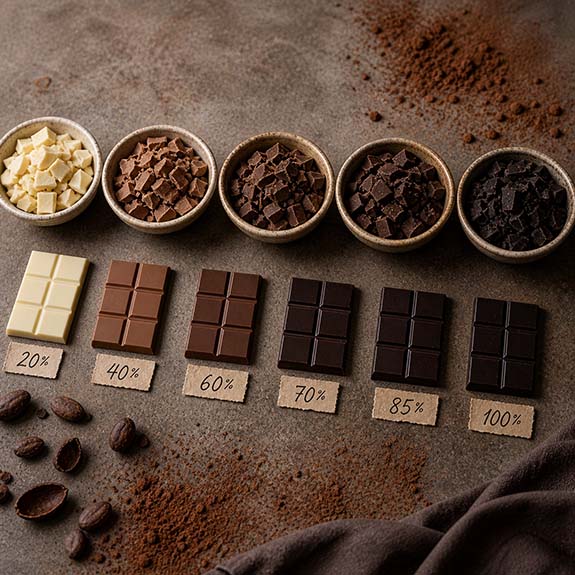
A Closer Look at Chocolate Percentages
Chocolate percentages can feel a little unclear at first glance. A bar labeled 70% or 85% sounds precise, but what does that number actually mean for how it tastes, melts, or bakes?
Once you understand what those percentages represent, choosing chocolate becomes much more intuitive. You begin to select it not just by brand, but by how you want your dessert to feel. Sweeter and soft, or deep and bittersweet.
This is one of those small shifts that quietly changes everything in your kitchen.
What Does Chocolate Percentage Mean?
Chocolate percentage refers to how much of the bar comes from the cacao bean.
That includes:
- Cocoa solids (the chocolate flavor)
- Cocoa butter (the natural fat)
The remaining percentage is typically sugar, and sometimes a small amount of vanilla or emulsifier.
So when you see:
- 70% chocolate → 70% cacao, 30% sugar and other ingredients
- 85% chocolate → 85% cacao, 15% sugar
The higher the percentage, the less sugar and the more intense the chocolate flavor.
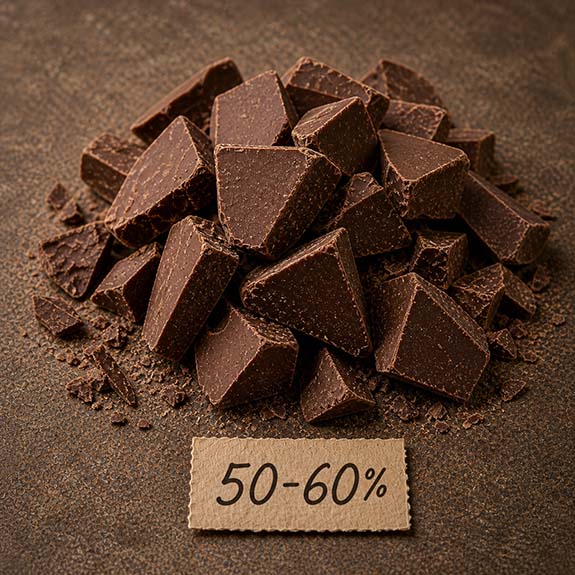
50–60% Chocolate
Balanced, smooth, and gently sweet
Flavor and Texture
Chocolate in the 50–60% range is usually sweeter, smoother, and more approachable. It still gives you chocolate flavor, but it does not lean too bitter or intense.
This range often feels familiar in cookies, cakes, and simple desserts.
- Noticeably sweet
- Mild chocolate flavor
- Smooth and approachable
This range is where chocolate feels familiar. It melts easily and blends smoothly into batters and doughs.
How It Works in Baking
Because 50–60% chocolate contains more sugar, it can make baked goods taste sweeter and feel softer. It melts beautifully and blends easily into batters, frostings, and drizzles.
This is a good range when you want chocolate to support the recipe without taking over.
This is your everyday chocolate. Comfortable, balanced, and easy to work with.
H3: Best Uses for 50–60% Chocolate
- Chocolate chip cookies
- Simple chocolate cakes
- Frostings and glazes
- Drizzles
- Family-style bakes
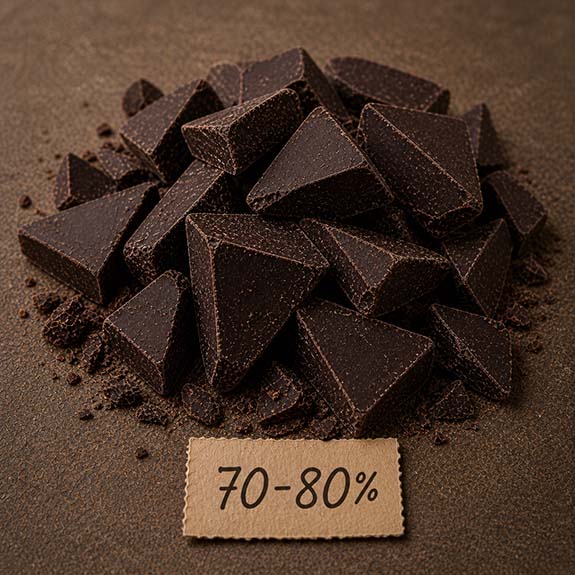
70–80% Chocolate
Rich, balanced, and versatile
Flavor and Texture
- Balanced sweetness
- Deeper chocolate flavor
- Slight bitterness that rounds out desserts
This is where chocolate begins to feel more layered. It holds its own without overpowering.
or most often.
Best Uses for 70–80% Chocolate
- Brownies
- Chocolate pudding
- Ganache
- Chocolate chunk cookies
- Tart fillings
- Chocolate cakes with deeper flavor
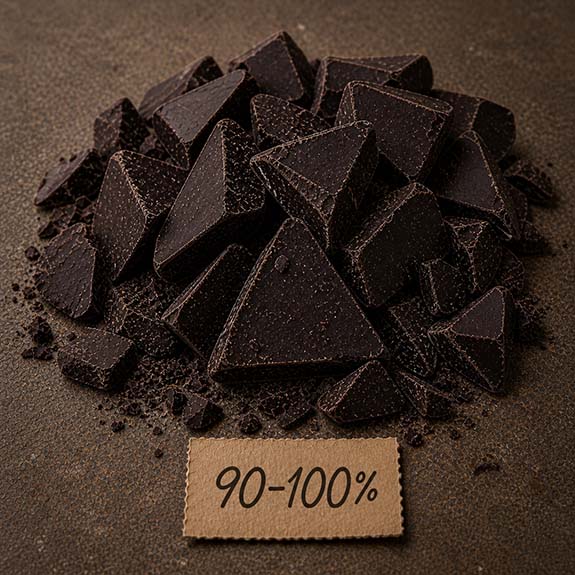
90–100% Chocolate
Bold, intense, and deeply concentrated
Flavor and Texture
Chocolate in the 90–100% range is very intense. It has little to no added sugar, so the flavor is bold, bitter, and deeply concentrated.
This range is not usually sweet enough for casual snacking unless you love very dark chocolate. In baking, though, it can be incredibly useful.
How It Works in Baking
Because this chocolate has very little sugar, it gives you more control over the final sweetness of a recipe. It can create a strong chocolate foundation in cakes, brownies, sauces, and hot chocolate.
If you use 90–100% chocolate in place of a sweeter chocolate, the recipe may taste less sweet and more bitter unless you adjust the sugar.
Best Uses for 90–100% Chocolate
- Brownies with added sugar
- Flourless chocolate cake
- Hot chocolate bases
- Chocolate sauces
- Recipes calling for unsweetened chocolate
- Deep, intense chocolate desserts
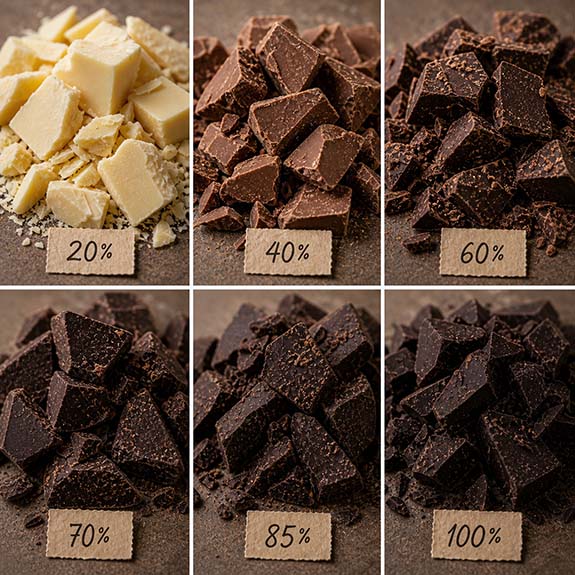
How Chocolate Percentage Affects Baking
Chocolate percentage affects more than flavor. It can change sweetness, texture, richness, and how bold the final dessert feels.
Higher Percentage Chocolate
Higher percentage chocolate usually has:
- Less sugar
- More cacao flavor
- More bitterness
- A firmer texture
- A deeper finish
Lower Percentage Chocolate
Lower percentage chocolate usually has:
- More sugar
- A softer flavor
- A smoother melt
- A sweeter finish
- A more familiar chocolate taste
A small change in percentage can make a noticeable difference, especially in simple recipes where chocolate is the main flavor.
How to Choose the Right Chocolate Percentage
Think about the feeling you want your dessert to have.
50–60% chocolate when you want something smooth, sweet, and familiar.
70–80% chocolate when you want rich chocolate flavor with balance.
90–100% chocolate when you want intensity, depth, and full control over sweetness.
A thoughtful pantry does not need every chocolate on the shelf. It needs a few good options you understand and enjoy using.
Pantry Foundations Tips for Baking with Chocolate
- Chop chocolate evenly so it melts at the same rate.
- Taste the chocolate before baking with it.
- Use 70–80% as your most versatile dark chocolate range.
- Use 90–100% when you want to control sweetness yourself.
- Store chocolate in a cool, dry place away from sunlight.
- Avoid overheating chocolate when melting, since it can become thick or grainy.
Frequently Asked Questions
What does chocolate percentage mean?
Chocolate percentage tells you how much of the bar comes from cacao, including cocoa solids and cocoa butter. The rest is usually sugar and small additions like vanilla or an emulsifier.
What is the best chocolate percentage for baking?
For most baking, 70–80% chocolate is the most versatile. It gives you strong chocolate flavor without being overly bitter.
Is 50–60% chocolate good for baking?
Yes. It works well in cookies, cakes, frostings, and recipes where you want a sweeter, smoother chocolate flavor.
Can I substitute 90–100% chocolate for 70% chocolate?
You can, but the recipe will taste more bitter and less sweet. You may need to increase the sugar depending on the dessert.
Is higher percentage chocolate always better?
Not always. Higher percentage chocolate is more intense, but the best choice depends on the recipe and the flavor you want.
Final Thoughts
Chocolate percentages are not just numbers on a wrapper. They are little clues that tell you how sweet, rich, bitter, and bold your chocolate will be.
Once you understand the difference between 50–60%, 70–80%, and 90–100%, choosing chocolate becomes part of the creative process.
You are no longer just adding chocolate. You are shaping the flavor of the whole recipe.
With a flour-dusted apron and something chocolate slowly melting nearby,
Lisa


