


Move one dependable container of oats from breakfast to baking and dinner with seasonal oatmeal, granola, bread, fruit crisps, savory bowls, and more.
September 1, 2026
Oats: One Ingredient, Many Possibilities

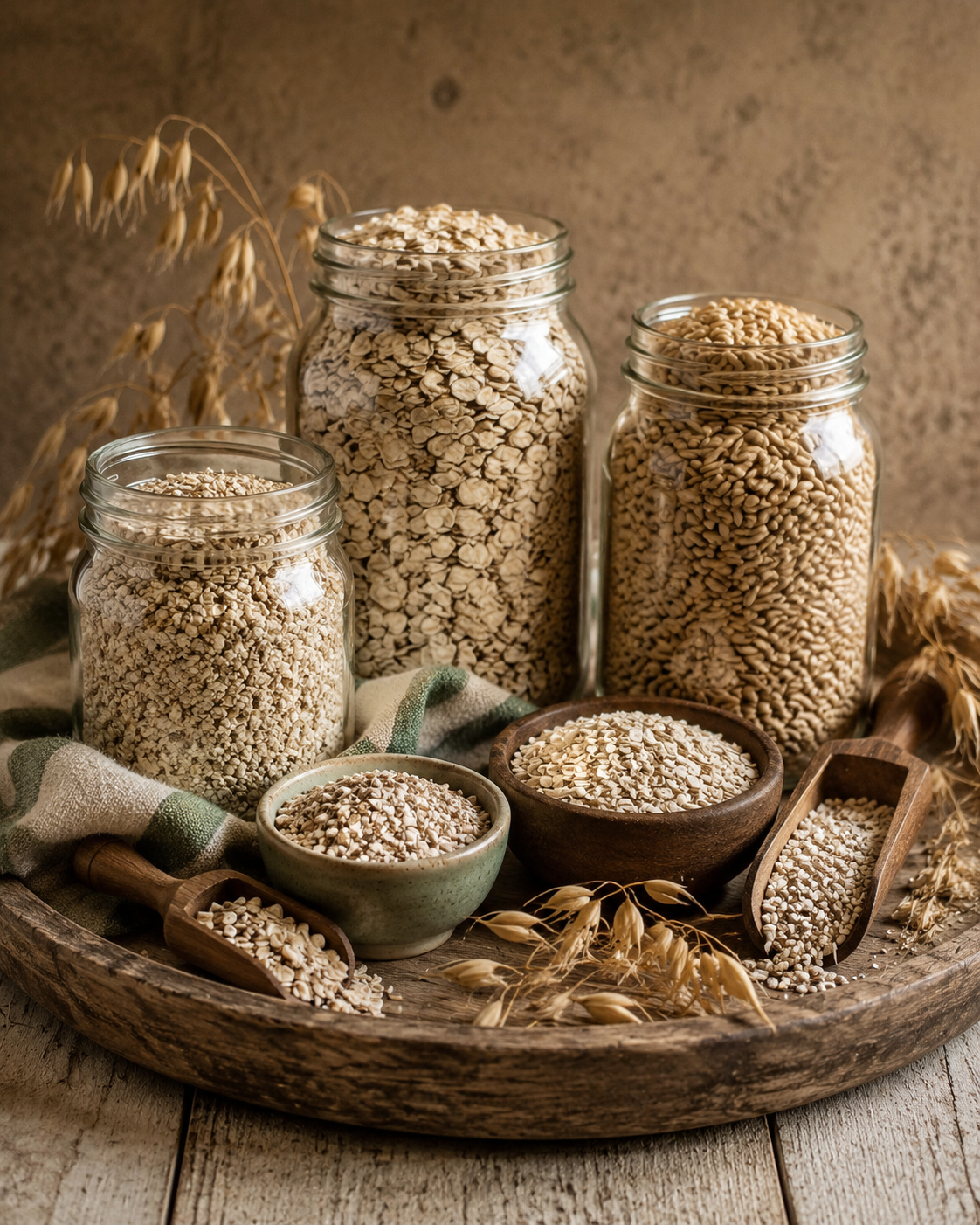
Ingredient of the Month: Oats
Part of September Ingredient of the Month Series
Part 1 • Oats 101: Types of Oats, Storage, and Everyday Uses
A jar of oats may look like breakfast waiting to happen.
Yet the same dependable grain can become crisp granola, a tender fruit bake, rustic bread, a savory supper, or a simple way to hold patties and meatballs together.
In Oats 101, Part 1 of this Pantry Foundations series, we explored oat types, storage, and texture. Now we can put that foundation to work throughout the day.
The key is to match the form of oats to the texture you want. Rolled oats remain visible and flexible, quick oats soften readily, steel-cut oats keep more chew, and oat flour adds tenderness without supplying the gluten-forming structure of wheat flour.
Begin With the Oats in Your Pantry
Start with the type you already have. Old-fashioned rolled oats work especially well in oatmeal, overnight oats, granola, cookies, fruit crisps, and many breads. Quick oats blend into softer, more uniform mixtures. Steel-cut oats suit hearty porridge and savory bowls where their firm texture can shine.
Oat flour behaves differently from wheat flour. It can bring mild flavor and tenderness, but it does not build the same gluten network. Use it in a recipe developed for oat flour or as a recipe-supported portion of the flour rather than assuming a one-for-one swap will work.
You do not need to stock every form. Choose the oats you use most often, then add another type only when it supports something you make regularly.
Seasonal Oat Recipe Ideas for Breakfast
A bowl of oatmeal is a foundation rather than a fixed recipe. Begin with rolled or steel-cut oats, follow the package directions for liquid and cooking time, and let the season guide the additions.
Try apples or pears in autumn, cranberries and orange in winter, berries in spring, or peaches in summer. Fresh, frozen, cooked, or dried fruit can all work; adjust added liquid and sweetness to suit the fruit.
A useful bowl can include:
- Fresh, cooked, frozen, or dried fruit
- Toasted nuts or seeds
- Cinnamon, ginger, nutmeg, cardamom, or vanilla
- Milk, kefir, yogurt, or a nondairy alternative
- Nut or seed butter
- Honey, maple syrup, or organic cane sugar, if sweetness is needed
- A small pinch of salt to bring forward the oats’ nutty flavor
Cook soft but sound fruit with a little butter and spice instead of letting it disappear into the refrigerator. Discard fruit that is moldy, slimy, leaking, or unpleasant-smelling.
Prepare Overnight Oats
Overnight oats use a long, cold soak instead of stovetop cooking. Rolled oats absorb the liquid and soften while keeping enough structure for a creamy breakfast.
Old-fashioned rolled oats usually create the best balance of softness and texture. Quick oats can become very soft, while steel-cut oats remain much firmer and need a formula developed for their longer soaking time and chew.
Build overnight oats with a simple pattern:
- Begin with old-fashioned rolled oats
- Add milk or another liquid
- Add kefir or yogurt for tang and creaminess, if desired
- Stir in fruit, spices, seeds, or nut butter
- Cover and refrigerate while the oats soften
- Adjust with a splash of liquid before serving
Keep overnight oats refrigerated at 40°F or below; do not leave them to soak on the counter. For best quality and safe handling, make only what you will use within three to four days, especially when the jar contains milk, kefir, or yogurt.
My Overnight Oats with Kefir and Yogurt follow this make-ahead pattern. Change the fruit with the season so the same breakfast does not feel identical all year.
Granola Oat Recipe Ideas
Granola turns rolled oats crisp and toasted. Begin with oats, fat, sweetener, and salt, then add pantry nuts, seeds, coconut, or spices.
Use melted butter or olive oil, honey or maple syrup, and ingredients such as pecans, walnuts, pumpkin seeds, coconut, cinnamon, or cardamom. Stir in dried fruit after baking so it stays pleasantly chewy rather than becoming hard or scorched.
Let the granola cool completely before breaking it into clusters or sealing it in a container. Cooling helps the clusters set and prevents trapped steam from softening the crisp oats.
Bake Oats Into Breakfast
Baked oatmeal sits somewhere between creamy oats and a tender breakfast cake. It holds its shape, reheats well, and makes a comforting start to a cool morning.
The Apple Cinnamon Breakfast Bake pairs oats with apples and warm spice. Pears, cranberries, berries, or peaches can offer a seasonal change.
Fruit varies in acidity, sweetness, and juiciness, so use a tested recipe when changing the main fruit. A very juicy substitution can alter the structure, baking time, and final texture.
Bread and Baking Oat Recipe Ideas
Rolled oats bring texture to breads, muffins, scones, cookies, and quick loaves. Fold them into dough or batter, soften them in a soaker, or scatter them over the top.
A soaker hydrates oat flakes before they enter bread dough, helping them soften instead of pulling as much moisture from the dough during baking. Oat flour can support some formulas, but replacing too much wheat flour can reduce gluten development, structure, and volume.
In cookies, rolled oats create distinct flakes and chew. Quick oats produce a softer, more uniform texture and can absorb moisture faster. Use the type named in the recipe when texture and spread matter.
Make a Seasonal Fruit Crisp
A bowl of ripe fruit and a handful of rolled oats can become one of the simplest desserts of the season. Combine the oats with flour, butter, organic cane sugar, salt, and spices. Scatter the mixture over prepared fruit and bake until the topping is golden and the filling bubbles at the edges.
Use apples or pears in autumn, cranberries in winter, berries in spring, and stone fruit in summer. Slightly bruised or overripe fruit can work if it is otherwise sound; trim damaged areas before preparing it.
Do not try to rescue moldy soft fruit by cutting away the visible spot. Mold can spread below the surface of high-moisture produce, so discard moldy, slimy, leaking, or fermented-smelling fruit.
This is the kind of flexible baking that helps us use what we have without making the result feel like an afterthought.
Savory Oat Recipe Ideas
Oats do not need to be sweet. Steel-cut oats are especially useful for savory dishes because the cut pieces retain their shape and pleasant chew after simmering.
Cook them in broth and finish them with roasted mushrooms, sautéed greens, caramelized onions, tomatoes, fresh herbs, Parmesan, Pecorino, a fully cooked or pasteurized egg preparation, or a drizzle of olive oil.
For a risotto-style supper, simmer steel-cut oats with broth, mushrooms, herbs, and cheese, adding liquid as needed until the oats are creamy but still pleasantly chewy. The method borrows from risotto technique, but the finished dish is not traditional Italian risotto.
Use Oats as a Binder
Rolled or quick oats can absorb moisture and help hold together meatballs, meatloaf, vegetable patties, bean burgers, fritters, and stuffed vegetables.
Quick oats blend in more completely, while rolled oats remain visible and add texture. Add them gradually, let the mixture rest so the oats can hydrate, and then decide whether it needs more.
When the mixture contains raw meat, poultry, seafood, or eggs, follow a tested recipe and cook it to the safe internal temperature for those ingredients.
Give Leftover Oatmeal a Second Life
Transfer cooked oatmeal to a shallow, covered container and refrigerate it within two hours of cooking. Use refrigerated oatmeal within three to four days or freeze it for longer storage.
Once safely chilled, leftover oatmeal can be folded into pancakes, waffles, muffins, quick breads, or oat cakes. It can also be sliced, browned in a skillet, and served with fruit or savory toppings.
Reheat plain oatmeal with a splash of milk or water until it is steaming hot throughout. If other perishable ingredients are mixed in, follow the storage and reheating guidance for the most perishable ingredient.
A Simple Plan for These Oat Recipe Ideas
One container of rolled oats can support several meals without repeating the same preparation:
- Prepare overnight oats for an easy breakfast
- Toast a portion into granola
- Bake apples and oats for a warm weekend breakfast
- Grind a small amount into flour for a recipe designed to use it
- Add rolled oats to bread or cookie dough
- Turn seasonal fruit into a crisp
- Use the final handful as a binder in savory patties
If you also keep steel-cut oats, use them for chewy porridge or a mushroom-and-herb supper. One dependable grain can help other pantry staples find their way to the table.
Frequently Asked Questions
Can I use steel-cut oats for overnight oats?
Yes, but they remain much firmer than rolled oats and need a recipe developed for their texture and longer soak. Keep them refrigerated while soaking; do not swap them directly into a rolled-oat recipe and expect the same result.
Which oats are best for granola?
Old-fashioned rolled oats are the best starting point. Their broad flakes toast well, remain visible, and form clusters without disappearing into the mixture.
Can oats be used in savory meals?
Yes. Steel-cut oats work especially well with broth, mushrooms, greens, herbs, aged cheese, and eggs. Rolled or quick oats can also bind meatballs, vegetable patties, and fritters.
What can I do with leftover cooked oatmeal?
Use it in pancakes, waffles, muffins, quick breads, oat cakes, or browned breakfast slices. Refrigerate it within two hours and use it within three to four days, or freeze it.
Can I replace wheat flour with oat flour?
Not automatically. Oat flour does not create the gluten network that gives wheat-based baking much of its structure, and its liquid needs can differ. Use a tested oat-flour recipe or a substitution specifically supported by the recipe.
Are oat flour recipes automatically gluten-free?
No. A recipe is gluten-free only when every ingredient and the preparation environment meet that need. If you must avoid gluten, choose oats or oat flour labeled gluten-free and check the labels on every other ingredient.
Bringing Oats to the Table
These oat recipe ideas show that oats are not limited to one purpose. They can be creamy or crisp, sweet or savory, finely ground or pleasantly chewy.
Begin with the form you have and choose a preparation that respects its texture. Rolled oats bring everyday flexibility. Steel-cut oats create hearty bowls and savory suppers. Oat flour adds tenderness when the recipe is built to support it.
One container can move from breakfast to bread, from granola to dinner, and from soft apples to a warm fruit crisp. That is the generous pleasure of one ingredient with many possibilities, ready to be cooked, shared, and carried back around the table.


