


Whether your zucchini comes from the garden, farmers’ market, or grocery store, this guide will help you choose it well, store it properly, and prepare it with confidence.
August 6, 2026
Zucchini 101: How to Choose, Store, and Prepare Summer Zucchini

Ingredient of the Month: Zucchini
Part of August Ingredient of the Month Series
Part 2 • One Ingredient, Many Possibilities
By August, zucchini seems to appear everywhere.
It fills garden baskets, farmers’ market tables, and generous bags left on neighbors’ porches. One day, you are admiring the first tender zucchini of the season. A few days later, you may wonder how one plant produced enough for the entire neighborhood.
That abundance is part of zucchini’s charm.
Zucchini is mild, affordable, and remarkably flexible. You can sauté it for a quick side dish, fold it into a garden frittata, bake it into zucchini bread, or fry its delicate blossoms.
The secret is learning how to match the size, texture, and moisture of zucchini to the way you want to cook it. This Zucchini 101 guide will help you confidently choose, store, prepare, and use summer zucchini.
What Is Zucchini?
Zucchini is a type of summer squash. Although we treat it as a vegetable in the kitchen, it is botanically a fruit because it develops from a flower and contains seeds.
Unlike winter squash, zucchini is harvested while immature. Its skin remains tender and its seeds are usually small. Most zucchini does not need to be peeled, and the skin, flesh, seeds, and blossoms are all edible.
Zucchini belongs to the same plant family as pumpkins, cucumbers, melons, and other squash. Its mild flavor allows it to move easily between savory and sweet recipes without overpowering the other ingredients.
Zucchini vs. Summer Squash
Zucchini is one type of summer squash, but the two terms are not exactly interchangeable.
The summer squash family includes:
- Green and golden zucchini
- Yellow straightneck and crookneck squash
- Round zucchini
Most summer squash has tender, edible skin and a moisture-rich interior. The varieties can often be substituted for one another, although their shape, firmness, and flavor may differ slightly.
Traditional green zucchini has a mild, grassy flavor and tender flesh, while summer squash can taste slightly sweeter.
What Does Zucchini Taste Like?
Zucchini has a mild, fresh flavor with a faint sweetness. Raw zucchini is crisp and refreshing. Once cooked, it becomes tender and readily takes on the flavors around it.
It pairs especially well with:
- Basil, parsley, thyme, and oregano
- Garlic, onions, shallots, and leeks
- Tomatoes, peppers, and eggplant
- Lemon and other bright citrus flavors
- Parmesan, ricotta, mozzarella, feta, and goat cheese
- Eggs, beans, grains, pasta, and toasted nuts
For a simple Mediterranean-inspired preparation, zucchini needs little more than olive oil, garlic, sea salt, black pepper, and fresh herbs.
How to Choose the Best Zucchini
For the most tender texture, choose small to medium zucchini that feel firm and relatively heavy for their size.
Look for:
- Smooth, vibrant skin
- Firm flesh without soft or sunken areas
- A fresh-looking stem
- No deep cuts, shriveling, or significant bruising
- A size that suits the recipe you plan to make
Zucchini measuring approximately 6 to 8 inches long is often ideal for everyday cooking. At this stage, the skin is thin, the flesh is firm, and the seeds are small.
Very small zucchini are particularly tender and lovely for grilling, roasting, or raw salads. Oversized garden zucchini may have tougher skin, larger seeds, and fibrous or watery flesh.
Do not automatically discard a large zucchini. Slice it lengthwise and inspect the center. Scoop out tough seeds and peel the skin if needed. The remaining flesh can be shredded for bread and fritters, or chopped for soups, sauces, and stuffed zucchini.
How to Store Fresh Zucchini
Store zucchini unwashed in the refrigerator crisper drawer and set the drawer to high humidity. For the best flavor and texture, try to use fresh zucchini within four or five days. Depending on its condition and storage environment, it may maintain its quality for up to a week.
Watch for signs of spoilage, including sliminess, mold, leaking liquid, deeply sunken areas, or an unpleasant smell. A slightly softened zucchini may still work in a cooked sauce or soup. A slimy, moldy, or foul-smelling zucchini should be discarded.
Wait to wash zucchini until shortly before using it. Rinse it under cool running water and dry it thoroughly with a clean kitchen towel.
Do You Need to Peel Zucchini?
Most zucchini do not need to be peeled. The skin is edible and contributes color and texture. On small and medium zucchini, it becomes tender as it cooks.
Peel an oversized zucchini if the skin has become noticeably tough. You can remove it completely or peel the zucchini in alternating strips to retain some color.
Unless a recipe specifically calls for peeled zucchini, leave the tender skin in place.
How to Prepare Zucchini
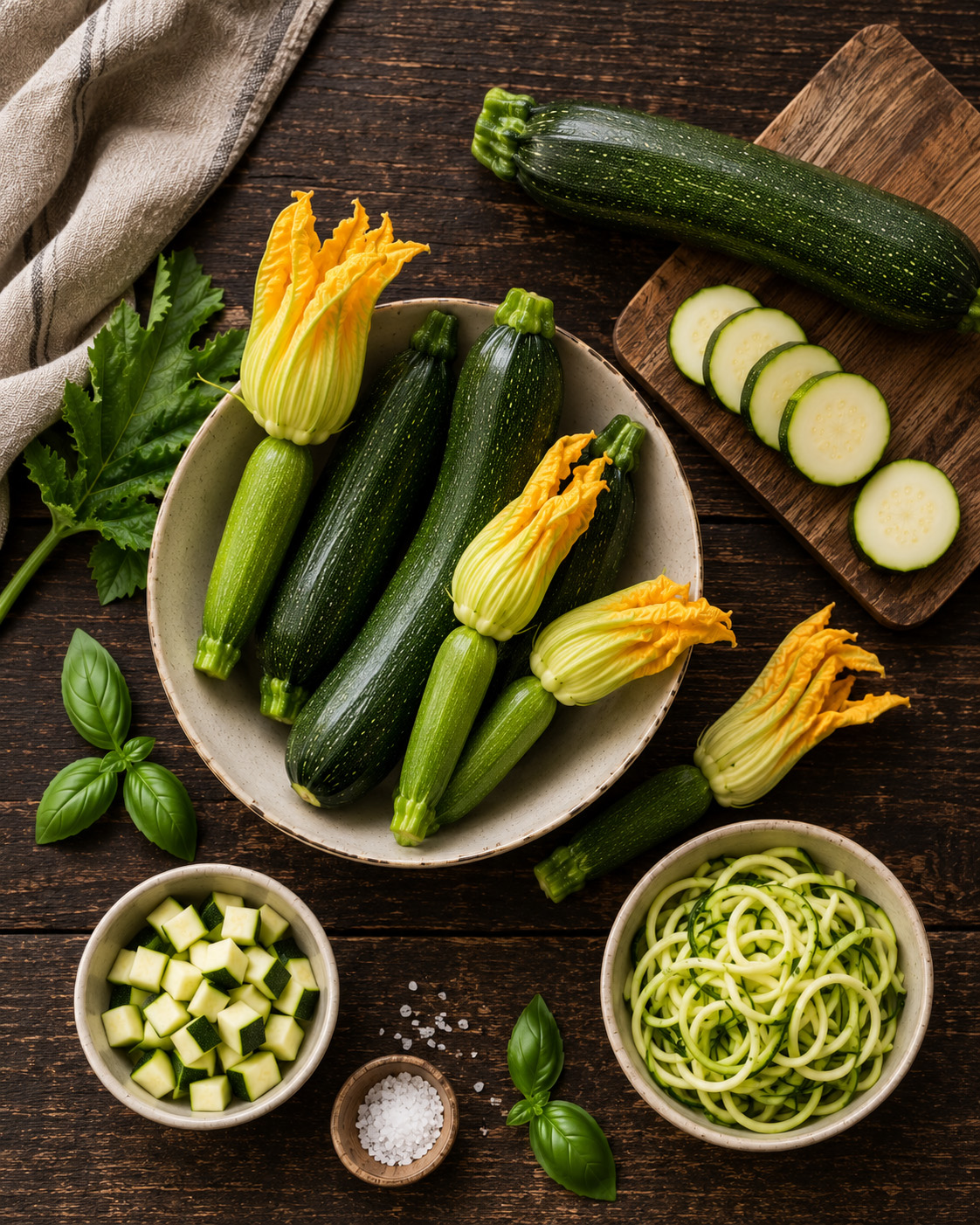
Begin by washing and drying the zucchini. Trim the stem and blossom ends, then cut it according to your recipe.
Common cuts include:
- Rounds: Sautéing, roasting, casseroles, and layered dishes
- Half-moons: Skillet meals, soups, and pasta
- Spears or planks: Grilling and roasting
- Cubes: Soups, frittatas, sauces, and sheet-pan meals
- Ribbons: Raw salads and light summer sides
- Shreds: Bread, muffins, and fritters
- Boats: Stuffing and baking
Keep the pieces similar in size so they cook evenly.
Why Does Zucchini Become Watery?
Zucchini naturally contains a great deal of water. As it cooks, some of that moisture moves into the pan, batter, or finished dish.
To encourage browning, use a wide pan and cook over medium-high heat. Leave space between the pieces and cook in batches when necessary. An overcrowded pan traps steam and can leave zucchini pale and soft.
For roasting, arrange the zucchini in a single layer and use only enough olive oil to coat it lightly.
Zucchini noodles need especially brief cooking. Remove them from the heat while they still have some structure.
Should You Salt Zucchini Before Cooking?
It depends on what you are making.
Salting sliced or shredded zucchini draws out moisture. This is helpful for fritters, savory pies, and casseroles where extra liquid could make the finished dish soggy.
Place the zucchini in a colander, sprinkle it lightly with salt, and let it rest for 10 to 20 minutes. Blot sliced zucchini or gently squeeze the moisture from shredded zucchini.
For quick sautéing or roasting, you usually do not need to salt it in advance. Season shortly before cooking and use enough heat to encourage browning.
Should You Squeeze Zucchini for Bread?
Follow the individual recipe.
Some zucchini bread recipes rely on the vegetable’s full moisture. Squeezing it too thoroughly could produce a dry loaf. Other recipes are formulated for drained zucchini and may become heavy or gummy if too much liquid remains.
There is no universal rule because the answer depends on the full recipe formula. For my Zucchini Garden Bread, prepare the shredded zucchini exactly as instructed for the proper balance of moisture and tenderness.
What Are Zucchini Blossoms?
Zucchini blossoms are the edible flowers produced by the plant. They have delicate petals and a mild squash flavor.
Female blossoms grow from the small developing zucchini. Male blossoms grow on long, slender stems. Both are edible, but harvesting a female blossom also removes the potential zucchini attached to it. Gardeners commonly harvest some male blossoms while leaving enough flowers for pollination.
Blossoms are highly perishable. Store them unwashed in the refrigerator between paper towels and use them the same day whenever possible.
They can be stuffed, fried, baked, torn over pizza, folded into eggs, or added to pasta. My Stuffed Zucchini Blossoms with Anchovies celebrates them with a traditional Italian-inspired preparation.
How to Reduce Zucchini Waste
A little planning can turn one basket into several different meals:
- Use the smallest zucchini raw or lightly sautéed.
- Grill or roast medium zucchini for sides, salads, and sandwiches.
- Add diced zucchini to eggs, pasta, soups, and grain bowls.
- Shred large zucchini for bread, muffins, or fritters.
- Freeze extra zucchini using a tested preservation method.
- Share garden extras while they are still firm and fresh.
A zucchini that is too large for one dish may be exactly right for another.
Put these lessons into practice with my Lemon Ricotta Zoodles with Fresh Herbs, explore the full Ingredient of the Month archive, continue through The Seasonal Pantry, or browse the Recipe Box for more seasonal recipes.
Frequently Asked Questions
Is zucchini a fruit or a vegetable?
Botanically, zucchini is a fruit. In the kitchen, it is generally prepared and served as a vegetable.
Can you eat zucchini raw?
Yes. Small, fresh zucchini can be sliced thinly or shaved into ribbons for salads and other uncooked dishes.
Can you eat zucchini skin and seeds?
Yes. The skin and small seeds of young zucchini are edible. Oversized zucchini may have tougher skin and more developed seeds that are better removed.
Why is my cooked zucchini mushy?
Zucchini becomes mushy when it is overcooked or crowded in the pan. Use higher heat, leave space between the pieces, and cook it only until tender.
How long does zucchini last in the refrigerator?
For the best quality, use refrigerated zucchini within four or five days. A very fresh zucchini may remain usable for up to a week if stored dry and free from spoilage.
Bringing Zucchini to the Table
Zucchini is not a complicated ingredient, but it rewards attention.
Choose it while it is firm. Match its size to the recipe. Give it room to brown. Respect the moisture it carries. Most importantly, use it while it still tastes like the garden.
Once you understand those foundations, zucchini becomes much more than the vegetable everyone is trying to give away in August. It becomes breakfast, supper, bread, a simple seasonal side, or a platter of delicate stuffed blossoms carried to the table.
Continue with Zucchini: One Ingredient, Many Possibilities to discover practical ways to use every shape and size throughout the season.


