


Learn how the most common types of oats differ, which oats work best for cooking and baking, and how to store them for a useful, dependable pantry.
September 1, 2026
Oats 101: Types of Oats, Storage, and Everyday Uses

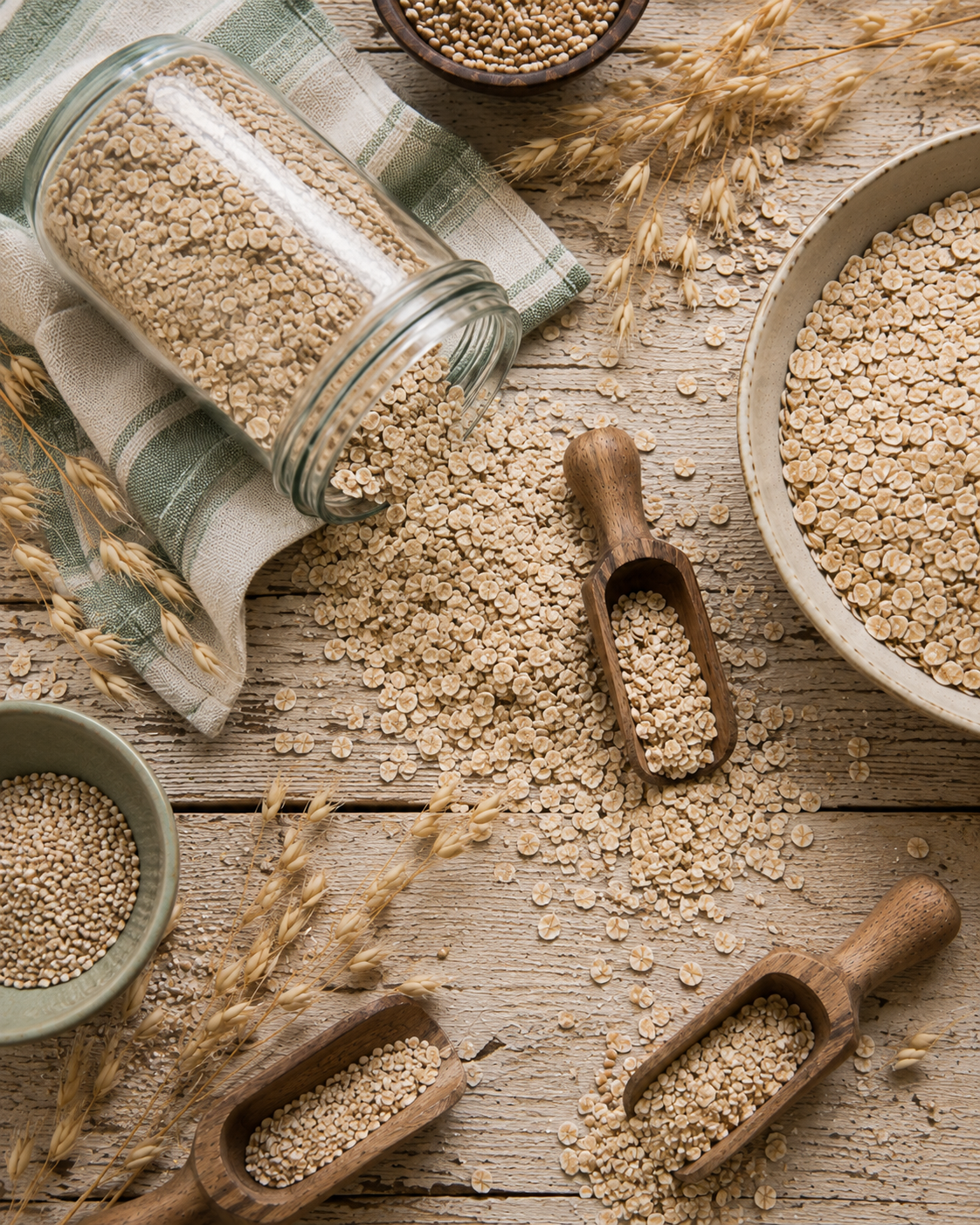
Ingredient of the Month: Oats
Part of September Ingredient of the Month Series
Part 2 • One Ingredient, Many Possibilities
A jar of oats may look simple on the pantry shelf, but it holds the promise of many good meals.
Yet this humble grain can become a warm breakfast, crisp granola, a tender apple bake, a batch of cookies, or a savory grain bowl.
Most packages begin with the same oat groat, but cutting, steaming, rolling, grinding, and precooking change the texture, absorption, and cooking time.
Once you understand those differences, it becomes much easier to choose the right oats, store them well, and make substitutions without losing the result you intended.
This Oats 101 guide covers the most common types of oats, how they cook, and the everyday pantry habits that help one dependable ingredient work a little harder.
What Are Oats?
Oats are cereal grains harvested from the oat plant. After cleaning, the tough outer hull is removed, leaving the edible oat groat. That groat contains the bran, germ, and endosperm.
Most grocery-store oats begin with this same whole groat. Chopping, steaming, rolling, grinding, or precooking changes the way the oats absorb liquid and behave in a recipe.
As a general rule, larger and more intact pieces take longer to cook and retain a chewier texture. Oats that are cut smaller or rolled thinner absorb liquid faster and create a softer texture.
The Most Common Types of Oats
Oat Groats
Oat groats are the most intact edible form. They are firm, nutty, and chewy, with a cooking time closer to brown rice than everyday oatmeal.
Use cooked groats in grain bowls, soups, stuffing, pilaf-style sides, and salads where you want the oats to hold their shape.
Steel-Cut Oats
Steel-cut oats are groats chopped into smaller pieces with steel blades. You may also see them labeled Irish oats. They soften as they simmer but retain more texture than rolled oats.
Their chew suits both breakfast porridge and savory bowls. They need more liquid and time than rolled oats, so the two are not automatic substitutes.
Old-Fashioned Rolled Oats
Old-fashioned oats are steamed groats rolled into flakes. They absorb liquid quickly while keeping enough structure for granola, baking, cookies, and fruit crisps.
If you want to keep only one type in your pantry, rolled oats are usually the most flexible choice. They move easily between cooking and baking without asking for much shelf space.
Quick and Instant Oats
Quick oats are rolled thinner and often cut smaller. They soften quickly and blend into recipes where distinct flakes are not essential.
Instant oats are generally precooked, dried, and made into very thin pieces. They are convenient for fast breakfasts but usually lack the structure needed for granola or a crisp topping. Flavored packets may also contain sweeteners, salt, or other ingredients, so read the label when you want plain oats.
Oat Flour and Oat Bran
Oat flour is finely ground oats. It adds mild sweetness and tenderness to baking. Homemade oat flour works well for small batches but may be coarser than commercial flour.
Oat bran is the fiber-rich outer portion of the groat separated during milling. It is useful in hot cereal and baking, but it is not interchangeable with rolled oats or oat flour. Each form absorbs liquid and builds texture differently.
Rolled Oats vs. Steel-Cut Oats
Rolled and steel-cut oats begin with the same groat, yet their shapes lead to very different results. Rolled oats are steamed and flattened, so they cook quickly and become creamy while leaving visible flakes. Steel-cut oats remain in thicker pieces, giving the finished bowl a firmer, chewier texture.
In baking, steel-cut oats cannot simply replace rolled oats. They need more time and liquid, while rolled oats cook faster and lose the intended chew in steel-cut preparations.
When a recipe specifies a particular type, use that type for the first test. Once you understand the intended texture, you can make changes with greater confidence.
Are Oats Gluten-Free?
Pure oats do not contain the gluten proteins found in wheat, rye, and barley. However, cross-contact can happen during growing, harvesting, transportation, storage, or processing.
If you need to avoid gluten for celiac disease or another medical reason, choose oats specifically labeled gluten-free. Under FDA rules, foods carrying that label must contain less than 20 parts per million of gluten. Third-party certification may offer an additional layer of oversight, but it is not required for an FDA-compliant gluten-free label.
Follow your healthcare professional’s guidance when oats are part of a medically necessary gluten-free diet.
How to Choose Oats at the Grocery Store
Begin with the way you actually cook. Choose rolled oats for the greatest everyday flexibility. Choose steel-cut oats if you enjoy a chewier porridge or want to explore savory grain bowls. Quick oats are useful when speed or a softer texture matters.
For plain oats, I look for a short ingredient list with oats as the only ingredient. The package should be dry and intact, and the oats should smell mild or faintly sweet rather than musty.
Start with one dependable type and add another only when it serves a recipe you make regularly.
How to Store Oats
Natural oils in oats can eventually develop stale or rancid flavors. Transfer opened oats to a tightly covered container and keep them in a cool, dark, dry cupboard away from heat and moisture.
In a hot kitchen, refrigerate or freeze well-packaged oats for longer storage. Let a chilled container warm before opening to reduce condensation.
Use your senses before cooking. Fresh oats should smell clean and mildly nutty. Discard them if they smell musty, sour, or like old cooking oil. A noticeably bitter flavor can also indicate rancidity. Moisture, insects, or visible mold are signs the oats should not be used.
A Simple Foundation for Cooking Oats
Liquid needs vary by oat type, brand, and preferred texture, so package directions are the best starting point. Rolled oats often use about two parts liquid to one part oats, while steel-cut oats generally need more liquid and a longer simmer.
Water keeps the flavor clean. Milk adds richness, and a combination of the two gives you a little of both. A small pinch of salt brings forward the oats’ naturally nutty flavor.
Oats do not need to stay sweet. Broth, mushrooms, greens, herbs, eggs, aged cheese, olive oil, and roasted vegetables can turn them into a satisfying savory meal.
How to Use Oats Without Wasting Them
Buy the type you use most, store it where you can see it, and label the container. Small amounts of rolled oats can become granola, crumble topping, muffins, cookies, or a binder for savory patties.
Transfer leftover cooked oatmeal to a shallow, covered container and refrigerate it within two hours. Use it within three to four days or freeze it for longer storage.
Once safely chilled, leftover oatmeal can be folded into pancakes, waffles, muffins, or oat cakes. Understanding the ingredient gives one container more than one purpose, making the pantry useful rather than crowded.
Frequently Asked Questions
Are old-fashioned oats and rolled oats the same?
Yes. Old-fashioned oats are rolled oats made by steaming oat groats and flattening them into flakes. The name distinguishes them from thinner quick-cooking or instant oats.
Can I use quick oats instead of rolled oats?
Sometimes, but expect a softer and less textured result. Quick oats absorb moisture faster, so they can change the spread, tenderness, or structure of baked goods. Use the type named in the recipe when texture matters.
Can I make oat flour from rolled oats?
Yes. Blend rolled oats until they become a fine powder. Homemade oat flour can be slightly coarser than commercial flour, so weigh it and use it in recipes developed for oat flour whenever possible.
How can I tell whether oats have gone bad?
Smell them before use. Oats that smell musty, sour, or like old oil may be stale or rancid. A noticeably bitter flavor can also indicate rancidity. Discard oats with moisture damage, insects, or visible mold.
Do I need several kinds of oats?
No. Rolled oats cover the widest range of everyday cooking and baking. Add steel-cut oats, oat flour, or another form only when it supports something you make often.
Bringing Oats to the Table
Oats are not a complicated ingredient, but the form you choose matters.
Keep rolled oats for everyday flexibility. Reach for steel-cut oats when texture matters. Use oat flour when a recipe needs its soft, tender character.
Once you understand those foundations, oats become much more than a morning bowl. They can be creamy or chewy, toasted until crisp, folded into bread, baked into cookies, or simmered with savory ingredients and carried to the table for supper.
Continue with Oats: One Ingredient, Many Possibilities, Part 2 of this Pantry Foundations series. We will take this dependable grain beyond breakfast and explore how it can move through baking, dinner, and the little extras that make a pantry work harder.


