


Discover the many ways to cook with fresh zucchini, from savory dinners and homemade breads to sweet treats and simple summer sides. One ingredient, endless possibilities.
August 6, 2026
Zucchini: One Ingredient, Many Possibilities

Ingredient of the Month: Zucchini
Part of August Ingredient of the Month Series
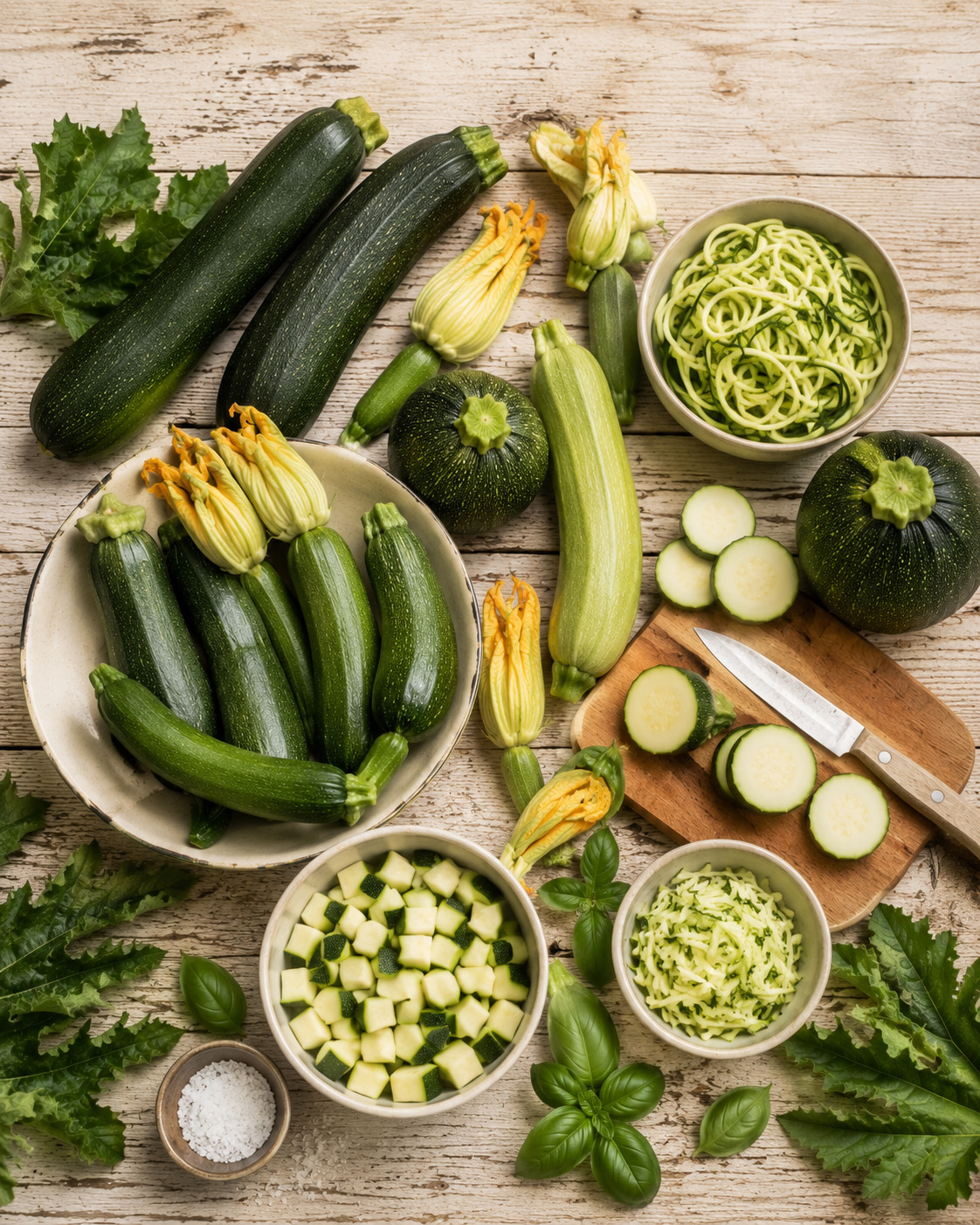
Zucchini has a habit of arriving all at once. A few small squash become a basketful, and suddenly they are lined up on the counter waiting for a plan.
Fortunately, zucchini does not ask us to make the same dish again and again. Its mild flavor and tender texture allow it to move easily from fresh summer salads to pasta, eggs, simple side dishes, and baking. You can grill it for dinner, fold the leftovers into a frittata the next morning, and shred the largest zucchini into a loaf of bread.
This kind of flexibility is at the heart of a well-used pantry. When we understand what an ingredient can do, we rely less on rigid meal plans and make better use of what we already have.
In Zucchini 101, we learned how to choose, store, prepare, and cook fresh zucchini. Now let’s explore what we can make with zucchini and the many possibilities tucked inside this humble summer squash.
Start With the Zucchini You Have
Before deciding what to make, look at the size and condition of your zucchini. Each one is naturally suited to certain preparations.
- Small zucchini are firm and tender, with thin skin and barely noticeable seeds. Enjoy them raw or cook them briefly on the grill or in a skillet.
- Medium zucchini are the most versatile. They can be sliced, diced, spiralized, shredded, or hollowed out for stuffing. They work beautifully in pasta, frittatas, soups, fritters, quick breads, and muffins.
- Oversized zucchini often have firmer skin, larger seeds, and more fibrous or watery flesh. Remove the tough skin and seedy center if needed, then shred or chop the remaining flesh for bread, muffins, fritters, soups, or sauces.
Fresh and Raw Zucchini
Young zucchini has a mild, fresh flavor that works well in raw preparations. The key is to slice it thinly so it remains delicate rather than crunchy or cumbersome.
Use a vegetable peeler or mandoline to create long ribbons. Dress them lightly with olive oil, lemon juice, sea salt, and black pepper. Add shaved Parmesan, fresh herbs, toasted nuts, or torn mozzarella for a simple summer salad.
Thin zucchini rounds can also be layered onto crostini, tucked into sandwiches, or added to a garden salad. Spiralized zucchini can be served raw or warmed just enough to soften slightly.
Salt and acid draw water from zucchini, so dress raw preparations shortly before serving. This helps the zucchini maintain its texture and prevents liquid from collecting at the bottom of the bowl.
Some of my favorite zucchini pairings include:
- Basil, parsley, or dill
- Lemon, garlic, or red wine vinegar
- Ricotta, mozzarella, Parmesan, or Pecorino Romano
- Toasted almonds, walnuts, or pine nuts
These simple combinations allow you to change the character of the dish without changing the main ingredient.
Sautéed Zucchini for Everyday Meals
A skillet is one of the quickest ways to turn zucchini into a simple side dish or the beginning of a meal.
Cut the zucchini into rounds, half-moons, or bite-sized pieces. Heat olive oil in a wide skillet and arrange the zucchini in a single layer. Let it develop a little color before stirring.
Finish it with garlic, lemon zest, fresh herbs, grated cheese, or a spoonful of pesto. Once cooked, it can be added to pasta, risotto, eggs, grain bowls, warm salads, or crostini.
For a simple Mediterranean-inspired variation, sauté zucchini in olive oil and finish it with basil, crushed red pepper, and Pecorino Romano.
Make a little extra. Tonight’s side dish can become tomorrow morning’s frittata.
Roasted or Grilled Zucchini
Roasting concentrates zucchini’s gentle flavor and creates browned edges. Cut it into thick rounds, spears, or chunks, then toss it lightly with olive oil and seasonings. Arrange the pieces in a single layer with space between them so they roast instead of steam.
Use roasted zucchini in:
- Pasta salads or grain bowls
- Sandwiches and flatbreads
- Frittatas and savory egg dishes
- Puréed soups or simple vegetable sauces
Grilling adds smoky flavor and caramelized edges. Cut zucchini lengthwise into sturdy planks or spears, brush them lightly with oil, and cook until marked and tender but not limp.
Serve grilled zucchini warm or at room temperature with burrata, mozzarella, pesto, or herb vinaigrette. For an easy summer meal, pair it with ripe tomatoes, fresh mozzarella, basil, olive oil, and a loaf of good bread.
Zucchini With Pasta
Zucchini and pasta belong together as it adds freshness and texture without overpowering the sauce.
Toss sautéed zucchini with short pasta, garlic, olive oil, herbs, and grated cheese. Thin slices can soften into the sauce, while browned pieces provide more texture.
For a creamier pasta, pair zucchini with ricotta, Parmesan, or a small amount of cream. Lemon zest and fresh herbs keep the finished dish bright.
Zucchini also works well with cherry tomatoes, mushrooms, sausage, pancetta, shrimp, or cannellini beans.
You can also replace some or all of the pasta with spiralized zucchini. Lemon Ricotta Zoodles offer a lighter way to use a generous amount of zucchini while keeping the flavors fresh and simple.
Zucchini noodles need only brief cooking. Too much time in the pan encourages them to release water and lose their structure.
Zucchini in Eggs and Savory Dishes
Eggs give leftover zucchini a second life. Fold sautéed or roasted zucchini into scrambled eggs, omelets, frittatas, or breakfast casseroles.
A Zucchini Garden Frittata is especially useful because it welcomes what is already available. A few vegetables, a handful of herbs, and a little cheese can become a complete meal.
Cook raw zucchini before adding it to an egg mixture so excess moisture can evaporate. This helps prevent a watery frittata.
Shredded zucchini also works beautifully in fritters, savory pancakes, vegetable patties, meatballs, burgers, soups, and pasta sauces. It adds tenderness to meatballs and can help stretch a smaller amount of meat across more servings.
For crisp fritters, lightly salt the shredded zucchini, let it rest, and squeeze it thoroughly before combining it with the remaining ingredients.
Stuffed Zucchini for a Complete Meal
Medium and large zucchini can become edible vessels for a filling meal.
Slice them lengthwise and scoop out part of the center, leaving enough flesh to support the filling. Chop the removed zucchini and add it back to the mixture.
Fill your zucchini with combinations such as:
- Sausage, tomatoes, herbs, and breadcrumbs
- Ground beef, rice, and Parmesan
- Cannellini beans, greens, and mozzarella
- Ricotta, spinach, and lemon
Stuffed zucchini is a natural clean-out-the-pantry meal. Small amounts of cooked grains, vegetables, cheese, herbs, or meat can come together without feeling like leftovers.
Avoid overly wet fillings. Zucchini releases moisture while it bakes, so thick sauces and well-drained ingredients work best.
Zucchini in Bread, Muffins, and Cakes
Zucchini’s moisture makes it a natural ingredient for baking. Its flavor remains subtle while helping create a soft, tender crumb.
Use shredded zucchini in quick breads, muffins, chocolate cakes, pancakes, or waffles. It pairs naturally with cinnamon, vanilla, lemon, chocolate, nuts, and dried fruit.
A Zucchini Garden Bread can be served for breakfast, tucked into a lunchbox, or as an afternoon snack. It is also a dependable use for large zucchini that are no longer tender enough for raw salads or quick cooking.
Do Not Forget the Blossoms
Zucchini blossoms may be delicate, but they are one of the loveliest parts of the summer harvest.
Stuff them with ricotta, mozzarella, herbs, or anchovies. Dip them in a light batter and fry them until crisp. Unfilled blossoms can also be torn over pizza, added to pasta, or folded gently into eggs.
Stuffed Zucchini Blossoms with Anchovies celebrates this brief seasonal ingredient with a traditional Italian-inspired preparation.
Harvest or purchase blossoms as close to cooking as possible. Use them the same day when you can, since they wilt quickly.
Frequently Asked Questions
Do you need to peel zucchini?
Small and medium zucchini usually have tender, edible skin and do not need peeling. Oversized zucchini may develop tougher skin, which can be removed before shredding or cooking.
Can you eat zucchini raw?
Yes. Young, tender zucchini can be eaten raw. Slice it thinly into ribbons or rounds and dress it shortly before serving to help maintain its fresh texture.
How do you keep zucchini from becoming watery?
Avoid overcrowding the pan, give roasted pieces plenty of space, and cook zucchini noodles only briefly. For fritters, salt shredded zucchini, let it rest, and squeeze out the excess moisture.
Around my Table
One of the things I love most about zucchini is that it never asks to be the center of attention. Instead, it quietly adapts to whatever the season calls for adding freshness to a simple pasta, moisture to homemade bread, color to a summer salad, or comfort to a warm skillet dinner. It’s a reminder that some of the most dependable ingredients are often the most versatile.
I hope this guide inspires you to look at zucchini with fresh eyes and discover new ways to enjoy it throughout the season. Whether your zucchini comes from your own garden, a local farmers’ market, or the grocery store, there’s always another delicious recipe waiting to be made.
If you’re just getting started, be sure to read Zucchini 101: Summer Harvest to learn how to choose, store, and prepare zucchini, then visit my Recipe Box for even more seasonal recipes that celebrate one of summer’s most generous vegetables


