


A simple guide to fresh, canned, jarred, and sun-dried tomatoes, including how to choose the right type, store them well, and use them with confidence in everyday cooking.
July 9, 2026
Tomatoes 101: A Simple Guide to Fresh, Canned, Jarred & Sun-Dried Tomatoes

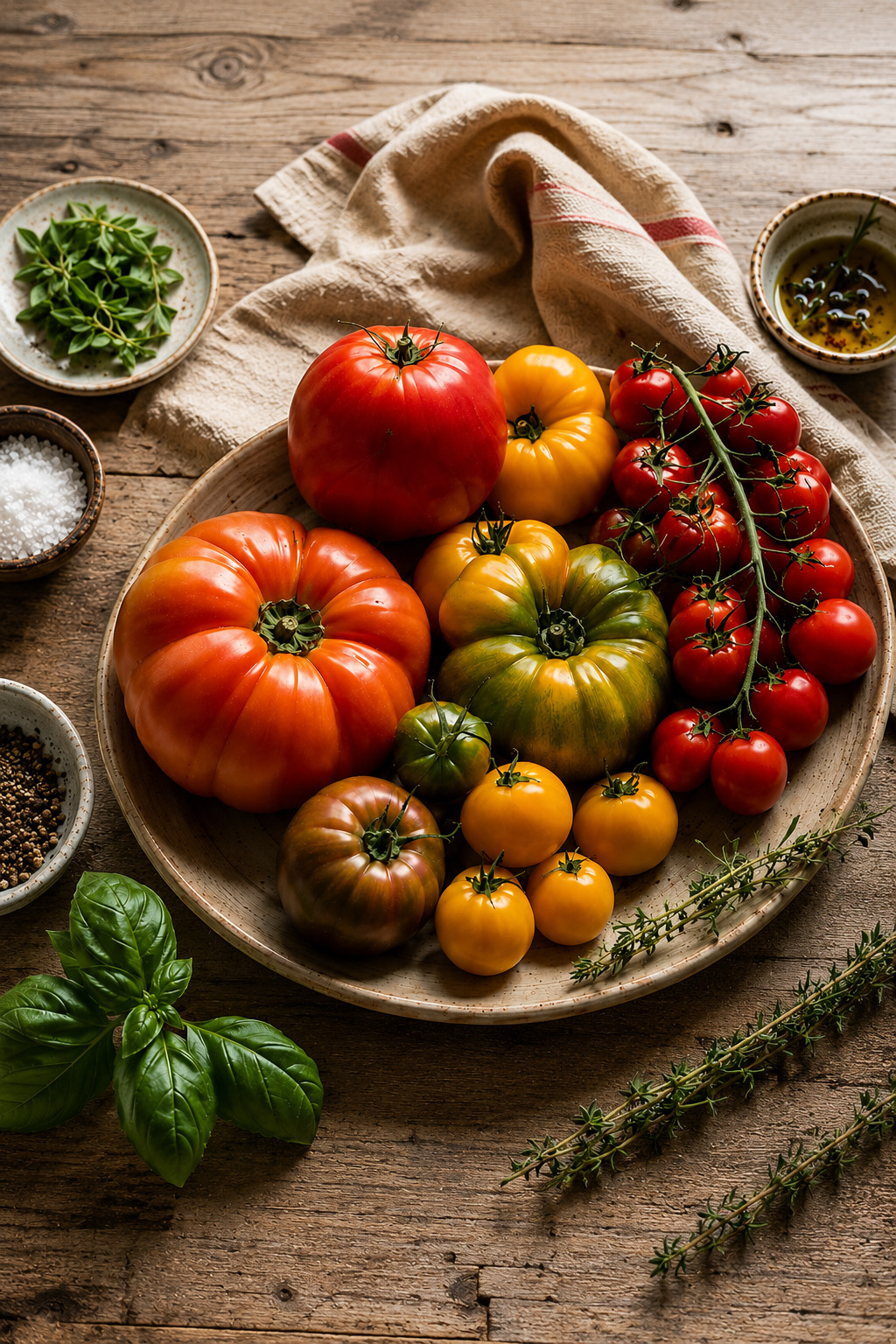
Ingredient of the Month: Tomatoes
Part of July Ingredient of the Month Series
Part 2 • One Ingredient, Many Possibilities
Tomatoes are one of the most versatile ingredients you can keep in your kitchen. From juicy summer ones to canned, jarred, and sun-dried varieties, each brings something different to the table.
There’s something unforgettable about slicing into a ripe summer tomato still warm from the sun. Add a sprinkle of flaky salt or fresh-cracked pepper and suddenly it brings me right back to my grandpa’s garden when I was a kid.
Long after the vines have faded, tomatoes continue to earn their place in the kitchen. Whole peeled tomatoes become slow-simmered sauces. Passata creates silky soups. Tomato paste adds richness to stews, and sun-dried tomatoes bring concentrated flavor to everything from pasta to salads.
The challenge isn’t whether to cook with tomatoes, it’s knowing which one to reach for.
Should you choose whole peeled or crushed? When does passata make more sense than tomato sauce? Is paste really necessary? And what should you do with fresh tomatoes once they start softening on the counter?
By understanding the different forms of tomatoes, you’ll waste less, stock your pantry with confidence, and know which tomato to reach for when you cook.
In this guide, we’ll explore fresh, canned, jarred, and sun-dried tomatoes
What Are Tomatoes?
In the kitchen, tomatoes are usually treated like vegetables because of their savory flavor. Botanically, they are fruits because they develop from the flower of the plant and contain seeds.
They belong to the nightshade family, alongside peppers, potatoes, and eggplants.
Today, you’ll find them fresh from the garden, canned for the pantry, concentrated into paste, strained into passata, or preserved as sun-dried pieces. Each one has its own purpose.
Why They Belong in Every Kitchen
This pantry staple brings sweetness, acidity, and savory depth to simple meals. A pot of beans, a pan of pasta, or a tray of roasted vegetables can feel fuller and more satisfying with the right sauce base.
Fresh varieties shine in summer when they are ripe, fragrant, and grown close to home. Canned and jarred options make cozy, homemade meals possible all year long.
They also help reduce food waste. Fruit that is starting to soften can be roasted, blended into soup, simmered into sauce, or frozen for later cooked dishes.
Add Flavor Naturally
They bring a balance of sweetness, acidity, and savory depth.
That combination can make simple ingredients feel fuller and more satisfying. A pot of beans, a pan of pasta, or a tray of roasted vegetables can become something memorable with the right tomato.
Use Year-Round
Fresh shine during the summer, especially when they are ripe, fragrant, and grown close to home.
Canned and jarred make tomato-based meals possible throughout the rest of the year. They bring consistency, convenience, and pantry comfort when fresh tomatoes are not at their best.
Stretch Simple Ingredients
A can of tomatoes, a box of pasta, olive oil, garlic, and a few herbs can quickly become dinner.
Tomatoes are one of those ingredients that make pantry cooking feel generous instead of bare-bones.
Help Reduce Food Waste
Fresh that are starting to soften can be roasted, blended into sauce, or simmered into soup.
With a little flexibility, even imperfect tomatoes can still become something useful and delicious.
The Many Forms of Tomatoes
Understanding each form helps you choose the right one before you start cooking.
Fresh
Fresh varieties are best in summer, when flavor, sweetness, and aroma are at their peak.
Common types include
Common varieties include:
- Cherry
- Grape
- Roma
- Beefsteak
- Heirloom
Use them when you want brightness, freshness, and texture. They work well raw, lightly cooked, roasted, or gently warmed.
Because they contain a lot of water, they can make dishes loose if not handled well. For saucier recipes, simmer them longer to reduce excess liquid. For raw dishes, season with salt and let them sit for a few minutes to draw out their juices and deepen flavor.
Canned Whole
Whole peeled cans give you the most control over texture. You can crush them by hand, chop them, blend them, or let them break down slowly as they cook.
They are especially useful for sauces and soups that need time to simmer.
When I’m making a sauce-based recipe, my pantry often starts with San Marzano whole peeled cans. I pass them through my old-fashioned food mill to remove seeds and tougher bits of pulp, leaving behind a smooth, simple sauce. It’s a technique I learned to love while living in Italy, and it has stayed with me ever since.
Crushed
Crushed varieties are already broken down, which makes them helpful when you want body and convenience.
Use them for sauces, soups, and baked dishes that need a fuller texture from the start. The texture can vary by brand, so check the label or stick with one you trust.
Diced
Diced cans are cut into small pieces and often made to hold their shape. Many brands add calcium chloride, a firming agent that helps the pieces stay intact during canning and cooking.
Use them when you want visible chunks in chili, soup, stew, or baked dishes. They are not the best choice for silky sauces. For a smoother result, reach for whole peeled, crushed, or passata.
And let’s not forget about fire-roasted diced tomatoes. Their lightly charred, smoky flavor adds extra depth to soups, stews, and chilis without much effort. I use them in my Rustic Tomato Basil Soup, where that subtle roasted flavor complements the fresh basil and gives the soup a little more character.
Tomato Sauce
Canned sauce is smooth, convenient, and already processed. In the United States, it is usually cooked and may include salt, garlic, onion, spices, or other seasonings.
Use it when you need a quick, smooth base. Since brands vary, always check the label so the flavor does not overpower your dish.
Tomato Paste
Paste is concentrated flavor in its strongest everyday form. It adds depth, color, sweetness, and richness without adding much liquid.
Use it when a dish tastes flat or needs more body. For the best flavor, cook it in olive oil for a minute or two before adding liquid. This softens the raw edge and brings out deeper flavor.
Small but mighty. A spoonful can do a lot of heavy lifting.
Passata
Passata is made from strained fruit. It is smooth, free from skins and seeds, and often has a clean, bright flavor.
Use it when you want a silky sauce without blending. A bottle of passata, good olive oil, garlic, and fresh herbs can become something beautiful with very little effort.
In Italy, passata became one of the staples I reached for most often. It is simple, dependable, and quietly wonderful.
Sun-Dried Tomatoes
Sun-dried pieces are sweet, chewy, rich, and deeply savory. A little goes a long way.
Use them when you want bold flavor without adding extra liquid.
Dry-packed versions are firmer and often need softening before use. Oil-packed ones are softer and ready to chop, blend, or stir into dishes. The oil can also carry a lot of flavor, so don’t forget about it.
How to Choose Fresh Tomatoes
When shopping for fresh tomatoes, look for fruits that feel heavy for their size and have a pleasant tomato aroma near the stem.
Choose tomatoes that are:
- Firm but not hard
- Smooth-skinned
- Deeply colored
- Fragrant
- Free from large bruises or soft spots
Avoid tomatoes that feel mushy, shriveled, watery, or heavily bruised.
During peak summer season, local tomatoes from farmers markets, farm stands, or the garden often provide the best flavor.
How to Store Tomatoes
Proper storage helps you get the best flavor and texture from both fresh and pantry tomatoes.
Fresh
Store unripe tomatoes at room temperature until fully ripe.
Once ripe, use them within a few days for the best flavor. If tomatoes become very ripe and you cannot use them right away, refrigeration can help slow spoilage.
For the best flavor, let refrigerated tomatoes come back to room temperature before serving.
Canned
Store unopened cans in a cool, dry pantry.
Once opened, transfer leftover canned tomatoes to an airtight container, refrigerate, and use within 5 to 7 days.
Paste
If you only use part of a can of tomato paste, freeze the rest in tablespoon-sized portions.
Once frozen, transfer the portions to a freezer-safe container or bag so you can add tomato paste easily to future soups, sauces, stews, and braises.
Passata
Unopened passata can be stored in the pantry according to the package directions.
After opening, refrigerate it and use it within the timeframe listed on the label, usually within several days.
Sun-Dried Tomatoes
Store unopened sun-dried tomatoes according to the package directions.
Once opened, oil-packed sun-dried tomatoes should usually be refrigerated. Keep them covered in oil and use a clean utensil when removing them from the jar.
Dry-packed sun-dried tomatoes should be stored in an airtight container in a cool, dry place, or refrigerated if the package directs.
Building a Tomato Pantry
If you are stocking a pantry from scratch, tomatoes deserve a permanent place on the shelf.
A well-stocked tomato pantry does not need to be complicated.
Start with:
- Canned whole
- Tomato paste
- Passata
- Sun-dried tomatoes
These four staples can help you create countless meals throughout the year.
As your pantry grows, consider adding crushed tomatoes, diced tomatoes, and tomato sauce.
Having a variety of tomato products on hand means you are never far from a homemade soup, pasta sauce, stew, braise, or quick weeknight dinner.
Simple Ways to Use Tomatoes
This ingredient can be the star of a meal or the quiet thing that brings balance and richness to everything around it.
Try using them in:
- Homemade pasta sauce
- Tomato soup
- Bruschetta
- Pizza sauce
- Garden salads
- Salsa
- Grain bowls
- Shakshuka
- Braised meats
- Roasted vegetable dishes
Fresh varieties bring brightness, juiciness, and texture. Canned and jarred options offer consistency, convenience, and comfort all year long. Both deserve a place in a well-stocked kitchen.
Ready to start cooking? Explore some of my favorite tomato recipes, including Rustic Tomato Basil Soup, Warm Burrata with Burst Cherry Tomatoes, and Sun-Dried Tomato & Basil Farfalle.
Frequently Asked Questions
Still have a few questions? Here are some of the most common ones I hear about cooking with fresh, canned, and jarred tomatoes.
Can I substitute canned tomatoes for fresh tomatoes?
In many cooked recipes, yes. Canned tomatoes often provide excellent flavor and consistency, especially when fresh tomatoes are out of season. For fresh salads, sandwiches, and Caprese, fresh tomatoes are still the better choice.
What is the difference between tomato sauce and passata?
Passata is a smooth strained tomato purée with a clean, bright tomato flavor. In the United States, canned tomato sauce is usually cooked and may include salt, spices, or seasonings. Always check the label because brands vary.
Are San Marzano tomatoes worth buying?
Many cooks love San Marzano tomatoes for sauces because they can be sweet, balanced, and tender. They are not required for a good sauce, though. A high-quality canned tomato you enjoy is usually more important than the name on the label.
What should I do with tomatoes that are getting too soft?
Soft tomatoes are perfect for roasting, blending into soup, simmering into sauce, or freezing for later cooked dishes. As long as they are not moldy, sour-smelling, or slimy, they can still be useful in the kitchen.
Final Thoughts
Tomatoes are one of the most useful ingredients you can keep in both your garden and your pantry.
Fresh ones bring the bright flavors of summer to the table, while canned and jarred options make homemade meals possible throughout the year.
By understanding each form and how to use it, you can cook with more confidence, waste less food, and build a pantry that supports simple, flavorful meals in every season.
Whether you are harvesting from the garden or opening a bottle of passata on a winter evening, this humble ingredient has a beautiful way of making a meal feel like home.


