


Sun-Dried Tomato and Basil Farfalle Pasta

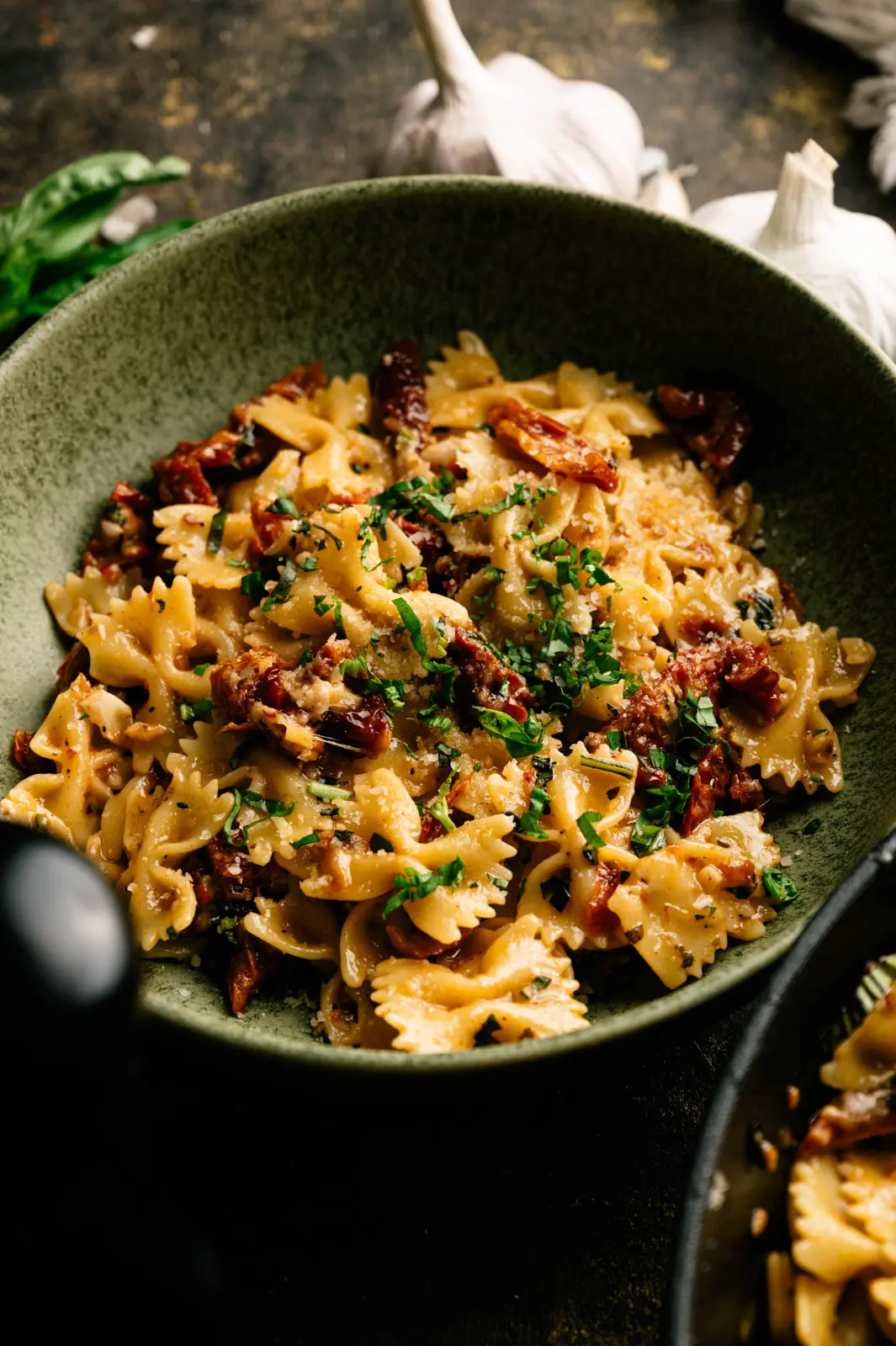
Sun-dried tomato and basil farfalle with garlic and Romano tossed in a silky, cream-free sauce. A simple, flavorful pantry pasta ready in about 30 minutes.
September 10, 2026
This sun-dried tomato and basil farfalle is the kind of pasta I love most: simple ingredients, plenty of flavor, and a beautiful bowl on the table in about 30 minutes. Garlic, Romano, fresh basil, butter, and olive oil come together with a splash of pasta water to create a silky sauce without a drop of cream.
Oil-packed sun-dried tomatoes do most of the heavy lifting here. They bring deep tomato flavor and a little sweetness, while Romano adds a salty, savory finish and fresh basil brightens everything at the end. Toss it all with farfalle and that glossy sauce finds its way into every fold and pinched center.
This is exactly why I love keeping a well-stocked pantry. While the pasta cooks, the garlic warms in the skillet, the tomatoes soften into the butter and olive oil, and there is just enough time to grate the cheese and set the table. Nothing complicated. Just a generous bowl of pasta made with ingredients that know how to work together.
Why You’ll Love This
A few pantry staples, a handful of fresh basil, and about 30 minutes are all you need to bring this one to the table.
- On the table in about 30 minutes. The sauce comes together while the farfalle cooks, making this an easy pasta for any night of the week.
- Rich with sun-dried tomato flavor. Oil-packed sun-dried tomatoes bring deep, concentrated tomato flavor with just the right touch of sweetness.
- Simple ingredients create a silky sauce. A little pasta water brings the butter, olive oil, and Romano together, coating every piece of pasta without the need for cream.
- Farfalle is perfect for the job. Those little folds and pinched centers catch bits of sun-dried tomato, fresh basil, and plenty of that glossy sauce.
- Make it a meal. Bring it to the table with a simple green salad and warm crusty bread, or add chicken, shrimp, or white beans when you want something a little heartier.
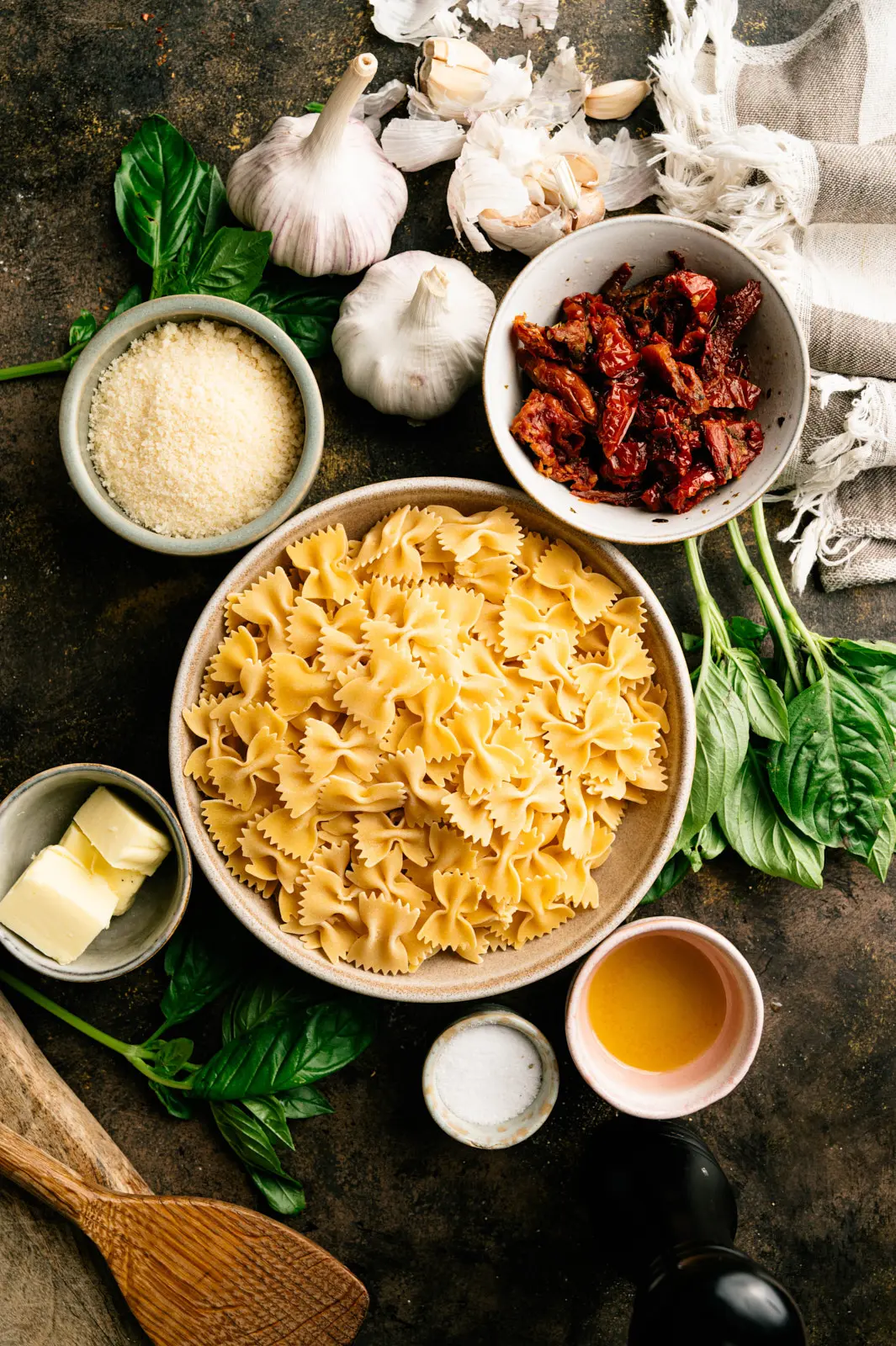
Ingredients You’ll Need
Farfalle Pasta
Farfalle, or bow tie pasta, is made for a sauce like this. The broad edges and pinched centers give the tomatoes, basil, and silky sauce plenty of places to settle. Cook it just until al dente, and be sure to check the thicker center before draining.
No farfalle in the pantry? Penne, fusilli, rigatoni, or orecchiette are all good choices. Look for a short pasta with ridges, curves, or little hollows that can hold onto the sauce.
Oil-Packed Sun-Dried Tomatoes
I prefer oil-packed sun-dried tomatoes here. They are tender, deeply flavored, and ready to go straight from the jar. Drain them well, slice them into bite-size pieces, and let them warm gently in the skillet so that concentrated tomato flavor works its way into the sauce.
And do not toss that flavorful oil from the jar. Save it for a vinaigrette, spoon it over bread, or use it with roasted vegetables. For this pasta, use the extra virgin olive oil listed in the recipe to build the sauce.
Garlic
Give the garlic a little patience. Slice or mince it evenly, then let it warm gently in the butter and olive oil. You want it fragrant and just beginning to turn golden, never deeply browned. That slow, gentle heat softens the sharpness and gives the whole sauce its foundation.
Butter and Extra Virgin Olive Oil
I like using both butter and extra virgin olive oil. The butter brings richness, while the olive oil keeps the sauce flavorful and fluid. A splash of starchy pasta water pulls everything together as you toss. You are looking for a light, glossy coating, not a heavy sauce.
Romano Cheese
Buy Romano in a wedge and grate it fresh if you can. Finely grated cheese melts into the warm pasta much more easily and gives the sauce that salty, savory finish. Romano brings plenty of seasoning on its own, so taste the finished pasta before reaching for more salt.
Fresh Basil
Fresh basil goes in at the very end, when its flavor stays bright and fragrant. Slice it just before you need it, fold it through the warm pasta, and let the heat soften it naturally. I always save a few small leaves for the bowls.
Ingredient Philosophy
Simple pantry meals deserve just as much care as the ones we plan days ahead. When there are only a handful of ingredients in the pan, each one gets a chance to matter. Choose sun-dried tomatoes you enjoy, an olive oil you like to cook with, and a good wedge of Romano to grate fresh.
I use organic ingredients whenever possible, but good cooking also means working with what is available and what fits your kitchen and budget. A jar from the pantry, a little cheese, and a handful of fresh basil can still become something worth gathering around.
That is one of the things I have always loved about Italian and Mediterranean-inspired cooking. It is not about adding more. It is about choosing simple ingredients, treating them well, and letting them become something far greater together.
How to Make Sun-Dried Tomato and Basil Farfalle Pasta
Cook the Farfalle
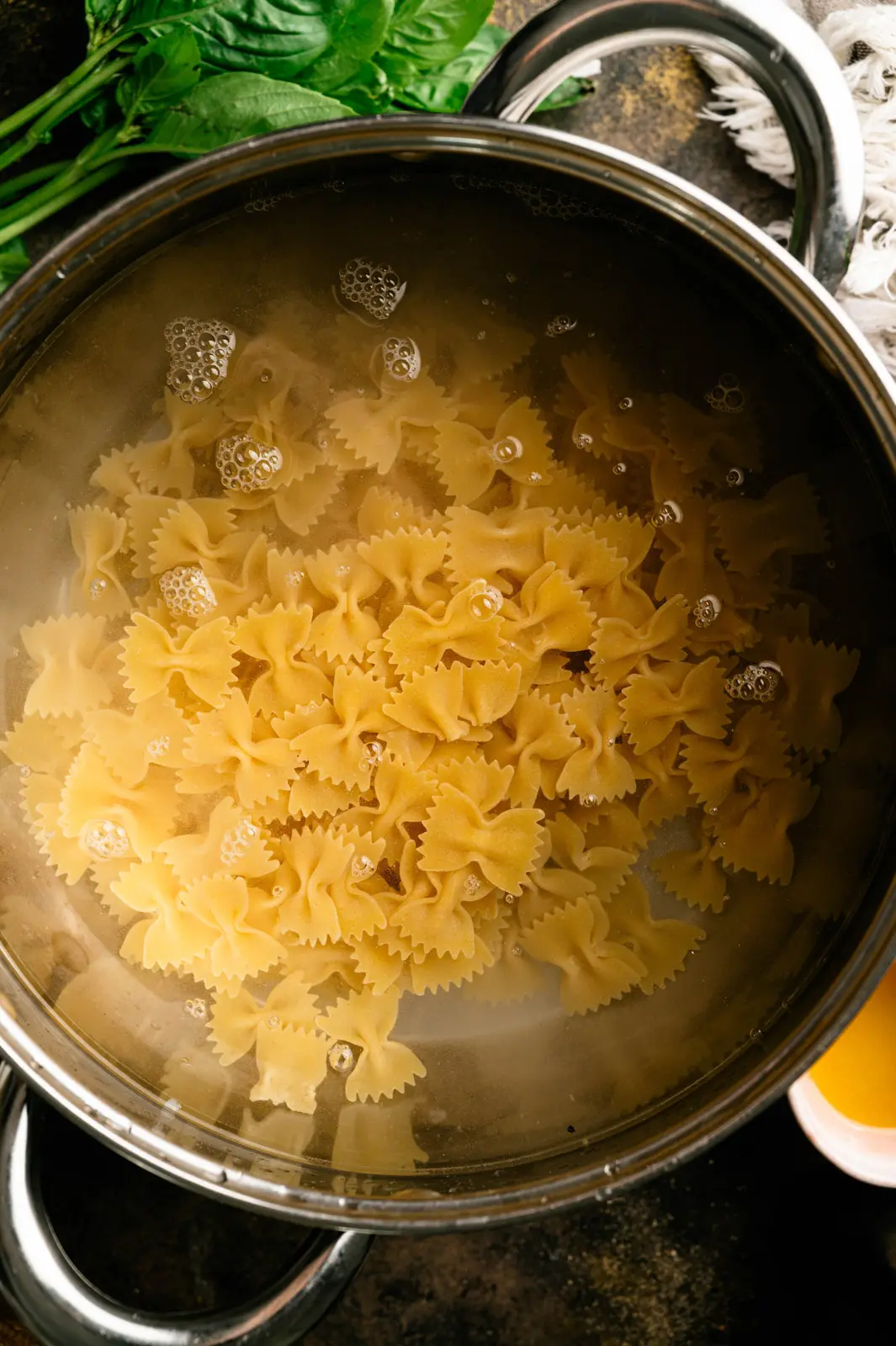
Bring a large pot of generously salted water to a boil and cook the farfalle until al dente. Before you drain it, scoop out at least ½ cup of that starchy pasta water, plus a little extra. It is one of the simplest ingredients in the recipe, but it is what helps turn the butter, olive oil, and Romano into a silky sauce.
Drain the farfalle without rinsing. We want all that lovely surface starch right where it is.
Build the Garlic and Tomato Base
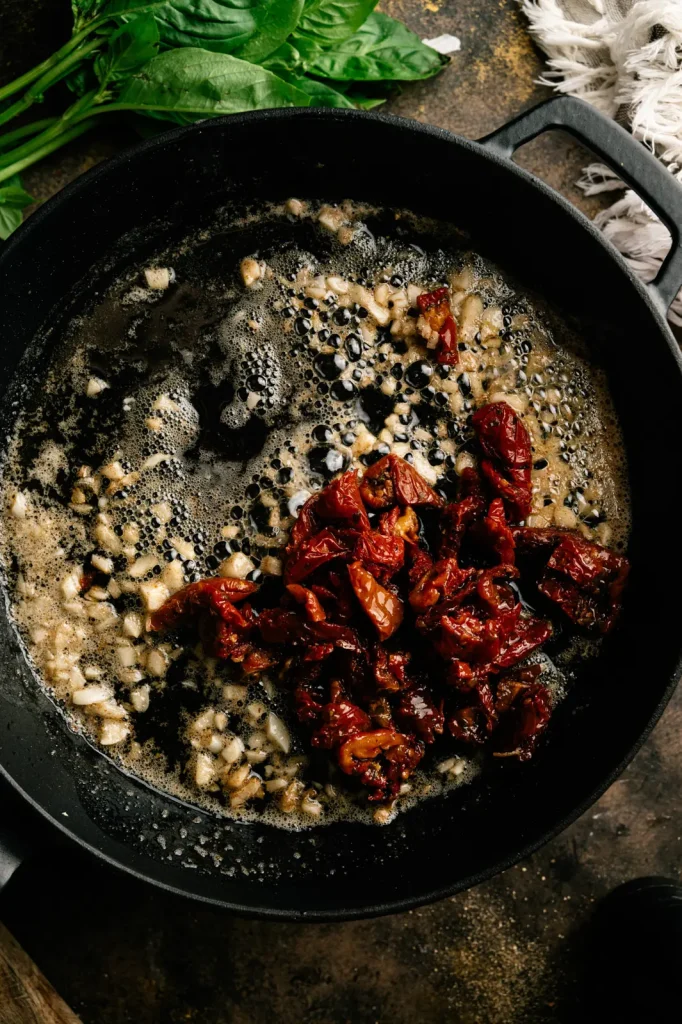
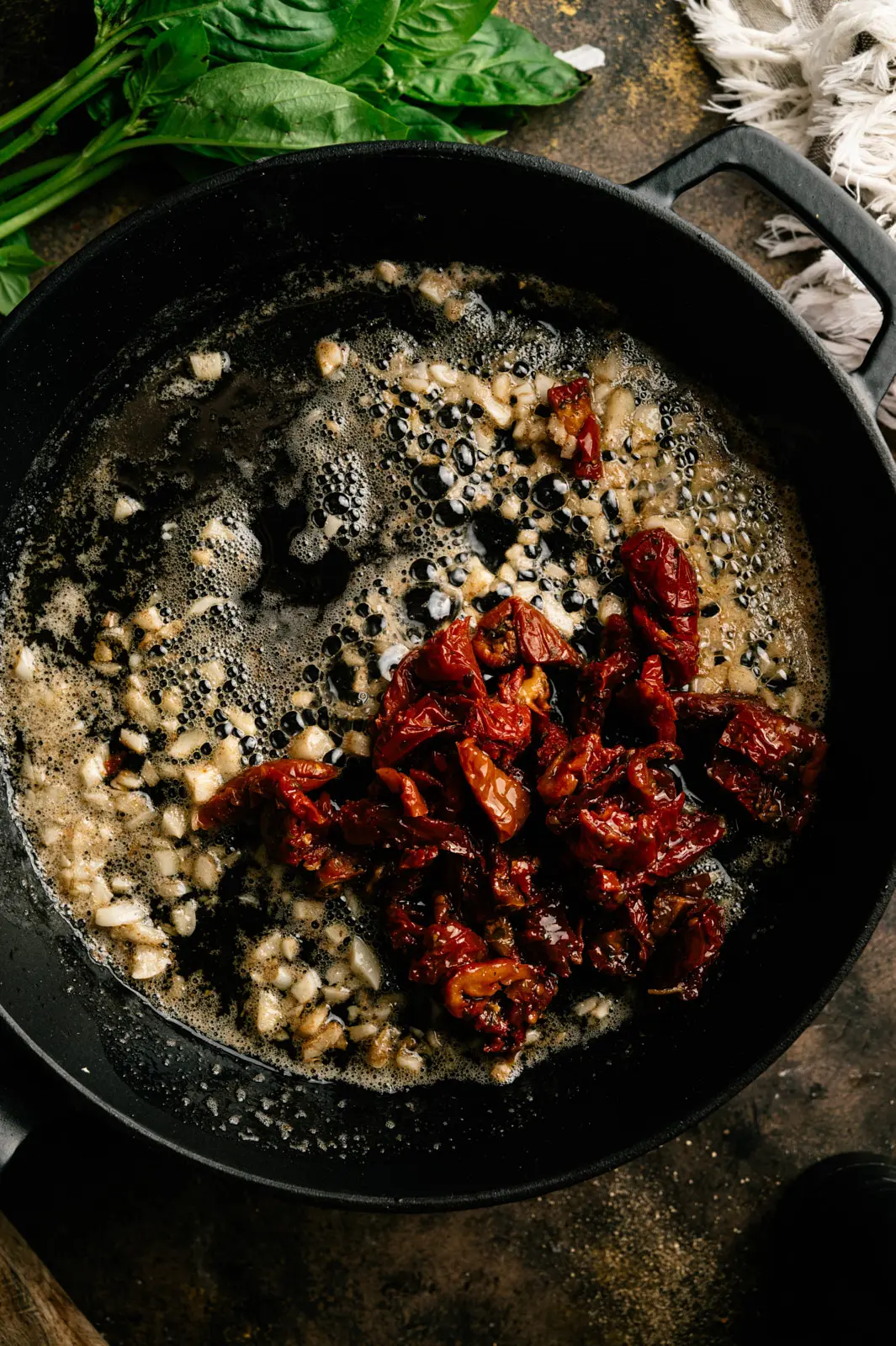
While the pasta bubbles away, warm the olive oil and butter in a large skillet over medium-low heat. Add the garlic and give it 2 to 3 minutes, stirring often. Keep the heat gentle. We are looking for fragrant and barely golden, not browned.
Add the drained sun-dried tomatoes and let them warm for another 2 to 3 minutes. As they soften, their concentrated flavor works its way into the butter and olive oil. This little step gives the sauce so much character.
Finish the Sauce
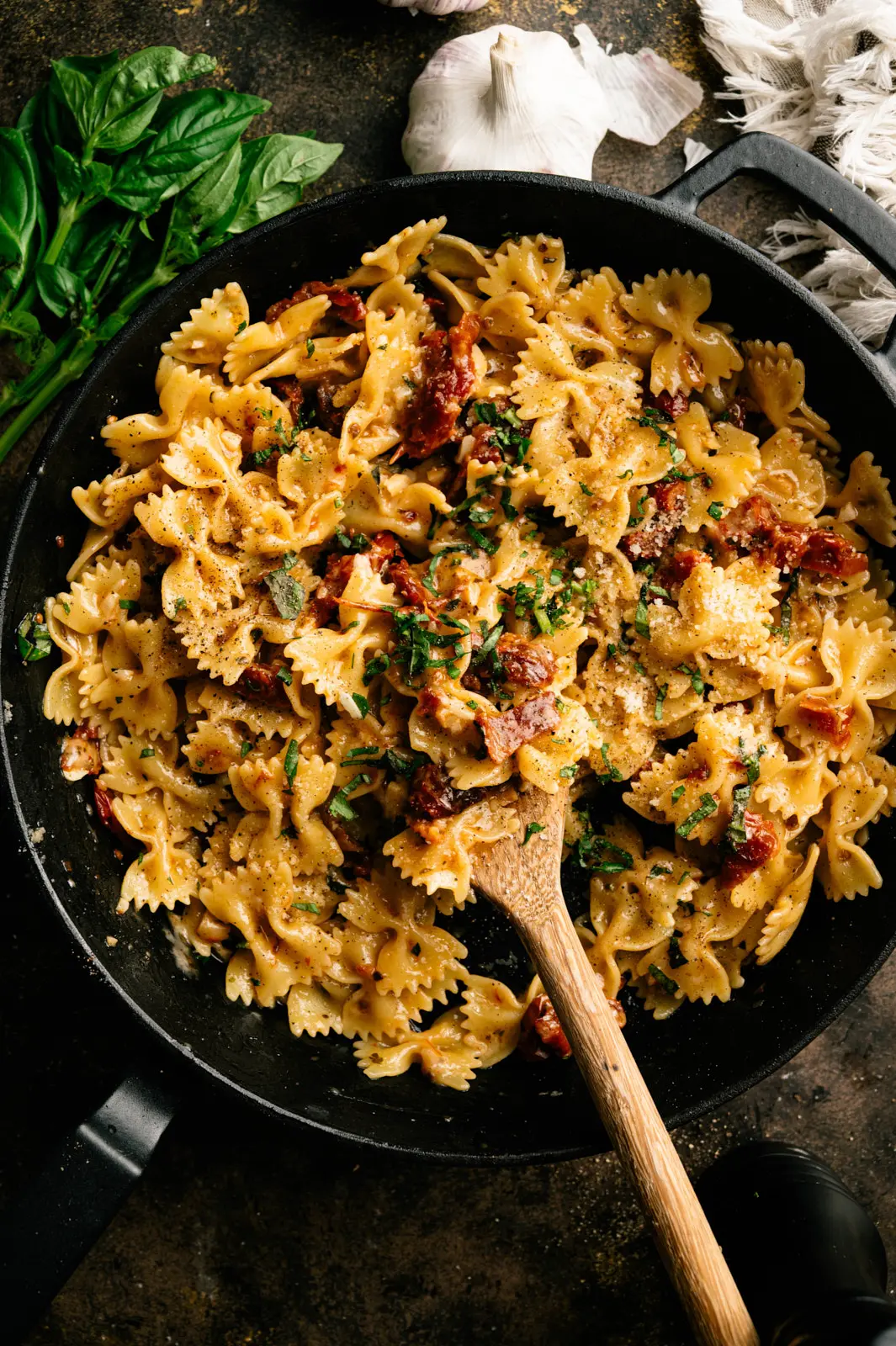
Add the drained farfalle to the skillet along with ½ cup of reserved pasta water. Give everything a good toss, then lower the heat before the Romano goes in.
Add the finely grated Romano a little at a time, tossing as you go. If the sauce starts to tighten, add another splash of pasta water. You will see it change in the pan. The butter, olive oil, cheese, and starchy water come together into a glossy sauce that lightly hugs the farfalle.
Add the Basil and Serve
Turn off the heat and fold in the fresh basil. Taste before adding salt, then finish with freshly cracked black pepper and any additional sea salt it needs.
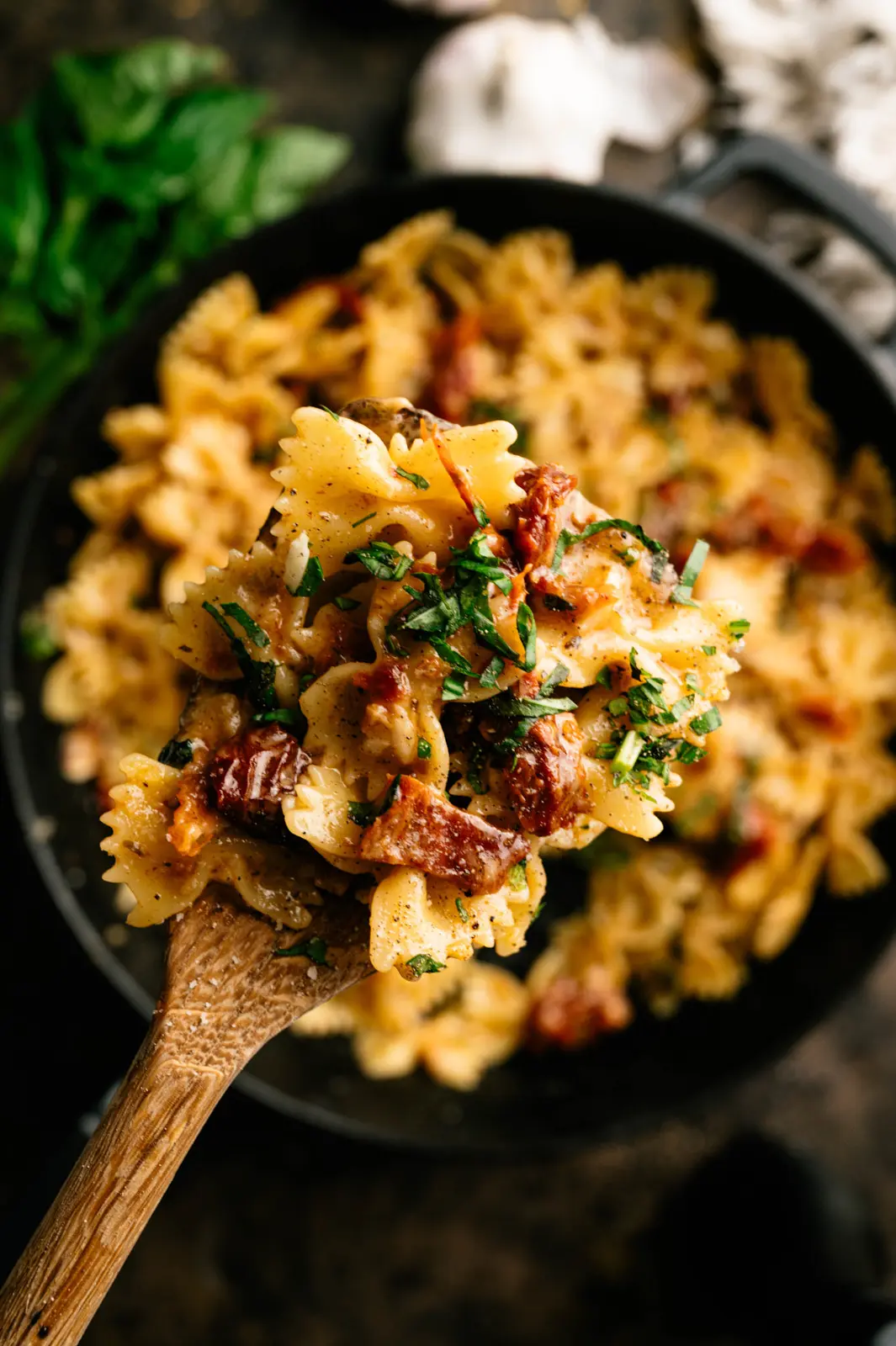
Spoon the pasta into warm bowls while the sauce is still loose and silky. Finish with a little more Romano, a few basil leaves, black pepper, or a drizzle of olive oil. Then bring the whole thing straight to the table.
My Weathered Table Tips
Reserve more pasta water than you think you need. It gives you a little breathing room if the sauce tightens as you toss.
Give the garlic gentle heat. If it starts taking on color too quickly, lower the heat. Soft and fragrant is exactly where we want it.
Add the Romano slowly. Finely grated cheese, low heat, and steady tossing are the little things that make the sauce silky instead of clumpy.
Save the basil for last. Slice it just before adding so it stays fresh, fragrant, and bright.
Taste first, salt second. Romano and sun-dried tomatoes already bring plenty of seasoning to the pan.
Print
Sun-Dried Tomato and Basil Farfalle Pasta
Farfalle tossed with oil-packed sun-dried tomatoes, garlic, fresh basil, and Romano in a silky butter and olive oil sauce. A simple pantry pasta ready in about 30 minutes.
- Total Time30 minutes
- Yield4 to 6 servings 1x
Ingredients
For the Pasta
- 340 g farfalle pasta
For the Sauce
- 28 g extra virgin olive oil
- 56 g unsalted butter
- 18–21 g garlic, thinly sliced or minced
- 225 g oil-packed sun-dried tomatoes, drained and sliced
- 8–10 g fresh basil, thinly sliced
- 75 g freshly grated Romano cheese
- 120 g reserved pasta water
- Fine sea salt, to taste
- Freshly cracked black pepper, to taste
Optional for Serving
- Extra freshly grated Romano
- Fresh basil leaves
- Extra virgin olive oil
- Freshly cracked black pepper
Instructions
- 1. Bring a large pot of generously salted water to a boil.
- 2. Cook the farfalle until al dente according to the package directions.
- 3. Reserve at least ½ cup of pasta water, then drain the pasta without rinsing.
- 4. While the pasta cooks, heat the olive oil and butter in a large skillet over medium-low heat.
- 5. Add the garlic and cook gently for 2–3 minutes, stirring often, until fragrant and lightly golden. Do not allow it to brown.
- 6. Stir in the sun-dried tomatoes and cook for another 2–3 minutes to warm them through and flavor the butter and oil.
- 7. Add the cooked farfalle to the skillet.
- 8. Pour in ½ cup reserved pasta water and toss until the pasta is evenly coated.
- Lower the heat and add the freshly grated Romano gradually, tossing until it incorporates into a silky sauce.
- 10. Add more pasta water, a small splash at a time, if the sauce needs loosening.
- 11. Fold in the fresh basil.
- 12. Taste and season with sea salt and freshly cracked black pepper.
- 13. Divide among serving bowls and finish with additional Romano, basil, black pepper, and olive oil if desired.
Notes
Choose oil-packed sun-dried tomatoes for the softest texture and richest flavor.
Reserve more pasta water than you think you need. A small splash can quickly loosen the sauce.
Keep the skillet over medium-low heat so the garlic becomes sweet and fragrant without browning.
Grate Romano from a wedge. Pre-shredded cheese may not melt as smoothly.
Add the Romano slowly. Finely grated cheese, low heat, and steady tossing are the little things that make the sauce silky instead of clumpy.
Slice the basil at the last moment and add it after the sauce comes together for the freshest aroma.
Taste before adding salt because Romano and sun-dried tomatoes already contribute saltiness.
Serve immediately for the silkiest sauce.
- Prep Time: 10 minutes
- Cook Time: 20 minutes
- Method: Stovetop
- Cuisine: Italian-inspired
Serving Suggestions
- Keep things simple with a crisp green salad dressed with lemon and olive oil.
- Put warm focaccia, ciabatta, or garlic bread on the table for catching every last bit of sauce.
- Add roasted zucchini, peppers, asparagus, or whatever seasonal vegetables look good right now.
- Set out extra Romano, black pepper, and a little bowl of basil and let everyone finish their own bowl at the table.
How to Store and Reheat
Store leftovers in an airtight container in the refrigerator for up to three days. To reheat, add the pasta to a skillet over medium-low heat with a small splash of water and stir gently until warmed through. A little fresh basil and Romano at the end brings it back to life.
The farfalle will continue to absorb the sauce as it sits, so leftovers will never be quite as silky as that first bowl straight from the skillet. I do not recommend freezing this one. If you want a head start, slice the tomatoes and grate the Romano ahead of time, but save the basil until you are ready to cook.
Frequently Asked Questions
Why should I reserve pasta water?
That cloudy cooking water is full of starch from the pasta, and it helps the butter, olive oil, and Romano come together and cling to the farfalle. Always scoop some out before draining. A splash or two can also loosen the sauce if it tightens in the pan.
Can I use dry-packed sun-dried tomatoes?
This recipe was developed with oil-packed sun-dried tomatoes because they are tender and ready to use. Dry-packed tomatoes usually need to be softened first, and I have not tested an adjusted amount or soaking method for this recipe.
Can I use Parmesan instead of Romano?
Yes. Parmesan will give you a milder, slightly less salty finish than Romano. Grate it finely, use the same weight, and taste the pasta before adding any extra salt.
Why did my Romano cheese clump?
Usually the pan is too hot or the cheese went in too quickly. Lower the heat and add finely grated Romano a little at a time while you keep the pasta moving. If the sauce feels too thick, a small splash of pasta water will help loosen everything again.
Can I make this pasta ahead?
You can slice the tomatoes and grate the Romano ahead, but I would cook and toss the pasta close to serving. This sauce is at its very best straight from the skillet, when it is still loose, glossy, and silky.
Around My Table
Some of my favorite meals are the ones that arrive at the table in one big, generous bowl. Put the Romano within reach, tear off a piece of warm bread, and let everyone help themselves. It does not take a long ingredient list or an afternoon in the kitchen to make a meal feel special.
This sun-dried tomato and basil farfalle is very much the way I love to cook. Start with what the pantry gives you, add something fresh from the kitchen or garden, and give each ingredient enough care to let it shine. It reminds me of the Italian kitchens I love, where simple food never feels like lesser food.
Bring it to the table with a simple salad and some good bread, then leave the pasta right in the middle where everyone can reach it. That second spoonful is part of the plan.


