How to Build a Well-Stocked Pantry Without Wasting Money
September 14, 2026
Build a thoughtful pantry around versatile ingredients you genuinely use with practical guidance for shopping, storing, rotating, and reducing waste.
A well-stocked pantry begins with ingredients you enjoy and know how to use. You can build one slowly, save money, and make everyday cooking easier without filling every shelf.
It is a thoughtful collection of foods you know how to use.
The right pantry makes everyday cooking and baking easier. It helps you create a meal when the refrigerator looks bare, bake something without another trip to the store, and use seasonal ingredients before they are forgotten.
Most importantly, a useful pantry should save money rather than encourage you to buy more.
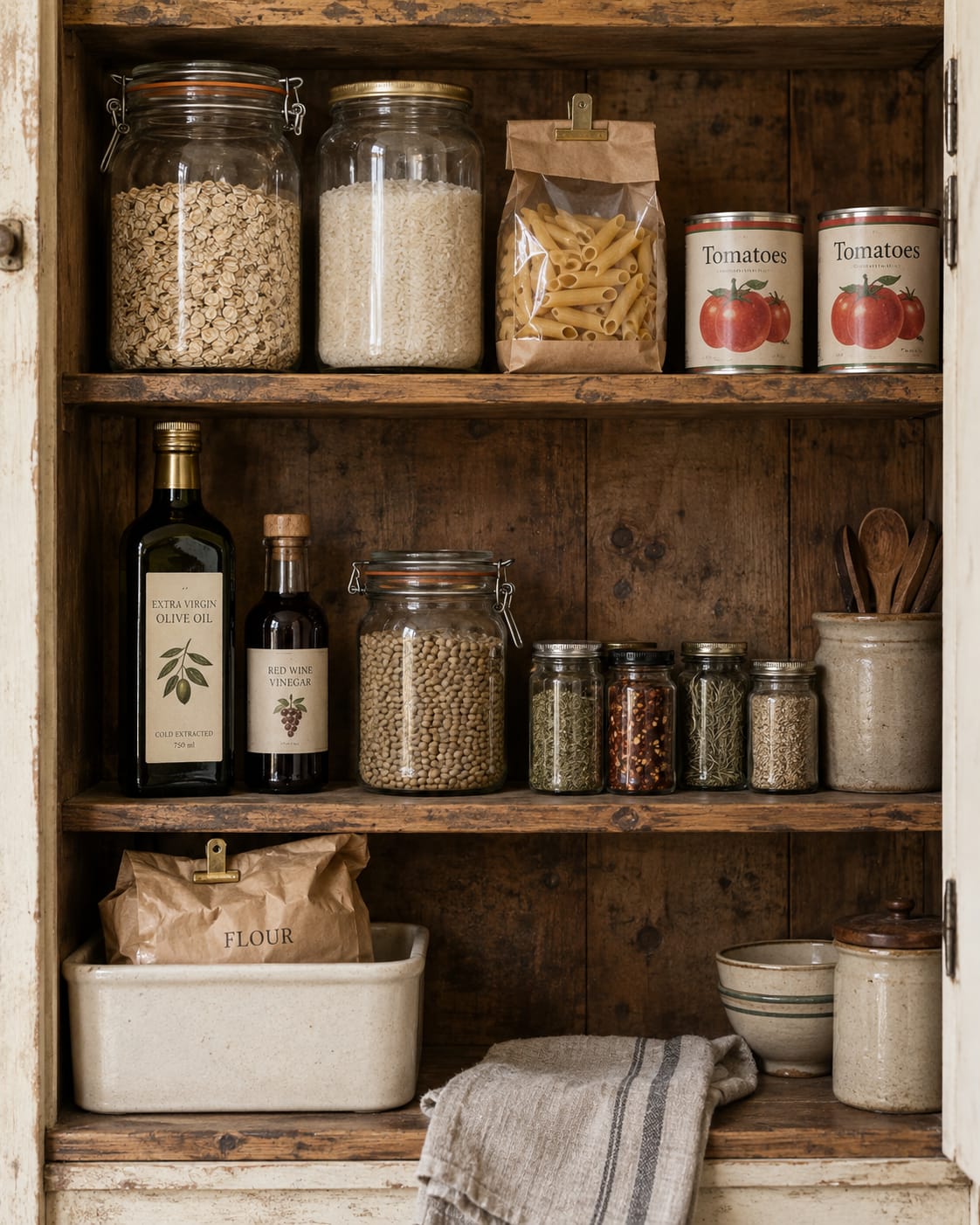
What Does a Well-Stocked Pantry Really Mean?
A well-stocked pantry looks different in every home.
A household that bakes bread each week needs different staples than one that rarely uses yeast. A family that enjoys pasta may keep several shapes nearby, while another kitchen relies more heavily on rice, beans, or grains.
Your pantry should reflect the way you cook and bake. That is the heart of Pantry Foundations: learn what you have and find more ways to use it.
Each ingredient should earn its place through at least one of these qualities:
- Versatility: You can use it in several recipes.
- Visibility: You can easily see and remember it.
- Familiarity: You understand how it tastes and behaves.
- Regular use: It supports food you genuinely enjoy making.
- Staying power: You can finish it before its quality begins to fade.
A full pantry is not necessarily a useful pantry. A smaller collection of dependable ingredients often offers far more freedom.

Begin with a Pantry Reset
Before buying anything, look at what you already have.
Set aside fifteen minutes and remove obvious clutter. Gather duplicate ingredients. Check open packages. Wipe the shelves, then group similar items together.
Create simple categories such as:
- Pasta, rice, and grains
- Beans and lentils
- Canned and jarred foods
- Baking ingredients
- Oils and vinegars
- Herbs and spices
- Nuts, seeds, and dried fruit
- Snacks and breakfast staples
Place anything that needs attention into a small Use-Soon basket. Keep it at eye level so those ingredients remain visible when you plan meals or choose something to bake.
This short reset often reveals that you need fewer groceries than you thought.
Build a Well-Stocked Pantry Slowly
You do not need to stock an entire pantry in one shopping trip.
Begin with the meals and baking projects you already make. Notice which ingredients appear repeatedly, then keep those staples on hand.
If you make pasta several times a month, keep pasta, canned tomatoes, olive oil, garlic, and Parmesan nearby. If you bake most weekends, flour, sugar, oats, butter, vanilla, leavening, and a few favorite spices may form your foundation.
Add one or two useful ingredients at a time. Learn how to use them before bringing home more.
A sale does not save money when the food remains unopened. A large package is not a bargain if half of it loses quality before you can use it.
Buy the size that fits your household, storage space, and actual cooking habits.

Build the Cook’s Pantry
The Cook’s Pantry holds the ingredients that help turn fresh food into a complete meal.
Oils and Acids
A dependable olive oil and one neutral cooking oil will cover many everyday needs. I use mild avocado oil in my homemade eggless mayonnaise, a useful starting point for dressings and dips.
Add one or two vinegars you genuinely enjoy. Red wine vinegar, white wine vinegar, balsamic vinegar, and apple cider vinegar can support dressings, sauces, marinades, vegetables, beans, and grains.
Fresh lemons can provide another useful source of acidity.
Pasta, Rice, and Grains
Choose a small selection based on what you regularly cook.
You might keep:
- One long pasta
- One short pasta
- Rice
- Farro, barley, polenta, or another favorite grain
- Oats for breakfast and baking
There is no need to keep every pasta shape or grain. Replenish the ones that consistently make their way to your table.
Beans and Lentils
Canned beans provide convenience, while dried beans offer flexibility and value when you have time to cook them.
Chickpeas, cannellini beans, black beans, and lentils can become soups, salads, spreads, grain bowls, pasta dishes, and simple sides.
Choose two or three varieties you know you will use.
Canned and Jarred Staples
Whole canned tomatoes, tomato paste, passata, broth, olives, capers, and roasted peppers can help build flavor when fresh ingredients are limited.
A few thoughtfully chosen jars can transform pasta, grains, beans, eggs, vegetables, chicken, or fish.
Avoid collecting specialty condiments for single recipes. Before buying one, consider at least two or three ways you might use it.

Build the Baker’s Pantry
The Baker’s Pantry should support the way you truly bake.
A practical foundation might include:
- All-purpose flour
- Bread flour, if you bake bread regularly
- Oats
- Cane or granulated sugar
- Brown sugar
- Baking powder
- Baking soda
- Yeast
- Fine sea salt
- Vanilla
- Cinnamon and a few favorite baking spices
- Chocolate for baking, nuts, or dried fruit you use often
Store flour, sugar, oats, nuts, and other dry ingredients in containers that protect them from air, moisture, and pests.
Specialty flours and decorations can be wonderful, but they should not crowd out the ingredients you reach for every week.
Let each addition follow a genuine interest or planned recipe rather than the hope that you might eventually use it.

Create a Simple Flavor Shelf
A useful flavor shelf does not need dozens of spice jars.
Begin with salt, black pepper, garlic, and several dried herbs or spices that match the food you enjoy.
In the MWT kitchen, that might include oregano, basil, thyme, rosemary, cinnamon, nutmeg, and red pepper flakes.
Keep everyday seasonings where you can see and reach them. Store specialty blends separately, and consider a one-in, one-out habit when trying something new.
Spices lose their best aroma over time. Buying smaller amounts often produces better flavor and less waste than purchasing large containers simply because they cost less per ounce.

Shop Your Pantry Before the Grocery Store
Before making a grocery list, look through the pantry, refrigerator, and freezer.
Ask:
- What needs to be used soon?
- What do I already have in duplicate?
- Which meals can begin with these ingredients?
- What fresh food would help complete them?
- Which staples are truly running low?
Plan several meals around what you already own, then shop for the missing pieces. For example, canned tomatoes can become simple homemade marinara sauce, while chickpeas can become homemade hummus.
This shifts grocery shopping from collecting food to completing meals.
Keep a short running list on paper, your phone, or the pantry door. Add an ingredient when you open the last package rather than when you merely notice the shelf looks less full.
Organize for Visibility
The best storage system is the one you can maintain.
Keep frequently used ingredients at eye level. Group similar foods together. Place newer packages behind older ones so the older food gets used first.
This is often called first in, first out.
Use clear containers when they help you see what remains, but do not transfer everything simply for appearance. Original packaging often contains helpful cooking instructions, allergen information, and product dates.
When you transfer food, label the container with the ingredient name and any date or instructions you will need later.
Protect pantry foods from heat, light, air, and moisture. Avoid storing oils, spices, flour, and other sensitive ingredients beside a hot oven, range, or sunny window.
Understand Pantry Dates
Many dates printed on packaged foods describe expected quality rather than the exact day a product suddenly becomes unsafe.
That does not mean every food should be kept indefinitely.
Inspect the packaging and the food itself. Discard cans that are bulging, leaking, heavily rusted, or deeply dented. Throw away food that shows mold, pest damage, moisture, an unusual odor, or another clear sign of spoilage.
When you are unsure about the storage life of a specific product, check a trusted resource such as the USDA FoodKeeper.
A simple date label can still help you rotate ingredients and enjoy them while their flavor and texture remain at their best.
Keep a Few Pantry Meal Foundations
A thoughtful pantry should make it easier to answer, “What can I make?”
Think in flexible foundations rather than complicated recipes:
- Pasta + tomatoes or olive oil + vegetables + cheese
- Grain + beans or lentils + vegetables + dressing
- Eggs + vegetables + herbs + bread
- Soup base + beans or grains + vegetables
- Oats + fruit + nuts or seeds
- Flour + yeast + water + salt
- Flour + butter + sugar + seasonal fruit
These are not rigid formulas. They are reminders that familiar ingredients can move in many directions.
Begin with what needs to be used, then add flavor and texture from the pantry.
Let a Small Part of the Pantry Change with the Seasons
Your pantry can remain dependable while still reflecting the season.
Spring may bring lighter grains, tender herbs, and lemon. Summer may move tomatoes, pasta, olive oil, and vinegars forward. Autumn can make room for oats, apples, pecans, and warm spices. Winter may call for beans, broth, baking ingredients, and citrus.
The foundation remains steady. Only a small portion needs to shift.
This keeps the pantry interesting without requiring a complete restock every few months.
A Gentle 30-Day Pantry Plan
Build slowly enough to notice what truly helps.
Week One: Notice
Complete a short pantry reset. Gather duplicates and create a Use-Soon basket.
Week Two: Use
Plan meals and one baking project around ingredients you already own.
Week Three: Fill the Gaps
Replace only the dependable staples that are missing or nearly finished.
Week Four: Refine
Notice what you used, what you ignored, and what made the week easier. Let those observations shape the pantry you continue building.
After thirty days, you will have something more valuable than a longer shopping list. You will understand your own kitchen better.
Frequently Asked Questions
How many ingredients should a well-stocked pantry contain?
There is no ideal number. A useful pantry contains enough versatile staples to support the way your household cooks and bakes without creating clutter or waste.
Is buying in bulk always less expensive?
No. Bulk buying saves money only when you can use the food while its quality remains good. Compare the unit price, but also consider your storage space and how quickly you use the ingredient.
Should I transfer everything into matching containers?
No. Use containers when they improve freshness, visibility, or pest protection. Keep original packaging when it provides useful instructions, allergen information, or product dates.
How often should I organize my pantry?
A short weekly check and a more thorough seasonal reset are usually easier than waiting for the pantry to become overwhelming.
What should I do with ingredients I no longer want?
If they are unopened, within appropriate quality guidance, and accepted by a local food pantry, consider donating them. Open products may need to be used creatively, shared appropriately, composted when suitable, or discarded if unsafe.
The Ingredient Philosophy
At My Weathered Table, we believe that a well-stocked pantry is not measured by how much it holds.
It is measured by how well it supports the way we cook, bake, create, and gather.
Every ingredient should have a purpose. It might help build a simple dinner, begin a loaf of bread, add flavor to a seasonal recipe, or make it possible to bake something worth sharing.
When we understand what we have, store it thoughtfully, and use it with intention, the pantry becomes more than a collection of food. It becomes a foundation for confidence.
The goal is not to own more.
The goal is to create more from what we already have.

Around My Table
The pantries I admire most are not the largest or the most perfectly organized.
They are the ones that feel lived in.
The olive oil sits within reach. The flour is ready for bread. A jar of beans can become soup, and a can of tomatoes can begin dinner. Ingredients move through the shelves because someone knows why they are there and looks forward to using them.
That is the pantry I want for My Weathered Table.
Begin with what you already have. Clear one shelf. Choose a few dependable staples. Use them often, then let your pantry grow alongside your confidence.
A thoughtful pantry does not ask you to cook or bake perfectly. It simply makes it easier to begin.
With flour-dusted hands, something simmering nearby, and plenty of laughter and good food to share around the table,


Questions about a recipe or technique?
I’m always happy to help. Feel free to reach out if you need guidance, substitutions, or a little extra help in the kitchen.
Pull up a Chair...
return to pantry foundations
return to recipe box
[email protected]
Questions about a recipe or technique?
I’m always happy to help. Feel free to reach out if you need guidance, substitutions, or a little extra help in the kitchen.
Lisa Marie