


Homemade Hummus

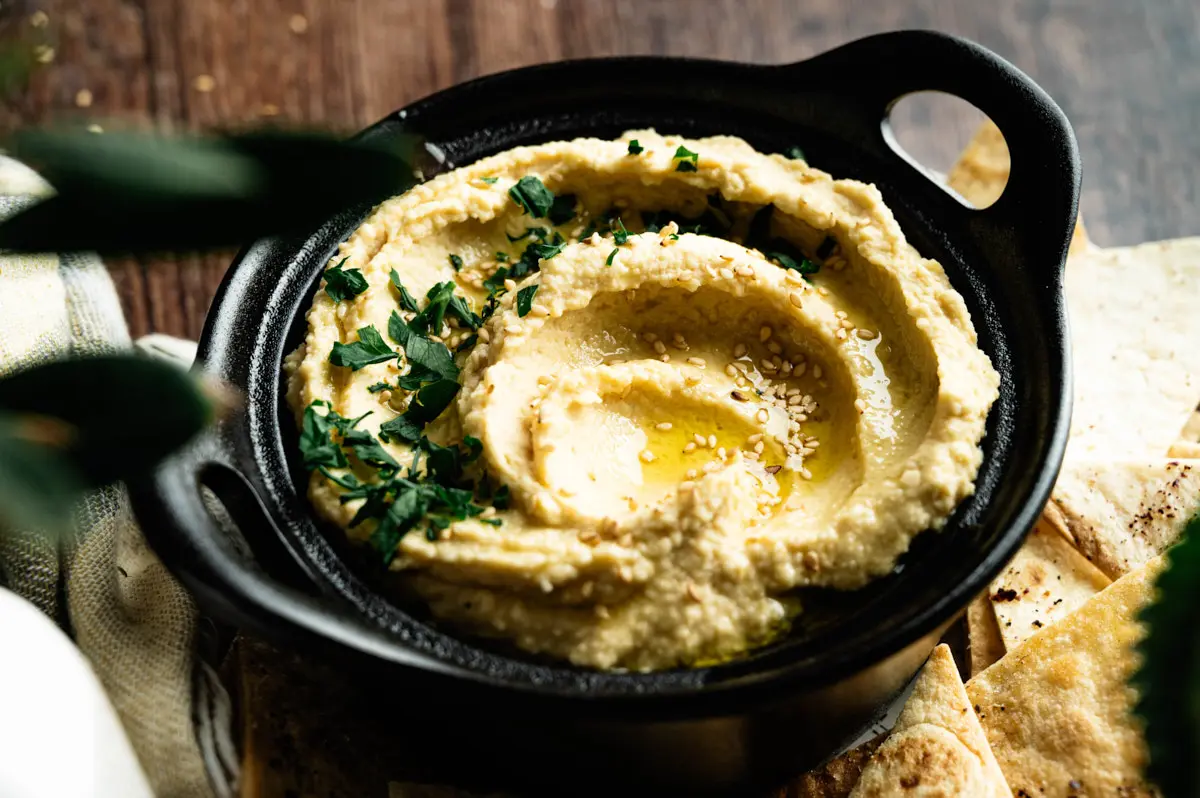
This creamy homemade hummus blends chickpeas, tahini, lemon, olive oil, and cumin into an easy Mediterranean-inspired pantry staple.
August 24, 2026
Creamy, bright, and made from a handful of pantry ingredients, this homemade hummus blends chickpeas, tahini, lemon, olive oil, and warm cumin into a smooth dip that is ready in 10 minutes.
This is one of those simple staples that earns a permanent place in the refrigerator. Spoon it onto a plate for lunch, tuck it into a sandwich, add it to a grain bowl, or set it on the table with warm bread and crisp vegetables for everyone to share.
A splash of reserved chickpea liquid helps the ingredients blend into a lighter, silkier hummus without relying on extra oil. Give the food processor a full minute once everything comes together, then taste and adjust until the flavor feels balanced.
Why You Will Love This Homemade Hummus
This is the kind of recipe that proves a dependable pantry can turn a few everyday ingredients into something generous and full of flavor.
- Ready in ten minutes. Add everything to the food processor, blend until creamy, and bring it straight to the table.
- Made with pantry staples. Chickpeas, tahini, olive oil, cumin, and garlic powder make this easy to prepare without a special grocery trip.
- Light, creamy texture. Reserved chickpea liquid loosens the hummus and helps it blend smoothly without making it heavy or oily.
- Useful in so many ways. Serve it as a dip, spread it onto sandwiches, spoon it into bowls, or use it as a simple side.
- Easy to make your own. Adjust the lemon, tahini, cumin, salt, and texture until the hummus tastes exactly right to you.
Ingredients You’ll Need
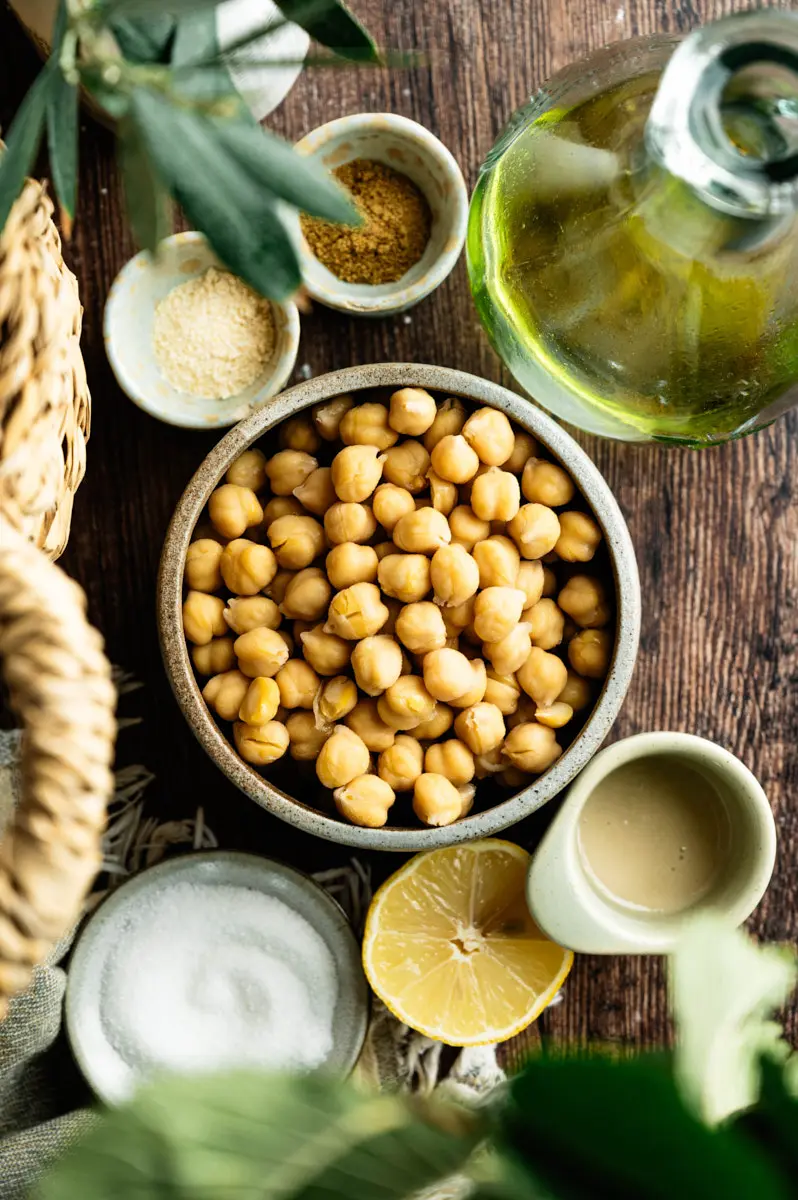
Chickpeas
Use one 15-ounce can of chickpeas, drained and rinsed, which gives you about 240 g of drained chickpeas. Before draining the can, reserve some of the chickpea liquid, also called aquafaba.
Adding the liquid a little at a time helps the hummus blend smoothly without making it oily or heavy. Begin with 2 tablespoons and add more only as needed.
Tahini
Tahini gives hummus its earthy, nutty flavor and creamy body. Stir the jar well before measuring because the natural sesame oils can separate.
Begin with one rounded tablespoon, or about 15 g. Add a little more after blending if you prefer a deeper sesame flavor.
Fresh Lemon Juice
Two tablespoons of fresh lemon juice brighten the chickpeas and balance the richness of the tahini and olive oil. Half of a medium lemon usually provides about the right amount, but lemons vary.
Taste the finished hummus and add another small squeeze if it needs more lift.
Extra-Virgin Olive Oil
Choose a smooth, fruity extra-virgin olive oil. Two tablespoons, or 30 ml, blend into the hummus. A small drizzle over the top adds flavor and gives the finished bowl a beautiful sheen.
Ground Cumin
A quarter teaspoon of ground cumin adds warmth and depth without overpowering the chickpeas and tahini. Sprinkle a little extra over the finished bowl if you enjoy its earthy flavor.
Garlic Powder
One-eighth teaspoon of garlic powder gives the hummus an even, mellow garlic flavor. It blends in immediately and does not need time to soften.
Fine Sea Salt
Begin with ⅛ teaspoon of fine sea salt, then taste after blending. Chickpeas and tahini can vary in seasoning, so it is easier to add more than to correct an overly salty bowl.
Ingredient Philosophy
I use organic ingredients whenever possible and choose the best quality that fits the season and budget. Good sourcing matters, but it should never make a recipe feel out of reach.
Hummus is a wonderful example of thoughtful pantry cooking. A can of chickpeas, a jar of tahini, good olive oil, and a fresh lemon can become lunch, a snack, a side dish, or the beginning of a shared platter.
Use accessible ingredients, taste as you go, and allow the recipe to work for your kitchen. The goal is a hummus you will be happy to make again and again.
How to Make Homemade Hummus
Reserve the Chickpea Liquid
Before draining the chickpeas, pour some of the liquid into a small cup or bowl. You will need 2 to 4 tablespoons, depending on the chickpeas and your preferred texture.
Drain and rinse the chickpeas well. There is no need to peel them for this everyday version.
Add the Ingredients
Place the drained chickpeas, tahini, olive oil, lemon juice, sea salt, garlic powder, cumin, and 2 tablespoons of reserved chickpea liquid in a food processor.
Blend Until Smooth
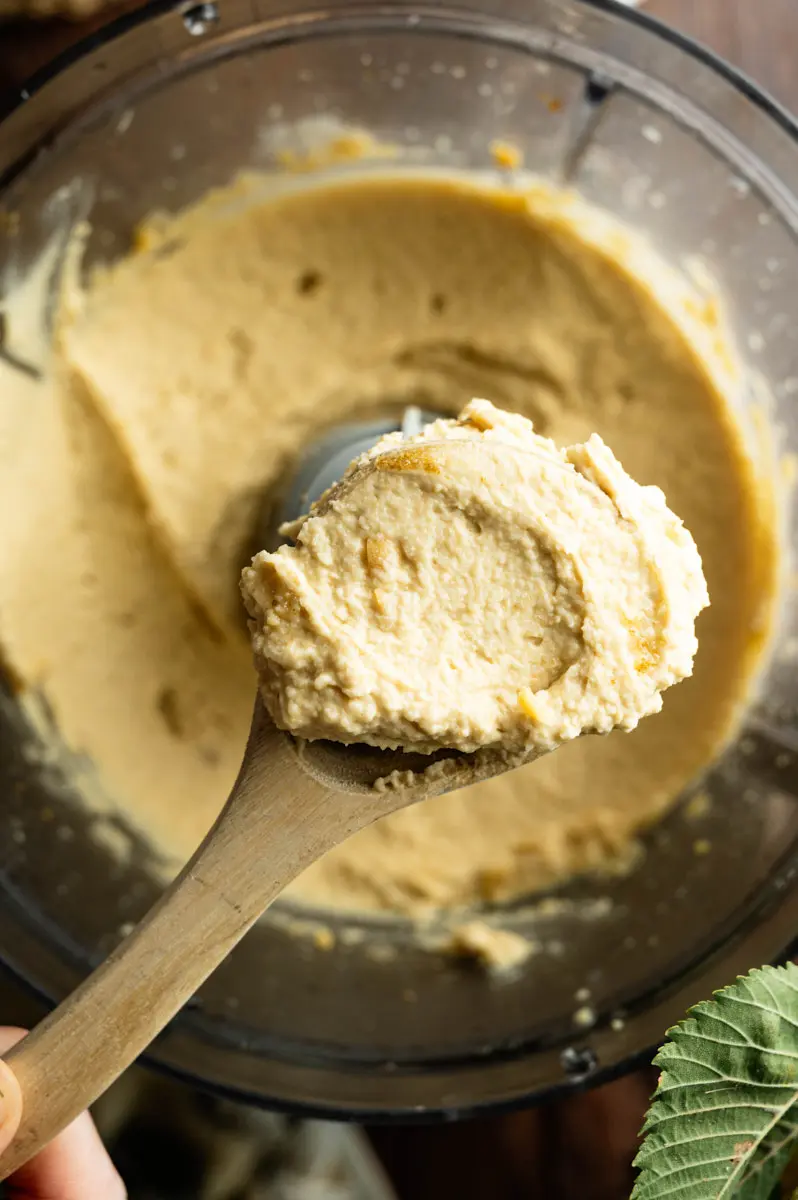
Process until the ingredients begin to look smooth. Stop and scrape down the sides of the bowl as needed so every chickpea reaches the blade.
Adjust the Texture
With the food processor running, add more reserved chickpea liquid 1 tablespoon at a time. Stop when the hummus looks creamy and is easy to spoon.
The exact amount will vary. Some chickpeas are drier than others, and the hummus will thicken slightly after refrigeration.
Give It One More Minute
Once the hummus reaches the right consistency, continue blending for about 1 full minute. This extra time helps the mixture become lighter and smoother.
Taste and Finish
Taste the hummus and adjust the lemon, tahini, cumin, or salt as desired.
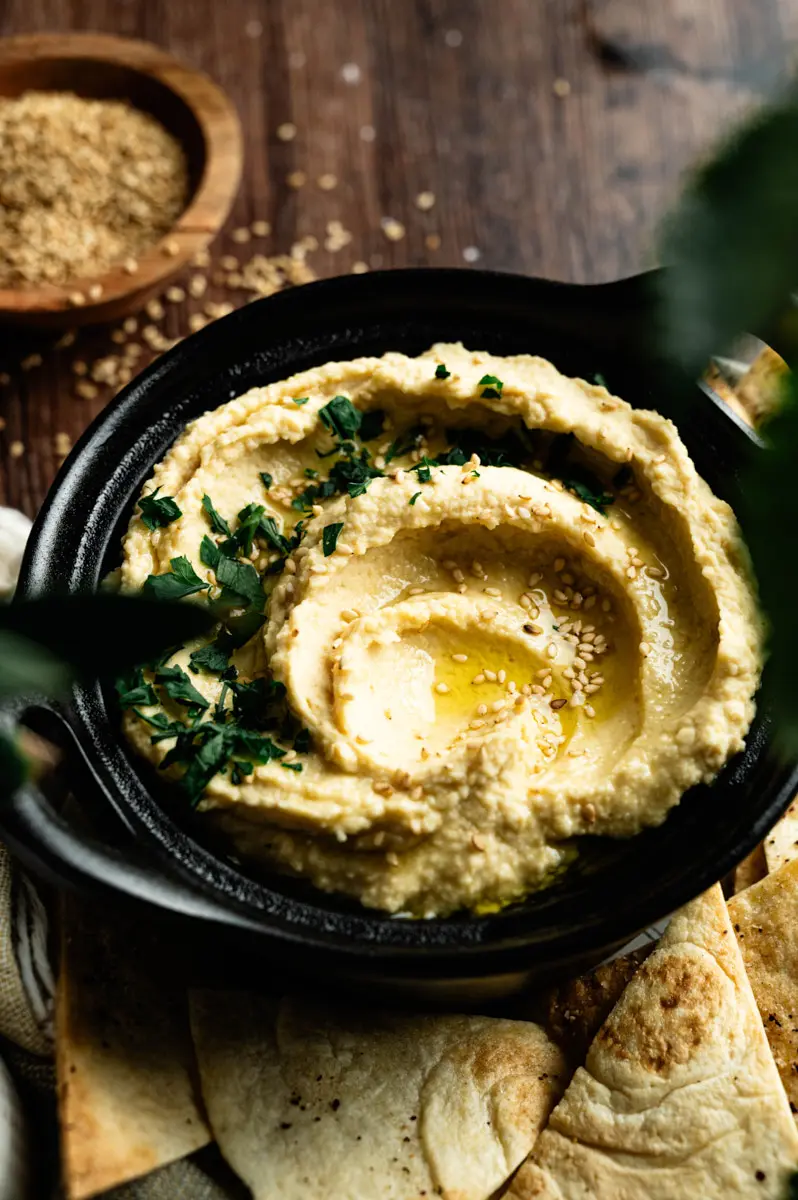
Spoon it into a shallow bowl. Use the back of a spoon to make a few generous swirls, then finish with olive oil and your favorite garnish.
My Weathered Table Tips
Blend longer than you think you need to. The final minute makes a noticeable difference in the creamy texture.
Reserve the chickpea liquid before draining the can. It is much easier to add another spoonful than to replace it after it is gone.
Add the liquid gradually. The hummus can move from thick to loose quickly.
Let the chickpeas guide the amount. The exact amount of liquid will depend on the chickpeas and the consistency you prefer.
Loosen it after chilling. Stir in water or reserved chickpea liquid before serving if the hummus has thickened.
Taste at the end. Add lemon for brightness, tahini for richness, cumin for warmth, or salt to sharpen the flavors.
Homemade Hummus
A creamy homemade hummus made with chickpeas, tahini, lemon, olive oil, cumin, and a splash of reserved chickpea liquid
- Total Time10 minutes
- Yieldabout 1¼ cups 1x
- DietVegan
Ingredients
1 (15-ounce) can chickpeas, drained and rinsed, with liquid reserved | about 240 g drained chickpeas
1 rounded tablespoon tahini
2 tablespoons extra-virgin olive oil
2 tablespoons fresh lemon juice | from about 1/2 medium lemon
1/8 teaspoon fine sea salt, plus more to taste
1/8 teaspoon garlic powder
1/4 teaspoon ground cumin, plus more to taste
2 to 4 tablespoons reserved chickpea liquid, as needed
Optional for serving: extra-virgin olive oil, cumin, paprika, sesame seeds, or chopped parsley
Instructions
- Add the drained chickpeas, tahini, olive oil, lemon juice, sea salt, garlic powder, cumin, and 2 tablespoons of reserved chickpea liquid to a food processor.
- Blend until the mixture begins to look smooth, stopping to scrape down the sides of the bowl as needed.
- With the processor running, add more reserved chickpea liquid, 1 tablespoon at a time, until the hummus is creamy and easy to spoon.
- Continue blending for about 1 minute to make the texture lighter and smoother.
- Taste and adjust the lemon, tahini, cumin, or salt as desired.
- Spoon the hummus into a shallow bowl. Finish with a drizzle of olive oil and your favorite garnish, then serve.
Notes
- For the creamiest texture, blend longer than you think you need to. The final minute makes a noticeable difference.
- Reserve the chickpea liquid before draining the can. It is much easier to add another spoonful than to replace it after it is gone.
- Add the liquid gradually. The hummus can move from thick to loose quickly.
- The exact amount of liquid will depend on the chickpeas and the consistency you prefer.
- The hummus will thicken slightly as it chills. Stir in water or reserved chickpea liquid to loosen it before serving.
- Taste at the end. Add lemon for brightness, tahini for richness, cumin for warmth, or salt to sharpen the flavors.
- Prep Time: 10 minutes
- Cook Time: 0 minutes
- Category: Appetizer
- Method: Food Processor
- Cuisine: Mediterranean
Variations and Substitutions
Garlic Hummus: Replace the garlic powder with a small fresh garlic clove for a sharper garlic flavor. Begin with half a clove if your garlic is especially strong.
Roasted Garlic Hummus: Blend in one or two soft roasted garlic cloves. Roasted garlic brings mellow sweetness and works beautifully with the lemon and cumin.
Lemon Herb Hummus: Add chopped parsley, basil, or cilantro after the hummus is smooth. Pulse briefly so the herbs remain visible and fresh.
Spiced Hummus: Finish the bowl with smoked paprika, za’atar, sumac, or additional cumin. Add seasonings gradually so they support the chickpeas and tahini.
Creamier Tahini Hummus: Add another small spoonful of tahini for a richer sesame flavor. You may need a little more lemon juice or chickpea liquid to keep the texture balanced.
Ways to Use Homemade Hummus
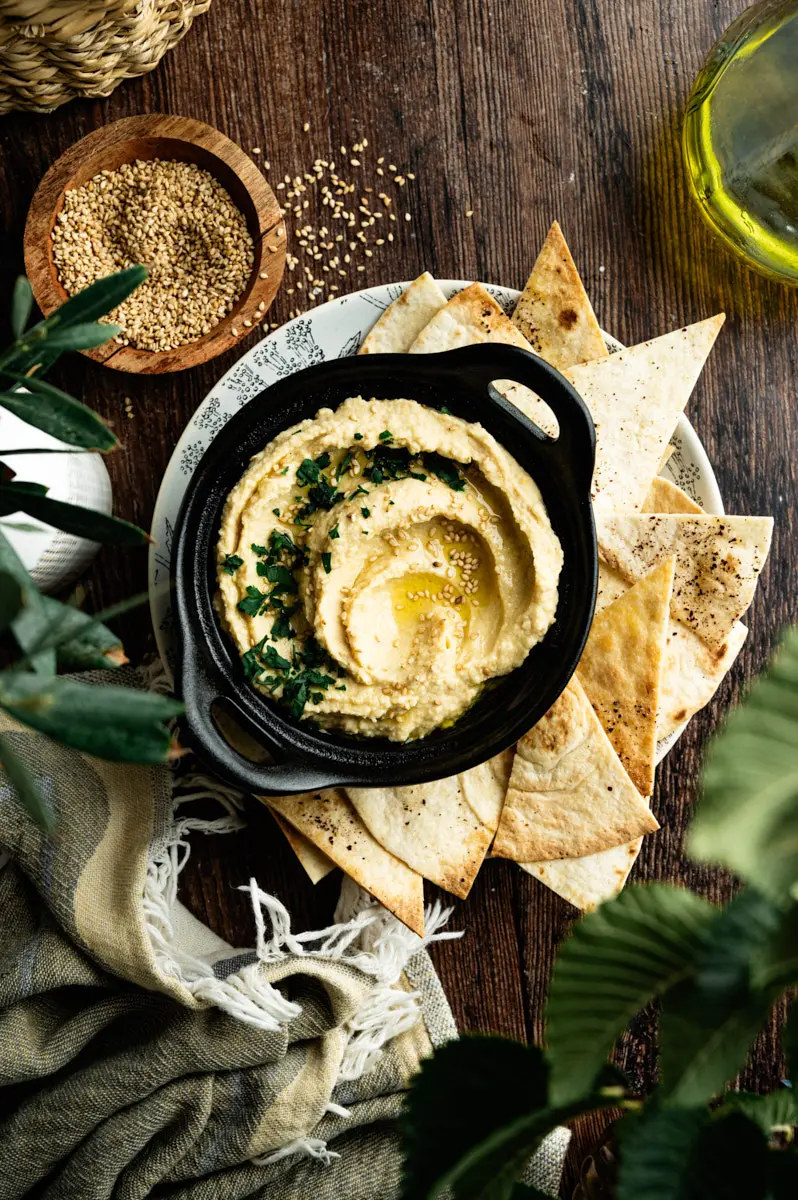
- Serve it with warm pita, crackers, toasted bread, cucumbers, carrots, radishes, or sweet peppers.
- Add it to a snack board with olives, tomatoes, marinated vegetables, cheese, and fresh herbs.
- Spread it on sandwiches, wraps, crostini, or toast before adding vegetables and greens.
- Spoon it into grain bowls or serve it alongside roasted vegetables.
- Use it as a creamy base for grilled chicken, fish, lamb, or falafel.
- Thin it with lemon juice and water to make a quick dressing for salads and bowls.
For an easy Mediterranean-inspired appetizer table, serve it beside Warm Burrata with Burst Cherry Tomatoes. It also works as a creamy accompaniment to Garden Zucchini Frittata. Browse the Recipe Box or visit Pantry Foundations for more ways to build meals from simple staples.
Storage and Freezing
Transfer the hummus to a clean, airtight container and refrigerate promptly. It will keep well for up to 4 days.
The hummus may thicken as it chills. Stir in a small spoonful of water or reserved chickpea liquid before serving if you would like to loosen the texture.
For longer storage, freeze the hummus in a freezer-safe container for up to 3 months. Leave a little room for expansion.
Thaw it overnight in the refrigerator, stir well, and refresh it with lemon juice or olive oil if needed. The texture may be slightly less silky after freezing, but a thorough stir helps bring it back together.
Frequently Asked Questions
Do I need to peel chickpeas for hummus?
No. Peeling chickpeas can create an especially silky hummus, but it is not necessary for this everyday recipe. Blending for a full minute and adding chickpea liquid gradually produces a creamy result with much less work.
What is aquafaba?
Aquafaba is the liquid in a can of chickpeas. In this recipe, it loosens the hummus and helps create a lighter texture without adding more oil.
Why is my hummus too thick?
Chickpeas vary in moisture. Add reserved chickpea liquid or water 1 tablespoon at a time while the processor runs until the hummus is creamy and easy to spoon.
Why is my hummus too thin?
The liquid was likely added too quickly. Add more chickpeas or a small spoonful of tahini, then blend again. The hummus will also thicken a little in the refrigerator.
Can I make hummus without tahini?
You can leave it out, but the flavor and texture will be different. Add a little extra olive oil and chickpea liquid as needed, then adjust the lemon and salt.
Can I use dried chickpeas?
Yes, but cook them until very tender before making the hummus. You will need about 240 g of cooked chickpeas for this recipe.
Around My Table
Hummus is proof that the simplest pantry ingredients can become something generous. A can of chickpeas, a spoonful of tahini, and a squeeze of lemon are all it takes to make a bowl worth gathering around.
I love setting it on the table with warm bread, crisp vegetables, and a little olive oil pooled on top. Someone reaches for another piece of pita, another spoonful disappears, and an everyday snack becomes part of the conversation.
It is simple food made to be shared, and that is often exactly what brings everyone back around the table.
2 responses to “Homemade Hummus”
-
This is the tastiest hummus ever!
Love this recipe!-
Thank you, Julia! I’m so happy you loved the hummus. It’s one of those simple recipes I always want tucked into the refrigerator for an easy lunch or afternoon snack. Thank you for taking the time to leave such a lovely review! 💜
-


Leave a Reply