What Is Pantry Foundations? Building a Kitchen You’ll Love, One Ingredient at a Time
June 11, 2026
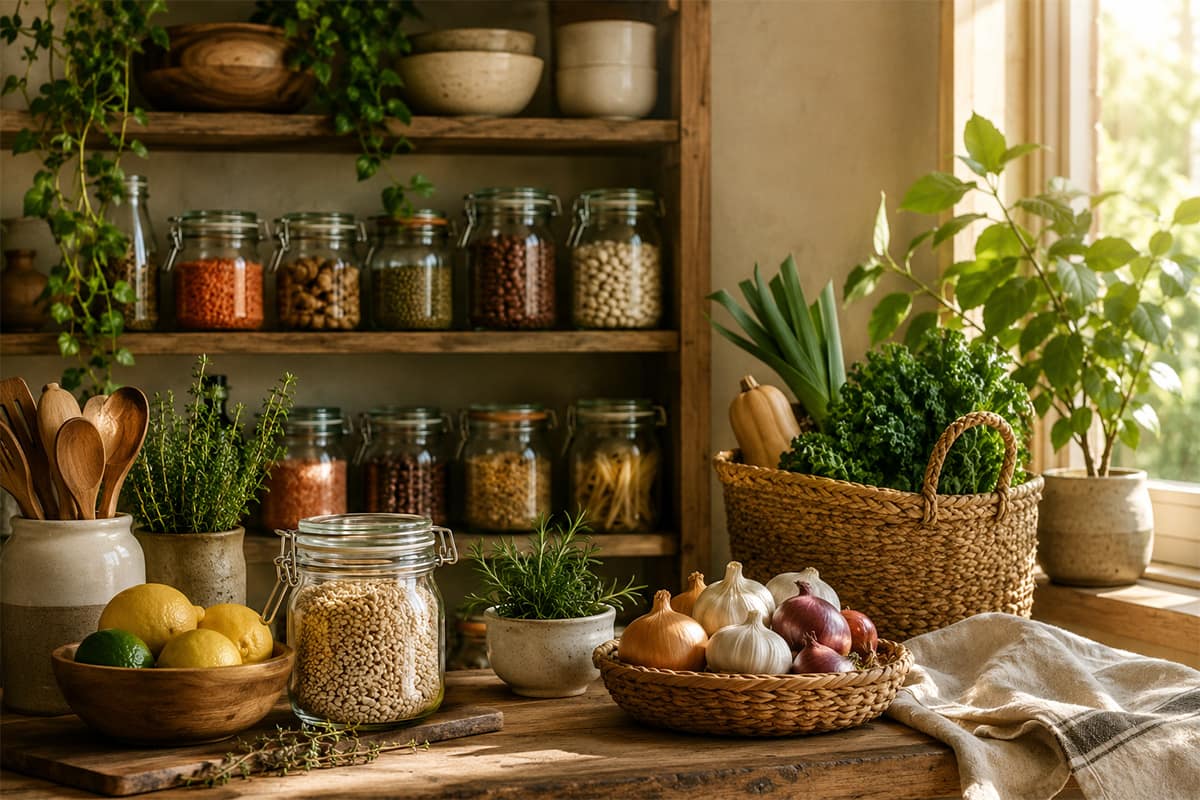
Pantry Foundations is the educational heart of My Weathered Table, where we slow down, understand everyday ingredients, and build a useful kitchen one ingredient at a time.
There is a difference between having ingredients in the kitchen and truly knowing what to do with them.
When you understand how an ingredient tastes, how it behaves, how to store it, and the many ways it can be used, cooking begins to feel less like following instructions and more like something you know how to do.
That is the heart of Pantry Foundations.
This is where we slow down and get to know the ingredients we keep in our kitchens. Not because your pantry needs to be picture-perfect or filled with dozens of specialty ingredients, but because a handful of well-chosen staples can take you surprisingly far.
We are building a useful kitchen, one ingredient at a time.
What Is Pantry Foundations?
Pantry Foundations is the educational heart of My Weathered Table. It is a place to learn more about the everyday ingredients we cook and bake with, from flour and oats to herbs, tomatoes, salt, butter, baking spices, and whatever is in season.
Instead of beginning with a recipe, we begin with the ingredient itself.
What does it taste like? Which variety should you buy? How should you store it? What happens when you bake with it? What can you make when you have half a jar, a few sprigs, or one lonely zucchini left at the end of the week?
These are the little things that make a big difference in the kitchen.
The more familiar you become with your ingredients, the easier it is to look at what you already have and see dinner, breakfast, bread, a sauce, or something sweet waiting to happen.

Why Begin With the Ingredient?
Recipes are wonderful. I have spent years developing them, testing them, photographing them, and sharing them around my own table.
But a recipe can only take you so far.
Learning why an ingredient works gives you something a recipe alone cannot: the confidence to make decisions in your own kitchen.
You begin to understand why rolled oats behave differently from steel-cut oats. Why one flour creates a tender cake while another gives bread its structure. Why fresh herbs should not all be stored the same way. Why browning butter changes far more than its color.
Once those pieces begin to click, cooking becomes more intuitive.
You stop wondering whether you have exactly what a recipe calls for and start asking a much more useful question:
What can I make with what I have?
That is the kind of confidence I want Pantry Foundations to help you build.
My Ingredient Philosophy
Some of the most important lessons I learned about food did not come from a cookbook.
They came from living in Italy, shopping in small markets, cooking with what was in season, and watching meals come together from ingredients that were often incredibly simple.
A tomato tasted like a tomato. Olive oil mattered. Herbs were used generously. Bread was never an afterthought. And good food did not require a pantry overflowing with ingredients.
It required knowing what you had and treating it well.
That philosophy still shapes the way I cook today.
I would rather have a smaller collection of ingredients I understand and use often than shelves filled with things I bought for one recipe and forgot about. I want ingredients to earn their place in the kitchen.
That might mean learning several ways to use a bag of oats, knowing how to turn a handful of herbs into dinner, or understanding which flour belongs in the bread you are making.
Simple ingredients become far more interesting when you know what they can do.
A Kitchen for Cooking and Baking
Around here, the cook’s pantry and the baker’s pantry live side by side.
Flour can become bread, pasta, biscuits, cake, or the beginning of a simple sauce. Butter can be spread over warm bread, browned for chocolate chunk cookies, folded into pastry, or stirred into a pan sauce. Citrus can brighten a vinaigrette, flavor a cake, finish roasted vegetables, or become something preserved for later.
That overlap is one of my favorite parts of a well-used kitchen.
Pantry Foundations explores ingredients across cooking, baking, preserving, and seasonal eating so you can see more than one possibility when you reach into the pantry.

What You Will Learn
Pantry Foundations is designed to answer the practical questions that come up when you actually cook.
Together, we will explore:
- how to choose ingredients at the grocery store or market
- the differences between common varieties
- how ingredients taste and behave
- the best ways to store them
- how long they keep
- how they work in cooking and baking
- seasonal ways to use them
- simple ways to reduce food waste
- ideas for using what you already have
Some posts will take a deeper look at one ingredient. Others will focus on a kitchen skill or pantry habit that makes everyday cooking easier.
The goal is not to memorize everything. It is to understand enough that the next time you pick up that ingredient, you feel a little more at home with it.
Three Habits That Make the Kitchen Work Better
Before we begin filling shelves, there are three simple habits that make almost everything else in the kitchen easier.
1. Weigh When It Matters
If you bake regularly, a kitchen scale may be one of the most useful tools you own.
Flour is especially easy to overmeasure with cups, which can change the texture of breads, cookies, cakes, and pastries. Weighing gives you consistency and makes recipes easier to repeat.
In Baking by Weight, we look at why grams matter, when weighing is most useful, and how a scale can make baking feel simpler rather than more complicated.

2. Stock What You Actually Use
A useful pantry does not need to be enormous.
Start with the ingredients you reach for again and again. Good olive oil. A few vinegars. Flour. Oats. Beans. Tomatoes. Salt. Spices. Baking essentials. The exact list will look different in every kitchen, and it should.
A Well-Stocked Pantry walks through how to build a pantry around the way you really cook, rather than someone else’s idea of what you should keep on your shelves.
3. Practice Mise en Place
Mise en place simply means getting things in place before you begin.
Read the recipe. Pull out your ingredients. Measure what needs measuring. Chop what needs chopping. Then start cooking.
It sounds simple because it is. But this small habit can make the difference between feeling rushed and feeling prepared, especially when several things are happening at once.
Mise en Place explores how this simple habit can bring more ease and enjoyment to the kitchen.
These three habits create a strong starting point. From there, we can get to the fun part: the ingredients themselves.

Ingredient of the Month
Each month at My Weathered Table, we spend time with one seasonal ingredient.
Rather than sharing a single recipe and moving on, we look at the ingredient from several angles: how to choose it, how to store it, how it behaves, and the different ways it can find its way onto the table.
One month may be oats. Another might be pecans, cranberries, citrus, tomatoes, zucchini, herbs, or baking spices.
The Pantry Foundations posts give you the knowledge behind the ingredient, while the recipes show you what that knowledge can become in the kitchen.
It is a simple rhythm: learn the ingredient, cook with it, and carry what you learned into the next meal.
Where Should You Begin?
If Pantry Foundations is new to you, do not feel as though you need to read everything at once.
Start wherever your kitchen needs you.
If baking feels unpredictable, begin with Baking by Weight.
If your shelves are crowded but dinner still feels difficult, start with A Well-Stocked Pantry.
If cooking feels rushed, spend a little time with Mise en Place.
Or simply choose an ingredient you use all the time and learn one new thing about it.
That is enough.
Pantry Foundations is meant to grow with you, just as a good kitchen does.

Around My Table
I have never believed that good cooking begins with having more.
More ingredients. More equipment. More complicated recipes.
Most of the meals I remember best began with something much simpler: good ingredients, a little knowledge, and people I wanted to feed.
That is what I hope Pantry Foundations gives you.
Not a perfect pantry, but a useful one. Not a list of rules, but a better understanding of the food already sitting on your shelves, growing in your garden, or waiting at the market.
May it help you open the pantry, look around, and see possibility.
Then pull something out and start cooking.
With flour-dusted hands, something simmering nearby, and plenty of laughter and good food to share around the table,

Questions about a recipe or technique?
I’m always happy to help. Feel free to reach out if you need guidance, substitutions, or a little extra help in the kitchen.
Pull up a Chair...
return to pantry foundations
return to recipe box
[email protected]
Questions about a recipe or technique?
I’m always happy to help. Feel free to reach out if you need guidance, substitutions, or a little extra help in the kitchen.
Lisa Marie