Pecans: Orchard to Table | How to Choose, Toast & Store Pecans
October 1, 2026
Pecans are one of those ingredients worth getting to know. From choosing them at their freshest to bringing out their rich, buttery flavor with a little toasting, you’ll learn how to use them with confidence for whenever inspiration strikes.
Ingredient of the Month: Pecans
Part of October Ingredient of the Month Series
Part 2 • One Ingredient, Many Possibilities
Rich, buttery, and just a little earthy, pecans are October’s Ingredient of the Month. They’re one of those ingredients that can move easily through the kitchen, from a handful scattered over breakfast to something savory for dinner or tucked into an autumn bake.
Before we start getting creative with them, I want to spend a little time getting to know the ingredient itself. We’ll take a closer look at where pecans come from, how to recognize them at their freshest, what happens to their flavor when they’re toasted, and how to store them well so they’re always ready when inspiration strikes.
For me, getting to know an ingredient is where confidence in the kitchen begins. The more you understand how it tastes and how it behaves, the easier it becomes to get creative, follow your instincts, and make it part of the way you cook and bake.
What Are Pecans?
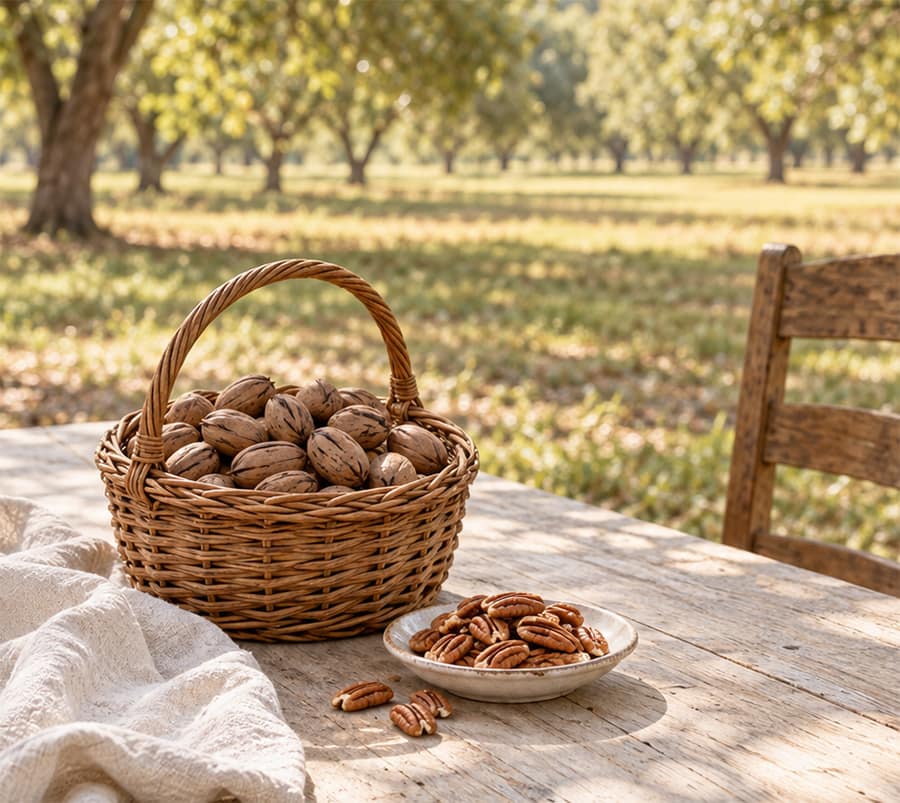
Pecans grow on large hickory trees native to North America, where they’ve been growing for centuries. Each nut develops inside a thick green husk that splits open as the nut matures and gradually dries to brown. Inside is the familiar smooth brown shell, which protects the deeply ridged pecan kernel until you crack it open.
Crack one open and you’ll find a tender, crisp nut with that rich flavor pecans are known for. They’re naturally buttery, a little earthy, and gently sweet, with subtle hints of caramel. That combination gives pecans a warmth all their own, and those flavors become even more noticeable once they’re toasted.
Pecans are also known for their deeply grooved shape and delicate texture, which sets them apart from many other nuts. They have a naturally high oil content, and those oils are behind much of their buttery richness and almost creamy quality as you bite into them. They’re also one of the reasons freshness matters so much when it comes to pecans.
When Are Pecans in Season?
In the United States, pecans are typically harvested from October through December, depending on the growing region and variety. As the nuts mature, their green outer husks begin to dry and split, eventually releasing the pecans inside. That timing is one reason pecans feel so naturally at home in autumn and around the holidays, arriving just as our kitchens begin filling with warmer flavors and spending a little more time baking.
You can find packaged pecans throughout the year, but autumn is an especially good time to look for the newest crop. Farmers markets, orchards, roadside stands, and specialty food shops are all worth checking, especially if you live near a pecan-growing region. You may find them freshly shelled or still in their shells, which is a lovely way to experience the ingredient a little closer to harvest. We were lucky enough to have pecan trees growing right in our neighborhood, so seeing those green husks begin to split was always a little sign that pecan season had arrived.
When you bring home pecans from the new crop, try one plain before toasting or adding other flavors. If you’re buying directly from a grower, ask whether they’ve been dried and are ready to eat. You’ll get to know their natural sweetness, buttery richness, and delicate texture. It’s a lovely reminder that even the ingredients we think of as pantry staples begin with a season and a harvest.
How Pecans Are Sold
Pecans come in more forms than you might expect, and knowing the difference makes it easier to buy what you actually need. You’ll usually find halves and pieces in the baking aisle, while roasted, salted, or flavored pecans may be with the snacks. Take a quick look at the label before adding them to your cart, especially when you want plain pecans for cooking or baking.
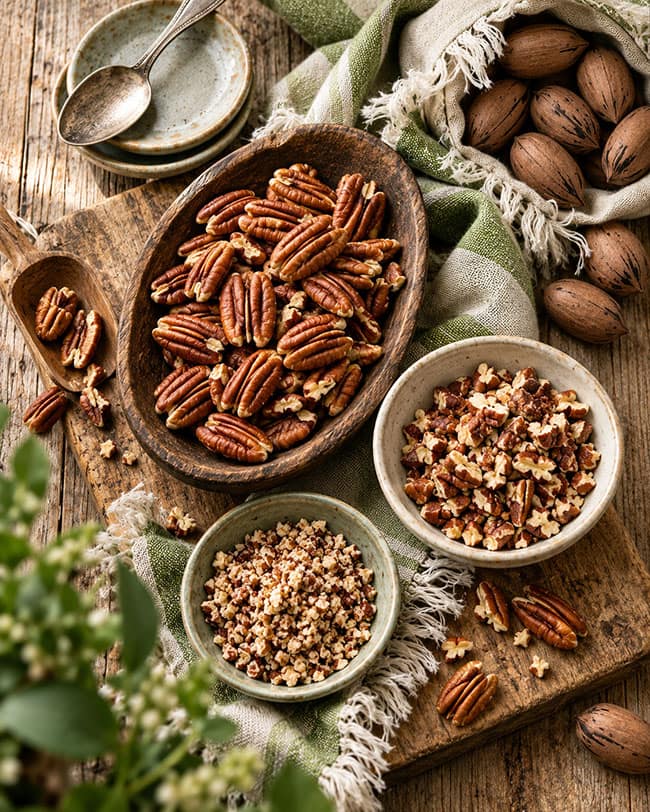
- In-shell pecans: Whole pecans with their shells still intact. Cracking them takes a little extra time, but there’s something wonderfully old-fashioned about sitting at the table with a bowl of pecans and a nutcracker.
- Pecan halves: Intact halves of the kernel with that beautiful familiar pecan shape. I like these when the pecans will be seen, such as on cakes, pies, cookies, salads, or a cheese board.
- Pecan pieces: Broken or chopped kernels that save a little prep when you’re baking or adding pecans to granola, oatmeal, breads, and savory dishes.
- Finely chopped pecans: Smaller pieces that disappear more easily into cookie dough, crusts, coatings, and streusel while still adding plenty of pecan flavor and texture.
- Pecan meal: Pecans ground into a soft, slightly coarse meal. It can add richness and nutty flavor to crusts, cookies, breading, and some gluten-free baking.
- Pecan butter: Pecans blended until smooth and creamy, much like other nut butters. Spread it over toast, swirl it into oatmeal, or use it as a starting point for sauces and dressings.
How to Choose Fresh Pecans
Fresh pecans should look plump and full, with that beautiful ridged shape. Look for kernels that appear full and intact rather than dry or shriveled. Color can vary quite a bit between varieties, so don’t assume a darker pecan is old or stale.
Take a look at the package, too. It should be well sealed with no moisture, mold, or signs of pests inside. I also like to check the package date and buy from stores where nuts are restocked regularly, especially when I’m buying a larger bag to keep in the refrigerator or freezer.
Once you open the package, pecans should have a firm, delicate bite rather than feeling soft or rubbery. Give them a quick smell while you’re at it. Fresh pecans have a mild, pleasantly nutty aroma.
If you notice a sour, musty, or paint-like smell, it’s best to discard the pecans. A paint-like odor can signal that their natural oils have turned rancid. Toasting can deepen the flavor of a good pecan, but it won’t restore one that has gone rancid.
Raw Pecans vs. Roasted Pecans
Raw pecans have a delicate, naturally buttery flavor and a slightly softer bite. I like starting with raw pecans because they give you more freedom in the kitchen. You can use them just as they are or toast them yourself when you want a deeper, nuttier flavor.
Roasting changes more than the texture. The heat brings out the pecans’ aroma, deepens their flavor, and gives them a crisper bite. Neither is necessarily better than the other. It really comes down to what you’re making and how much pecan flavor you want to bring forward.
When buying roasted pecans, take a quick look at the ingredient label. Store-bought versions may contain added oils, salt, sugar, or seasonings that you may not want in a recipe. I usually reach for raw, unsalted pecans so I have more control over the flavor. Then I can toast or season them myself depending on what I’m making, rather than working around flavors that have already been added.
How to Toast Pecans
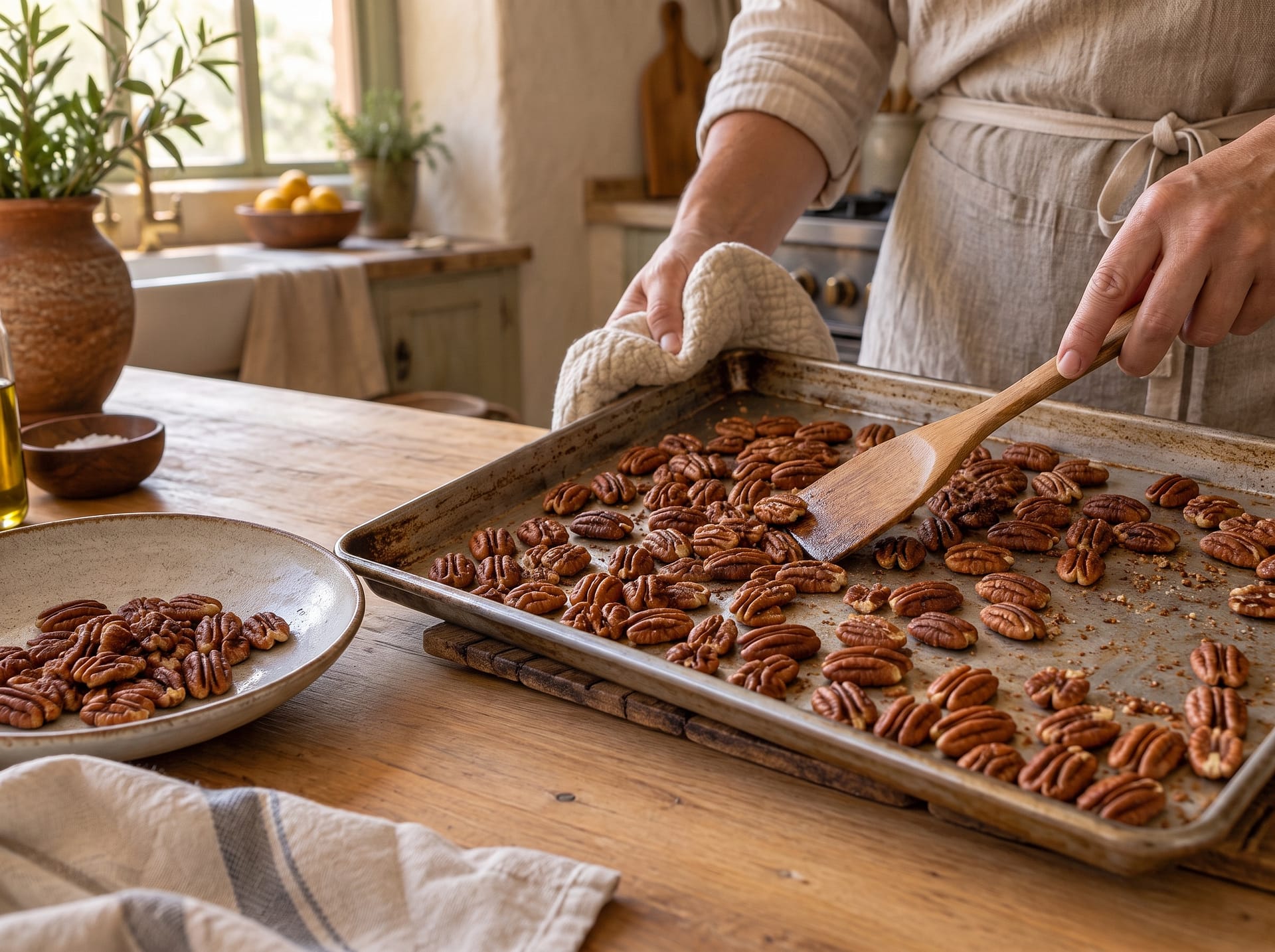
Toasting pecans is one of my favorite ways to bring out more of their natural flavor. A few minutes of heat deepens that buttery, nutty richness and gives them a crisper bite once cooled. As they toast, you’ll notice a richer, nuttier aroma. Use that scent along with the color and timer as your guide.
Spread the pecan halves in a single layer on a rimmed baking sheet and toast in a preheated 325°F (165°C) oven for about 10 to 12 minutes, stirring halfway through. Start checking early, as smaller pieces toast faster and can burn quickly.
As soon as they’re done, transfer the pecans off the hot baking sheet. The pan will continue to hold heat, so moving them to a cool plate or another surface helps stop the toasting and prevents them from becoming too dark.
Let them cool completely before chopping or adding them to doughs and batters. Warm pecans can soften butter or melt chocolate, so give them a few extra minutes to cool while you gather and prepare the rest of your ingredients.
When I only need a small handful, I usually toast them on the stove instead. Add the pecans to a dry skillet over medium-low heat and stir or toss them often so they toast evenly. It only takes a few minutes, so stay close. Once that warm, nutty aroma begins to fill the kitchen, transfer them to a plate and let them cool.
How to Store Pecans
Pecans have a naturally high oil content, which is part of what gives them their rich flavor, but those oils also make proper storage important. Heat, light, moisture, and air can shorten their freshness, so how you store pecans depends mostly on how quickly you plan to use them.
Pantry Storage
For pecans you plan to use within a few weeks, an airtight container in a cool, dark pantry works well. In my kitchen, I use glass Weck jars with an oxygen absorber tucked inside. I love having pecans within reach when I want a handful for breakfast, baking, or tossing into a salad.
An oxygen absorber can help limit exposure to oxygen while the jar stays tightly sealed, but it loses effectiveness as it absorbs oxygen, including fresh air introduced each time you open the jar. For longer storage, or if your kitchen runs warm, the refrigerator or freezer is the more reliable choice.
Refrigerator Storage
Shelled pecans can also be stored in a tightly sealed container in the refrigerator. This is a good option if your kitchen is warm or you’ve opened a larger package that you know you won’t use quickly.
Because nuts can pick up surrounding aromas, keep the container well sealed, especially around strongly scented foods.
Freezer Storage
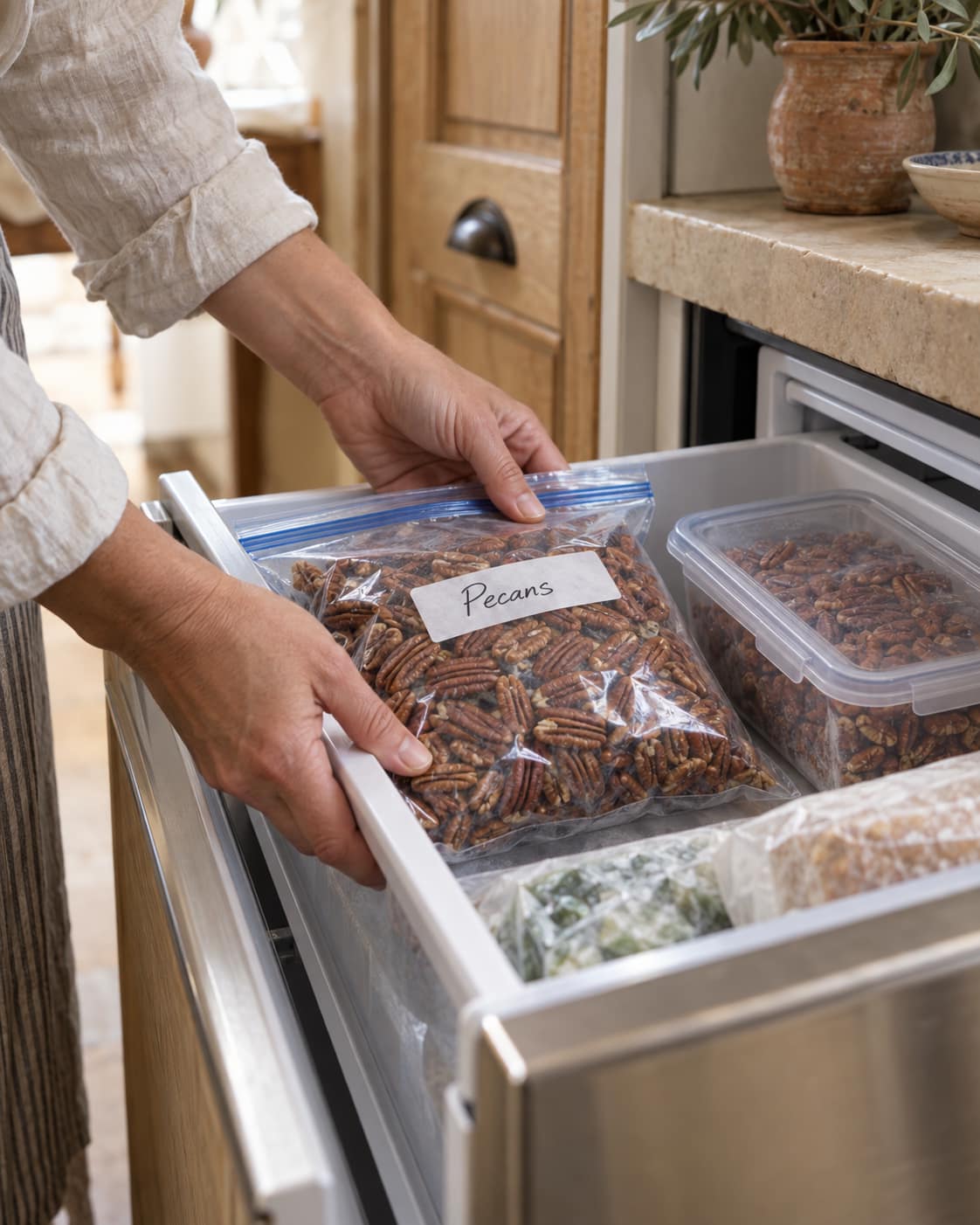
For a larger supply or longer storage, place pecans in an airtight freezer-safe container or heavy freezer bag and remove as much air as possible. Label the container with the date so you can keep track of what you have.
When you’re ready to use them, take out only what you need. Let frozen pecans come to room temperature in their closed container before opening it. This helps limit condensation from forming on the nuts.
Once thawed, they’re ready to chop, toast, or work into whatever you’re making.
How I Chop Pecans
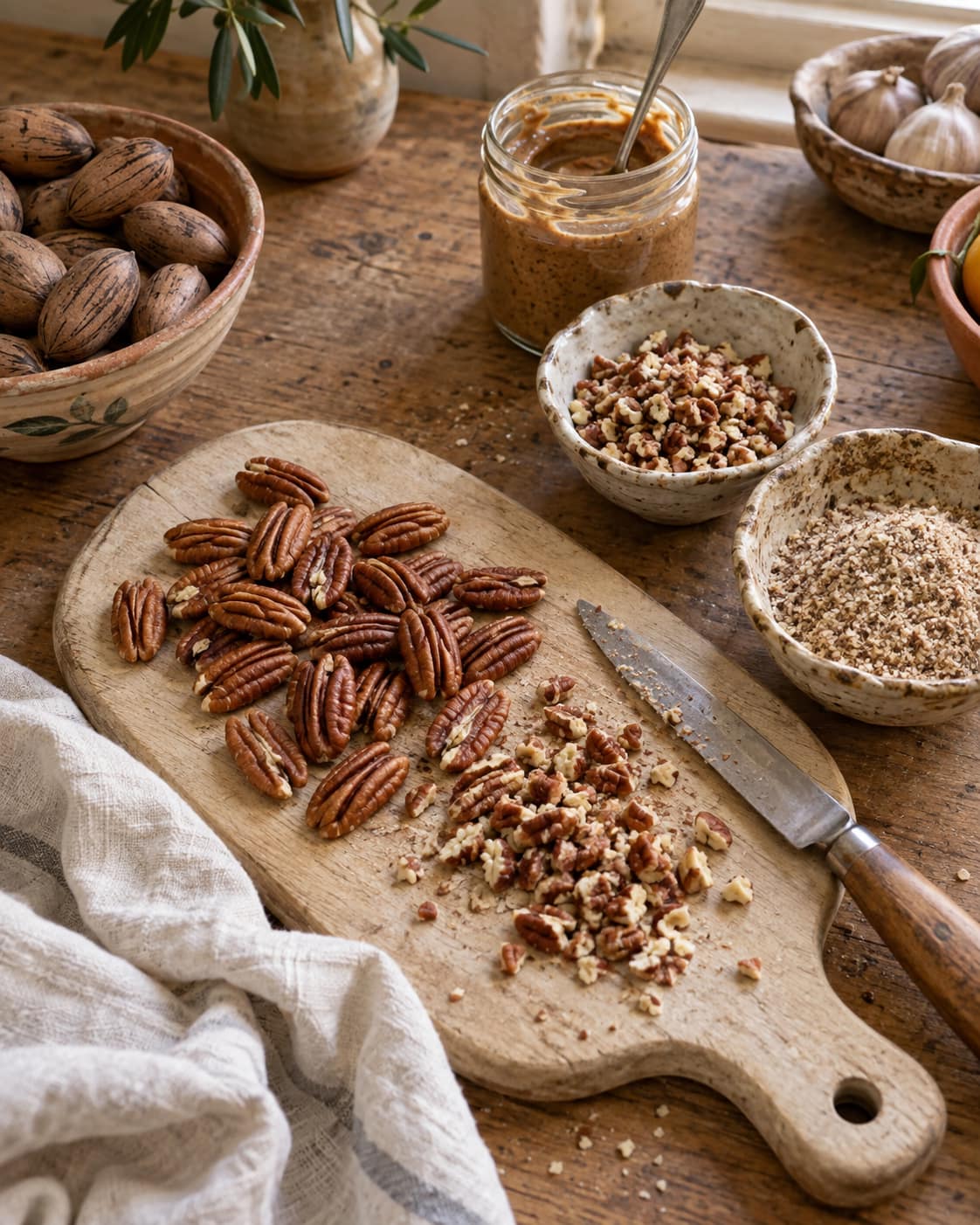
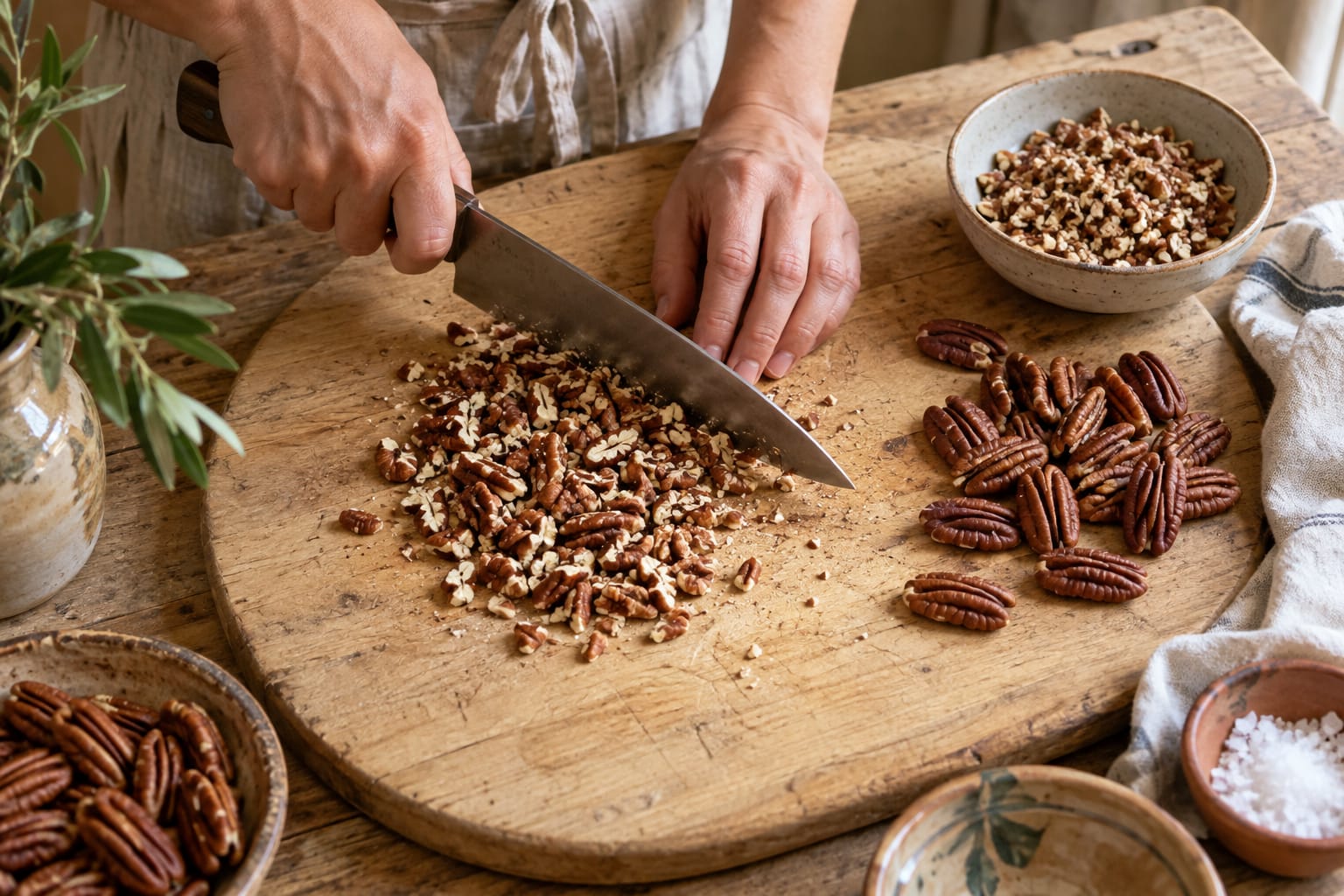
I almost always chop pecans by hand, either with a chef’s knife or a hand chopper. A chef’s knife gives me plenty of control over the size, while a hand chopper makes quick work of a larger handful. Both are especially useful when I want some texture left in the pecans rather than chopping them too finely.
When I need a finer, more even texture, I reach for the food processor. Use short pulses and check the pecans often. Their naturally high oil content means they can quickly move past finely chopped and begin turning into pecan butter if you let the processor run too long.
How finely I chop them really depends on what I’m making. For cookies and quick breads, I like pieces large enough that you still notice the pecans in every bite. For crusts, coatings, and streusel, I’ll go finer so they blend more evenly with the other ingredients.
When a recipe calls for chopped pecans, I prefer to weigh them rather than rely on a cup measurement. How much fits into a measuring cup changes with the size of the pieces, while the weight stays the same.
How to Use Pecans
Once you get to know pecans, this is where the fun begins. Their buttery flavor and delicate crunch make them easy to work into both sweet and savory dishes, sometimes with nothing more than a quick chop or a few minutes of toasting.
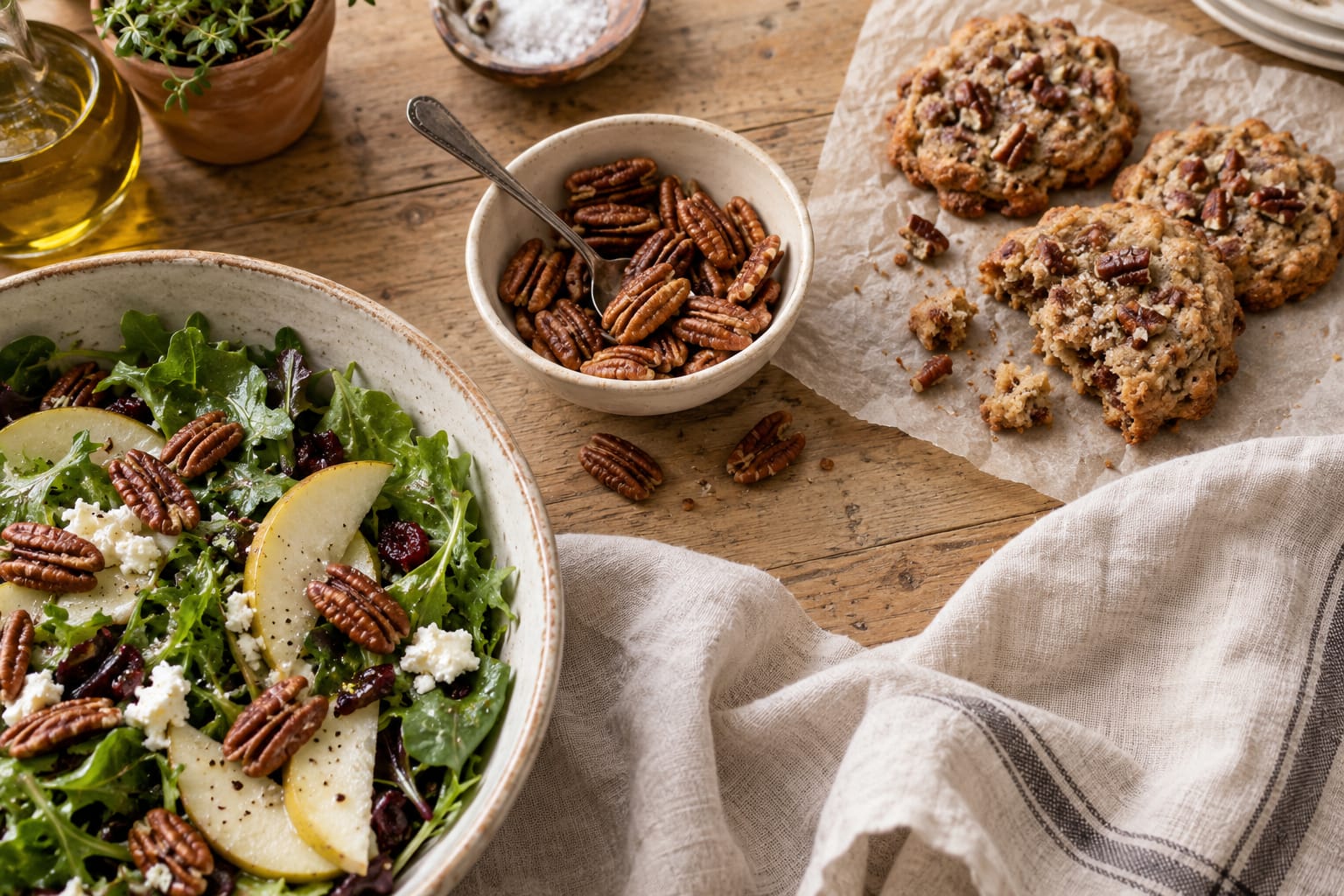
I love scattering a handful over Overnight Oats with Kefir, folding them into an Apple Cinnamon Oatmeal Bake, or letting them take center stage in Butterscotch Pecan Biscotti. They’re just as at home tossed into a salad, paired with roasted vegetables, or added to something warm from the oven.
And this is only the beginning. In Part 2: One Ingredient, Many Possibilities, we’ll open the pantry a little wider and explore all the creative ways pecans can move from breakfast to dinner, baking, and something sweet.
Can Pecans Replace Walnuts?
In many recipes, yes. Pecans and walnuts can often be swapped in cookies, muffins, quick breads, salads, and toppings. I recommend substituting them by weight, especially in baking, so the amount stays consistent.
The biggest difference is flavor. Pecans are naturally sweeter and more buttery, while walnuts have a deeper, earthier flavor with a slight bitterness. Pecans also have a more delicate bite, so changing the nut can subtly change both the flavor and texture of what you’re making.
For recipes where the nut plays a supporting role, I’m comfortable making the swap and letting the pecans bring their own personality to the dish. If the recipe is built around a particular nut, though, I’d stick with the original until you know how changing it will affect the finished result.
Frequently Asked Questions
Do pecans need to be refrigerated?
Not for short-term storage. Pecans can stay in an airtight container in a cool, dark pantry if you plan to use them within a few weeks. For longer storage, or if your kitchen runs warm, keep them in the refrigerator or freezer to help preserve their flavor.
Can pecans go bad?
Yes. Pecans contain natural oils that can become rancid over time. Discard any that smell sour, musty, or like paint, or show signs of mold. Toasting won’t restore pecans that have gone rancid.
Should I toast pecans before baking?
It depends on the recipe. Toasting can deepen their flavor and give them a crisper bite, but I always follow the recipe first. If it calls for raw pecans, use them raw. If you’re creating or adapting something yourself, toasting is one way to bring more pecan flavor forward.
Can I freeze pecans?
Yes. Pecans freeze beautifully when sealed well in an airtight container or freezer bag. Take out only what you need and let them come to room temperature in the closed container before opening it to help prevent condensation.
Are pecans naturally sweet?
Yes, pecans have a gentle natural sweetness along with their buttery, earthy flavor. Toasting can make that sweetness and nutty aroma more noticeable. If you’re buying roasted or flavored pecans, check the label for added sugar, oils, salt, or seasonings.
Ingredient Philosophy
I choose organic ingredients whenever I can, and I read labels for products made with fewer, recognizable ingredients. I also try to buy what I know I’ll actually use. A smaller amount of good quality pecans that stays fresh in my pantry makes more sense to me than buying a large bag simply because it costs a little less.
I usually buy raw, unsalted pecans because they give me more freedom in the kitchen. I can toast them, season them, bake with them, or grab a handful just as they are without working around added salt, sugar, or oils. Keeping ingredients like these on hand is part of how I build a well-stocked pantry that works for the way I actually cook and bake.
For me, Pantry Foundations is also about understanding why ingredients are different and how those differences show up in what we make. Pecans are one example, and chocolate is another. In Cocoa Powders Explained, I break down natural and Dutch-process cocoa and how knowing the difference can change the way you bake. The more we understand what’s in our pantry, the more confidently and creatively we can use it.
Around My Table
October has always been one of my favorite months. It’s my birthday month, the beginning of autumn, and that first little hint that the holidays aren’t too far away. There’s an anticipation to October that I love, especially when cooler mornings finally begin making their way to Arizona and I find myself spending more time in the kitchen.
It’s also when I start reaching for pecans more often. I keep them in those glass Weck jars in the pantry, ready for a handful over breakfast, something I’m testing in the kitchen, or an idea I’ve scribbled down and want to try. Sometimes they make it into the recipe I had planned, and sometimes a few disappear along the way.
That’s really what I hope Getting to Know Pecans leaves you with. Not a list of rules to remember, but a better feel for the ingredient and a little more confidence when you reach for it in your own kitchen. In Part 2, Pecans: One Ingredient, Many Possibilities, we’ll take everything we’ve learned here and start getting creative with where pecans can take us next.
There’s always something new to discover in the pantry. Explore more Pantry Foundations in the Cook’s Pantry, Baker’s Pantry, and Seasonal Pantry, where we’ll keep getting to know the ingredients that help us cook and bake with more confidence and creativity.
With flour-dusted hands, something simmering nearby, and plenty of laughter and good food to share around the table,


Questions about a recipe or technique?
I’m always happy to help. Feel free to reach out if you need guidance, substitutions, or a little extra help in the kitchen.
Pull up a Chair...
return to pantry foundations
return to recipe box
[email protected]
Questions about a recipe or technique?
I’m always happy to help. Feel free to reach out if you need guidance, substitutions, or a little extra help in the kitchen.
Lisa Marie