


Simple Homemade Marinara Sauce

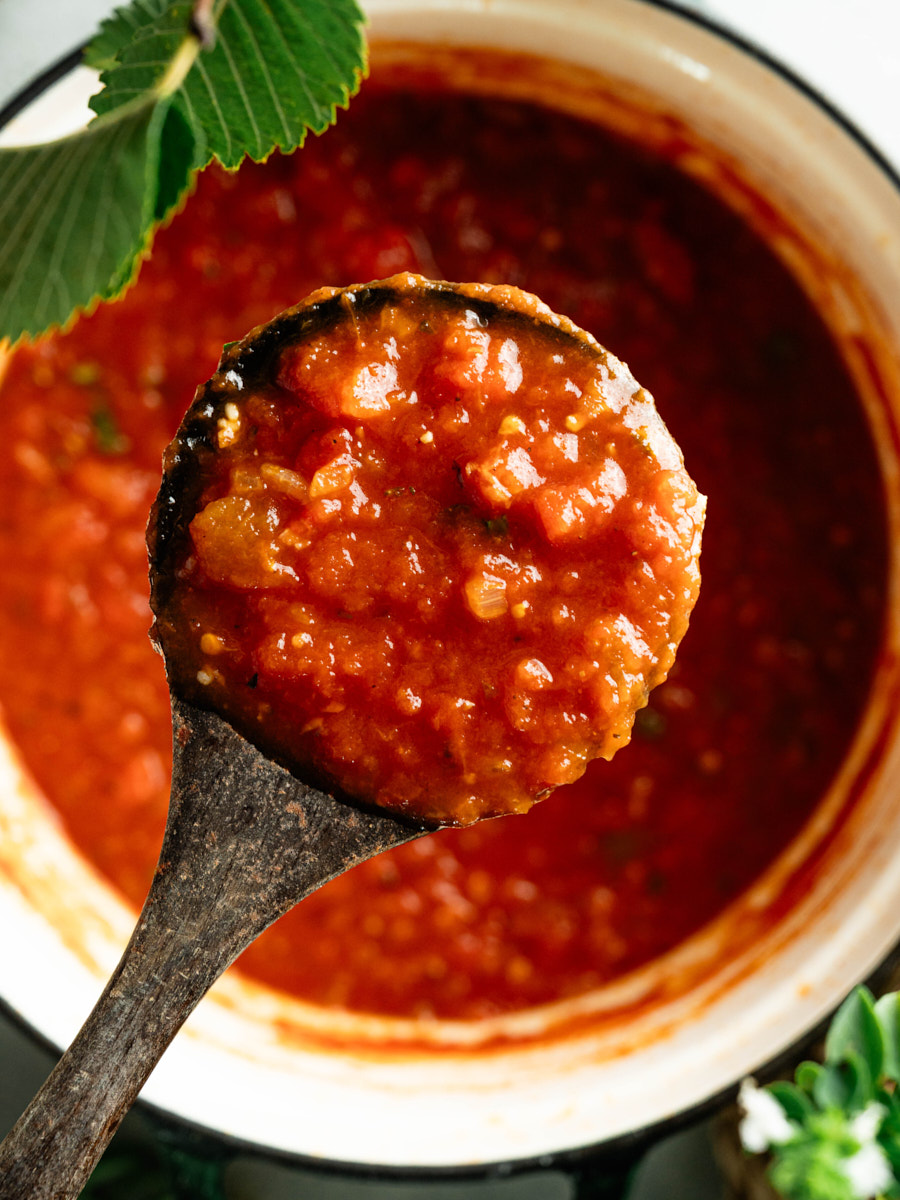
This simple homemade marinara sauce turns tomatoes, garlic, olive oil, oregano, and basil into a rustic, versatile pantry staple.
August 19, 2026
There is something nostalgic about a pot of simple homemade marinara sauce simmering on the stove. The ingredients are familiar, the method is unhurried, and before long the kitchen smells like tomatoes, garlic, olive oil, and basil.
This is the sauce I reach for when I want one recipe to carry me through several meals. Spoon it over pasta, spread it across pizza dough, tuck it into stuffed zucchini boats, or warm it alongside good bread. It is rustic, bright, and useful in all the best ways.
A good marinara doesn’t need a long list of ingredients. It just needs enough time for the tomatoes to soften and deepen. This stovetop version makes about 3 cups and comes together in one saucepan with 10 minutes of prep and 30 to 40 minutes of cooking. If you’re looking for even more inspiration, explore these creative ways to use tomatoes in everyday cooking.
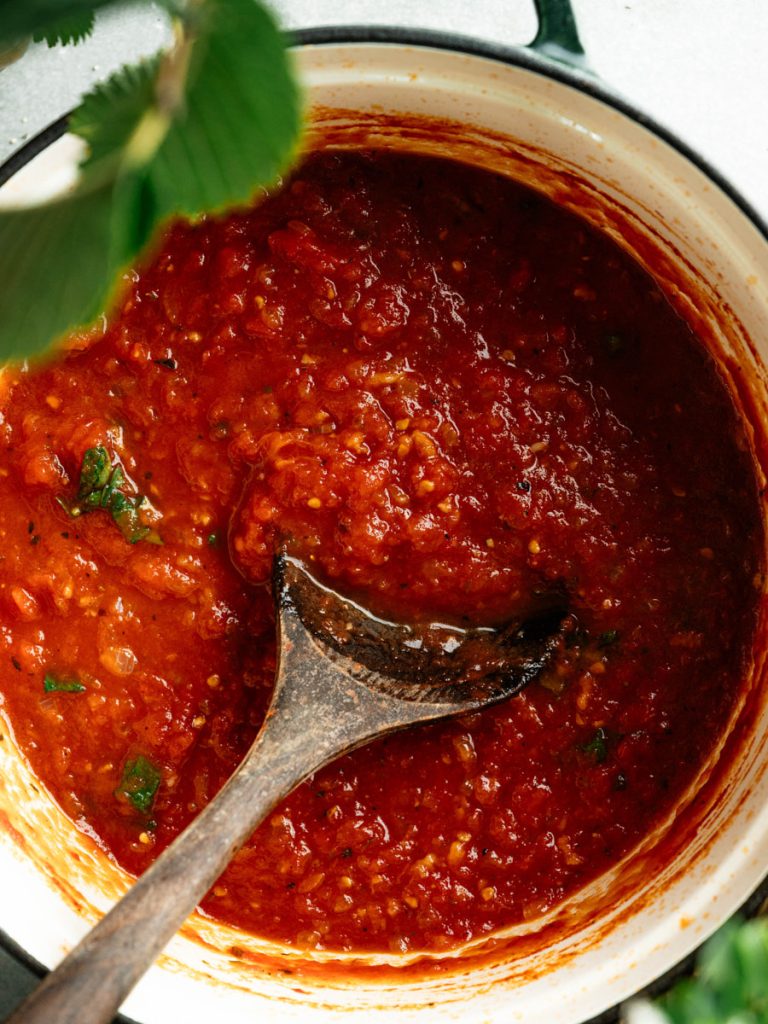
Why You Will Love This Homemade Marinara
This everyday sauce earns its place in the refrigerator because it is simple enough for a weeknight and flavorful enough to become a foundation recipe.
- It uses familiar pantry and refrigerator staples.
- The sauce is ready in 40 to 50 minutes, including prep time.
- You can keep the texture rustic or blend it until smooth.
- It works with pasta, pizza, meatballs, baked vegetables, and warm bread.
- It stores and freezes well, making tomorrow’s dinner a little easier.
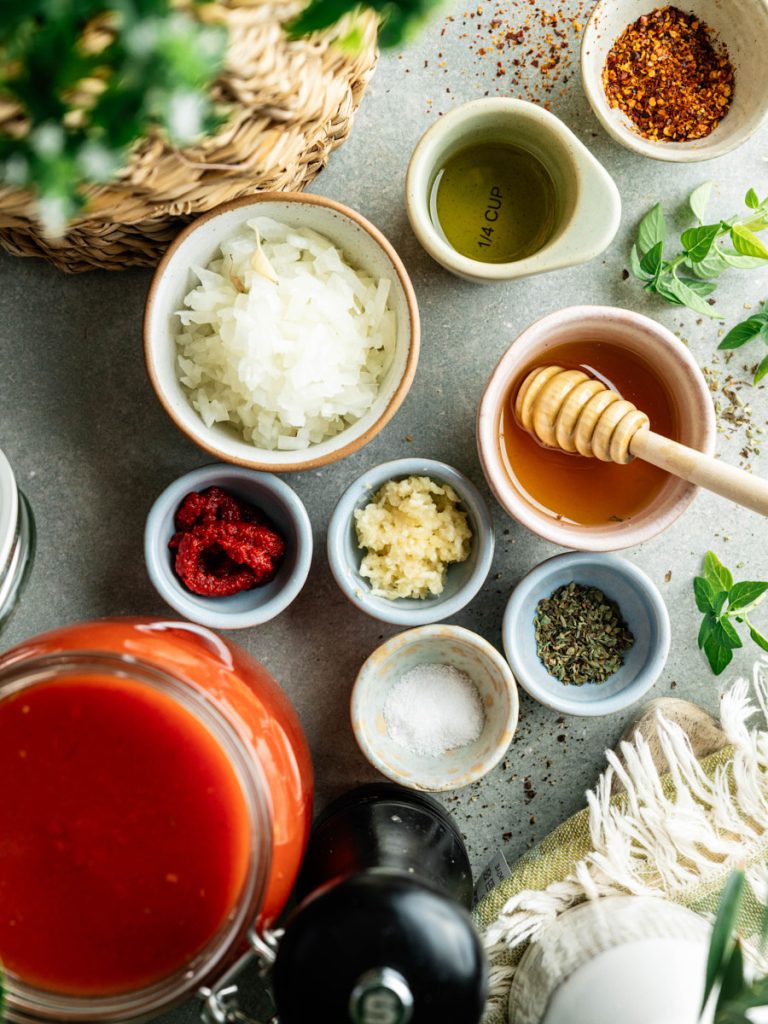
Ingredients You’ll Need
Tomatoes
Use one 28-ounce can of whole peeled or crushed tomatoes. Whole peeled tomatoes give you the most control over texture. Crush them by hand for a rustic sauce or pulse them briefly before cooking for a smoother finish.
Look for tomatoes with a short ingredient list and a clean, naturally sweet flavor. Because the tomatoes are the heart of the recipe, a good can makes a noticeable difference. Not sure whether to choose whole peeled tomatoes or crushed tomatoes? My Tomatoes 101 guide explains how each variety works.
Extra-Virgin Olive Oil
Extra-virgin olive oil creates the base of the sauce and carry the flavors of the onion, garlic, oregano, and basil. Choose an oil that tastes pleasant on its own. The flavor does not need to be expensive or bold, only fresh and balanced.
Yellow Onion
Yellow onion brings gentle sweetness and body. Dice it finely so it nearly disappears into the finished sauce. Cook it slowly over medium-low heat until soft and translucent, avoiding deep browning.
Garlic
Minced garlic cloves give the marinara its savory backbone. Add the garlic after the onion has softened and cook it for about 30 seconds. Garlic can turn bitter quickly, so add the tomatoes as soon as it smells fragrant.
Tomato Paste
Tomato paste is optional, but it gives the sauce a thicker body and deeper tomato flavor. It is especially helpful when the marinara will be used for pizza, stuffed vegetables, or baked pasta.
Oregano and Fresh Basil
Dried oregano infuses the sauce as it simmers. Fresh basil goes in during the final 5 minutes so its flavor stays lively and aromatic. Use one small sprig and remove it before serving, or add five fresh leaves and leave them in the sauce.
Salt, Pepper, and Red Pepper Flakes
Fine sea salt sharpens the tomato flavor, while freshly ground black pepper brings gentle warmth. A pinch of red pepper flakes is optional. It should add a little spark rather than turn the sauce spicy.
Honey or Cane Sugar
Honey or cane sugar is optional and should only be added after tasting. Some canned tomatoes are naturally sweet, while others lean acidic. Add just enough to soften any sharp edge without making the sauce taste sweet.
Ingredient Philosophy
Marinara is a lesson in how a few well-chosen ingredients can become more than the sum of their parts. Nothing needs to be fussy. Fresh olive oil, good canned tomatoes, and fragrant basil do most of the work when we give them time.
I keep canned tomatoes in the pantry throughout the year because they make seasonal, from-scratch cooking possible even when fresh tomatoes are not at their best. Choose what fits your kitchen and budget, taste as you go, and let the sauce tell you what it needs.
How to Make Simple Homemade Marinara Sauce
Prepare the Tomatoes
If you are using whole peeled tomatoes, pour them into a bowl and crush them with clean hands. For a finer sauce, pulse them briefly in a blender. Do not blend for too long or the texture may become foamy.
Soften the Onion
Warm 2 tablespoons of extra-virgin olive oil in a medium saucepan over medium-low heat. Add the finely diced onion and cook for 5 to 7 minutes, stirring occasionally. The onion should become soft and translucent without taking on much color.
Add the Garlic and Tomato Paste
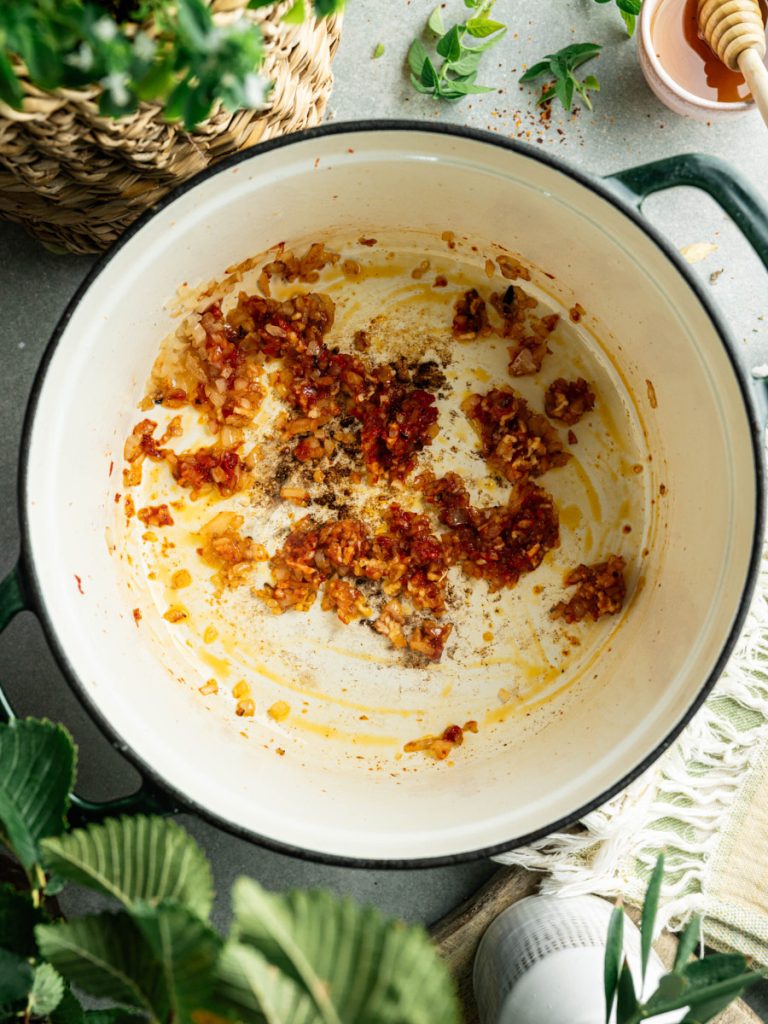
Stir in the minced garlic and cook for about 30 seconds, just until fragrant. If you are using tomato paste, add it now and cook for 1 minute. Stir often so the garlic and paste do not catch on the bottom of the pan.
Simmer the Sauce
Add the tomatoes, fine sea salt, oregano, black pepper, and optional red pepper flakes. Bring the mixture to a gentle simmer, then reduce the heat to low.
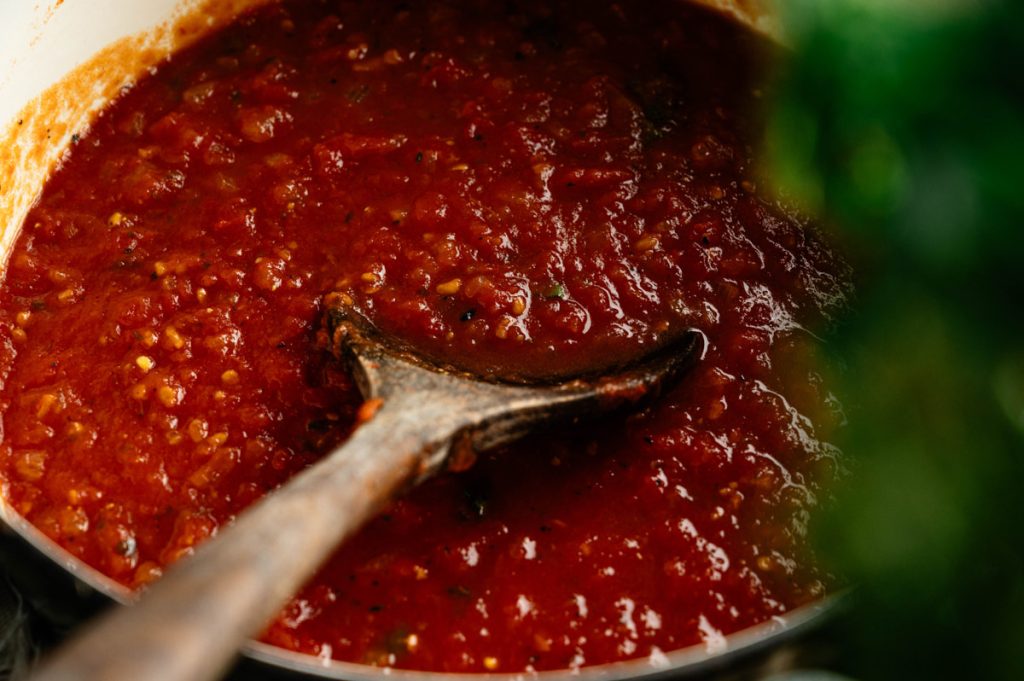
Cook uncovered for 25 to 35 minutes, stirring occasionally. The sauce should bubble quietly, not boil aggressively. As moisture evaporates, the tomato flavor will deepen and the marinara will thicken naturally.
Finish with Basil
Add the fresh basil during the final 5 minutes of cooking. Taste the sauce. If the tomatoes are particularly acidic, stir in a small amount of honey or cane sugar. The sauce may not need any.
Remove the basil sprig if you used one. Leave the marinara rustic, or use an immersion blender for a smoother texture. Adjust the salt before serving.
My Weathered Table Tips
Thicken it for pizza or stuffed vegetables: Use the tomato paste and simmer until the sauce holds its shape on a spoon.
Loosen it for pasta: Stir in a splash of starchy pasta water as needed.
Keep the heat low: A hard boil can cause scorching and make the flavor taste flat.
Taste before adding sweetness: Many canned tomatoes are already balanced and need no honey or sugar.
Adjust the consistency: If the sauce becomes too thick, stir in a small splash of water.
Use a deeper saucepan: It helps contain splatters while still allowing moisture to evaporate.
Print
Simple Homemade Marinara Sauce
A rustic, all-purpose marinara made with tomatoes, garlic, olive oil, and fresh basil. Use it for zucchini boats, pasta, pizza, meatballs, or dipping warm bread.
- Total Time40–50 minutes
- YieldAbout 3 cups 1x
Ingredients
- 2 tablespoons extra-virgin olive oil
- 1/2 small yellow onion, finely diced
- 3 garlic cloves, minced
- 794 g whole peeled or crushed tomatoes
- 1 tablespoon tomato paste, optional, for a thicker sauce
- 3/4 teaspoon fine sea salt, plus more to taste
- 1/2 teaspoon dried oregano
- 1/4 teaspoon freshly ground black pepper
- Pinch of red pepper flakes, optional
- 1 small sprig fresh basil or 5 fresh basil leaves
- 1 teaspoon honey or cane sugar, optional
Instructions
- If using whole peeled tomatoes, crush them by hand in a bowl or briefly blend them for a smoother sauce.
- Warm the olive oil in a medium saucepan over medium-low heat.
- Add the onion and cook for 5 to 7 minutes, stirring occasionally, until soft and translucent. Avoid browning it.
- Add the garlic and cook for about 30 seconds, just until fragrant.
- Stir in the tomato paste, if using, and cook for 1 minute. This deepens the tomato flavor and helps thicken the marinara.
- Add the tomatoes, salt, oregano, black pepper, and red pepper flakes.
- Bring the sauce to a gentle simmer. Reduce the heat to low and cook uncovered for 25 to 35 minutes, stirring occasionally.
- Add the fresh basil during the final 5 minutes. Taste the sauce. If the tomatoes are particularly acidic, add a small amount of honey or sugar. It may not need any.
- Remove the basil sprig. Leave the marinara rustic or blend it with an immersion blender for a smoother texture.
Notes
For a thicker marinara suited to pizza or stuffed zucchini boats, use the tomato paste and simmer until the sauce holds its shape on a spoon. For pasta, loosen the finished sauce with a splash of pasta water as needed.
- Prep Time: 10 minutes
- Cook Time: 30–40 minutes
Ways to Use Homemade Marinara
Pasta Night
Toss the sauce with spaghetti, rigatoni, or fresh pasta. Add a splash of pasta water to help it cling to the noodles, then finish with basil, olive oil, or grated cheese if desired.
Pizza and Flatbread
Spread a thin layer over pizza dough or flatbread. Use the tomato paste and simmer the sauce a few minutes longer so it does not make the crust soggy.
Stuffed Vegetables
Spoon the marinara into stuffed peppers, or baked eggplant. Its bright flavor balances rich fillings and brings everything together. It makes the perfect base for my Italian-style stuffed zucchini boats, bringing together tender zucchini, a savory filling, and plenty of comforting Italian flavor.
Meatballs and Baked Dishes
Simmer meatballs gently in the sauce, or layer it into lasagna, baked ziti, eggplant Parmesan, and other oven dishes.
A Simple Snack
Warm a small bowl of marinara and serve it with toasted bread, fried vegetables, or mozzarella sticks. It is one of those humble combinations that disappears quickly.
Substitutions and Variations
Smooth Marinara
Blend the finished sauce with an immersion blender until it reaches your preferred texture. Let it settle for a minute before tasting and adjusting the seasoning.
Spicy Marinara
Increase the red pepper flakes a little at a time. Let them bloom briefly with the garlic before adding the tomatoes for a more pronounced heat.
Garlic-Forward Sauce
Add one additional garlic clove, but keep the heat gentle. Cooking the garlic until fragrant rather than browned preserves its sweeter side.
Fresh Tomato Version
When garden tomatoes are abundant, a fresh tomato sauce is lovely, but the timing and liquid balance will differ from this canned-tomato recipe. Peel and seed the tomatoes if desired, then simmer until the sauce reaches the right consistency.
Herb Variation
Add a small sprig of thyme or a little chopped parsley near the end. Avoid mixing too many dried herbs, which can cover the clean tomato and basil flavor.
Storage and Freezing
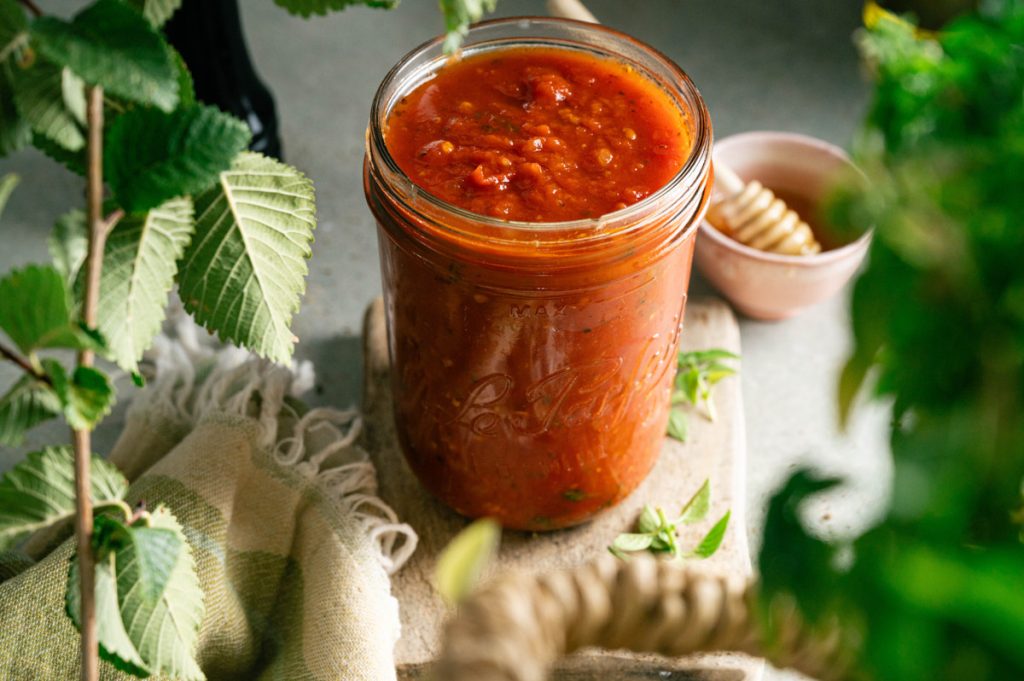
Allow the sauce to cool, then transfer it to a clean airtight container. Refrigerate for up to 5 days. Reheat gently on the stovetop, stirring occasionally. If the sauce thickens in the refrigerator, add a splash of water.
For longer storage, portion the cooled marinara into freezer-safe containers and freeze for up to 3 months. Leave a little room for expansion. Thaw overnight in the refrigerator, then warm slowly and adjust the seasoning before serving.
Smaller portions are especially useful for pizza, dipping, or adding to a quick lunch. Label the container with the amount so you know exactly what is waiting in the freezer.
Frequently Asked Questions
Is marinara sauce the same as tomato sauce?
Marinara is a simple tomato sauce usually made with tomatoes, olive oil, garlic or onion, and herbs. “Tomato sauce” is a broader term and may include vegetables, meat, longer cooking, or a smoother texture.
Should marinara be smooth or chunky?
Either texture is right. Crush whole tomatoes by hand for a rustic sauce, or blend the finished marinara for a smoother consistency. Choose the texture that suits the dish.
Why is my marinara sauce acidic?
Tomato variety and brand can affect acidity. Simmering helps soften sharpness. Taste near the end and add a small amount of honey or cane sugar only if needed.
Do I need tomato paste?
No. Tomato paste is optional. Use it when you want a deeper tomato flavor or a thicker sauce for pizza, stuffed vegetables, or baked dishes.
Can I double this recipe?
Yes. Use a larger, wide pot and allow extra simmering time if needed. A larger volume may take longer to reduce to the same consistency.
Can I freeze homemade marinara?
Yes. Cool the sauce completely and freeze it in airtight, freezer-safe containers for up to 3 months. Thaw it overnight in the refrigerator before reheating.
Around My Table
A pot of marinara simmering on the stove makes the whole kitchen feel settled. The ingredients are ordinary, but time changes them. The onion softens, the tomatoes deepen, and basil perfumes the room.
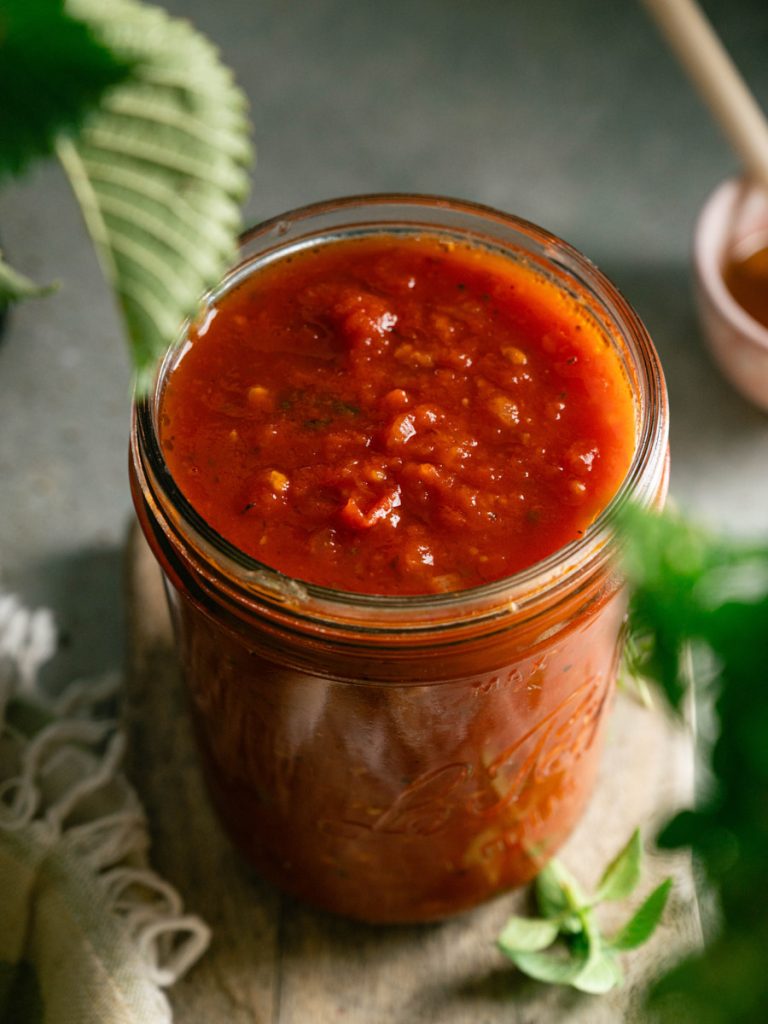
I like to keep a jar tucked into the refrigerator because it turns whatever is nearby into a meal. A bowl of pasta, a few roasted vegetables, or a heel of bread suddenly has somewhere delicious to go.
This is everyday cooking at its most generous. Make a pot, use what you need tonight, and save the rest for the meals still to come. Simple food has a lovely way of taking care of us.
This simple homemade marinara is only the beginning. Visit the Recipe Box for more Mediterranean-inspired recipes, homemade sauces, and everyday meals made from scratch.
2 responses to “Simple Homemade Marinara Sauce”
-
Rich, easy, and delicious! This marinara sauce is so easy to make! Normally I don’t use onion in my marinara but this brought so much more flavor! This is my new go to marinara sauce. It’s quick and easy to make while preparing meat, or noodles at the same time. Thanks for another amazing recipe!
-
Thank you so much, Stephanie! I’m thrilled the onion won you over. It adds such wonderful depth and sweetness to a simple marinara sauce. I love that this has become your new go-to, especially for those busy dinners when everything can cook at once. Thank you for leaving such a lovely review! 🤎
-


Leave a Reply