Fresh Herbs: From Garden to Table, How to Choose, Store, and Use Them
September 17, 2026
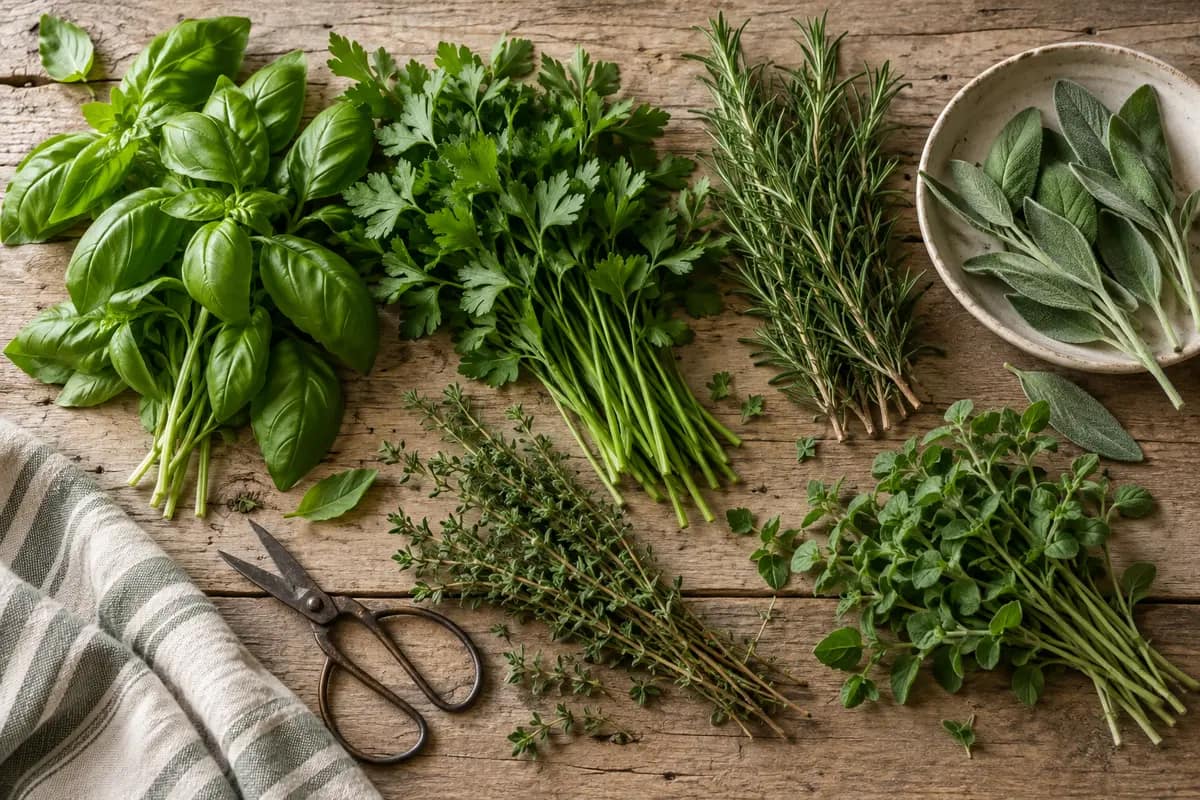
Fresh herbs bring color, fragrance, and garden flavor to everyday meals. Learn how to choose, store, and prepare your favorites, from tender basil and parsley to woody rosemary and thyme.
Ingredient of the Month: Fresh Herbs
Part of June Ingredient of the Month Series
Part 2 • One Ingredient, Many Possibilities
A handful of fresh herbs can completely change a dish.
Basil folded into warm pasta, rosemary tucked beneath roasting vegetables, or parsley scattered over a finished bowl brings color, fragrance, and fresh garden flavor to the table. Herbs may look like a finishing touch, but they often become the ingredient that pulls everything together.
Fresh herbs have always been part of the rhythm in the My Weathered Table kitchen. I grow them near the house where I can snip what I need while cooking. Some days it is a generous handful for pesto. Other days, it is only a few leaves of basil torn over tomatoes or a sprig of rosemary added to a pot simmering on the stove.
They are simple ingredients with beautiful possibilities.
Let’s take a closer look at how to choose, store, prepare, and cook with the fresh herbs we use most often.
What Are Fresh Herbs?
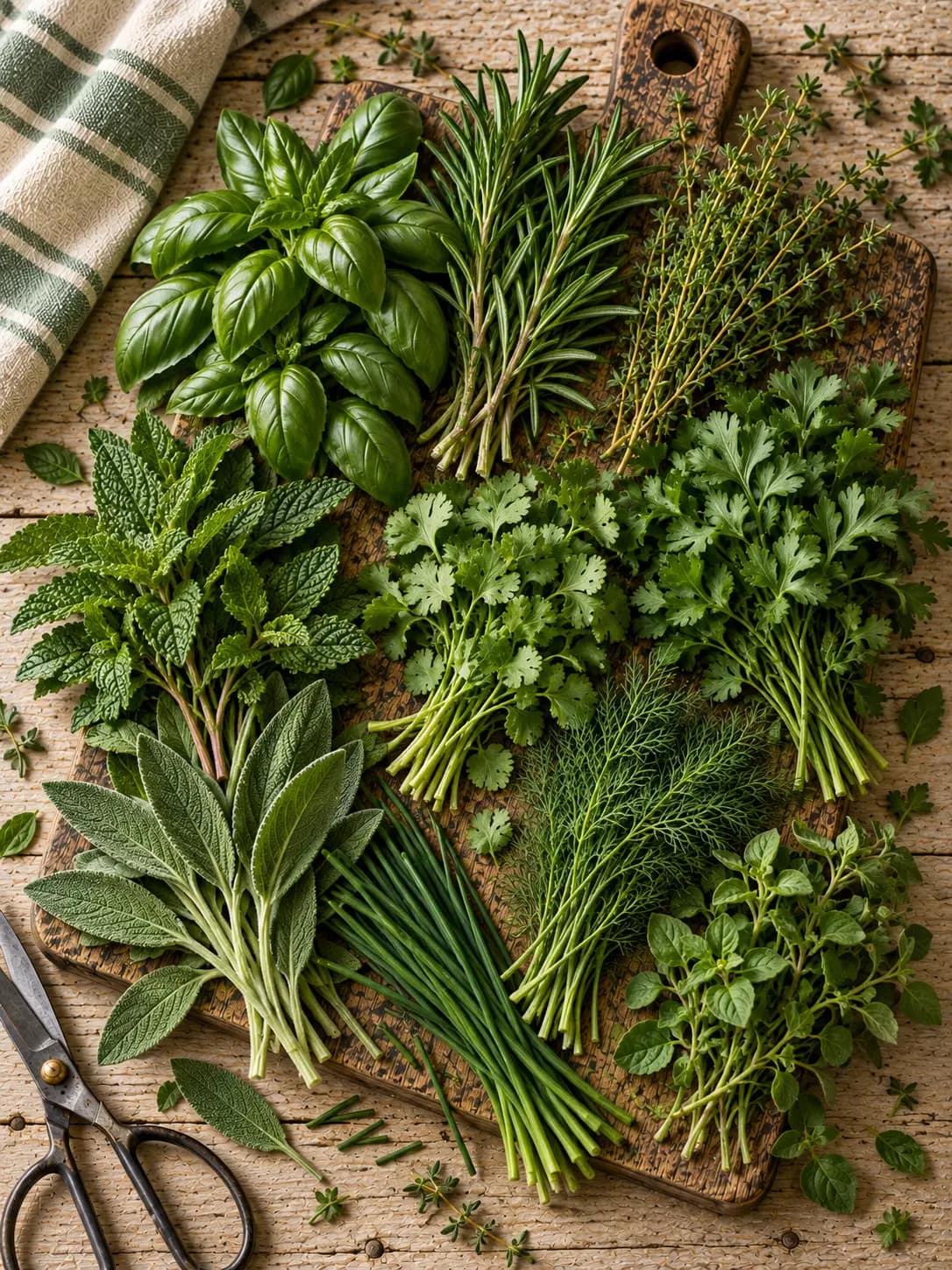
Fresh herbs are the leafy, fragrant parts of plants used to season food.
Unlike spices, which often come from dried seeds, bark, roots, berries, or fruit, culinary herbs usually come from the leaves and tender stems of the plant.
Fresh herbs fall into two helpful categories: tender herbs and sturdy herbs.
Understanding the difference makes it easier to know when to add them to a dish and how to store them once they come home.
Tender Herbs
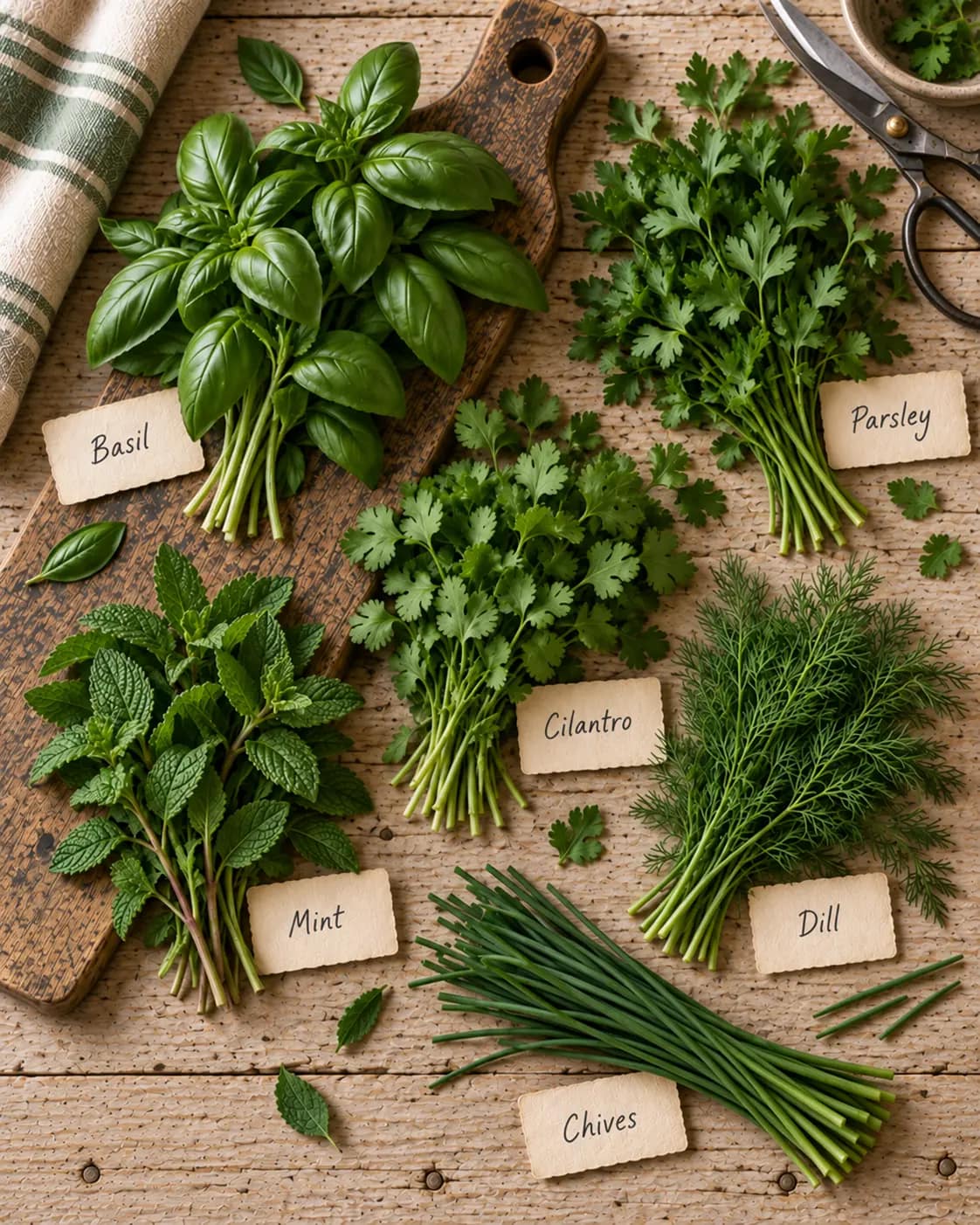
Tender herbs have soft leaves and delicate stems. Their flavors are usually brightest when they are added toward the end of cooking or used fresh.
Common tender herbs include:
- Basil
- Parsley
- Cilantro
- Dill
- Mint
- Chives
- Tarragon
Long cooking can dull their color and soften their fresh flavor. Add them during the final minutes of cooking or scatter them over the finished dish.
Parsley and cilantro stems are also tender and flavorful. Finely chop them into sauces, dressings, soups, and marinades instead of automatically tossing them into the compost bowl.
Sturdy Herbs
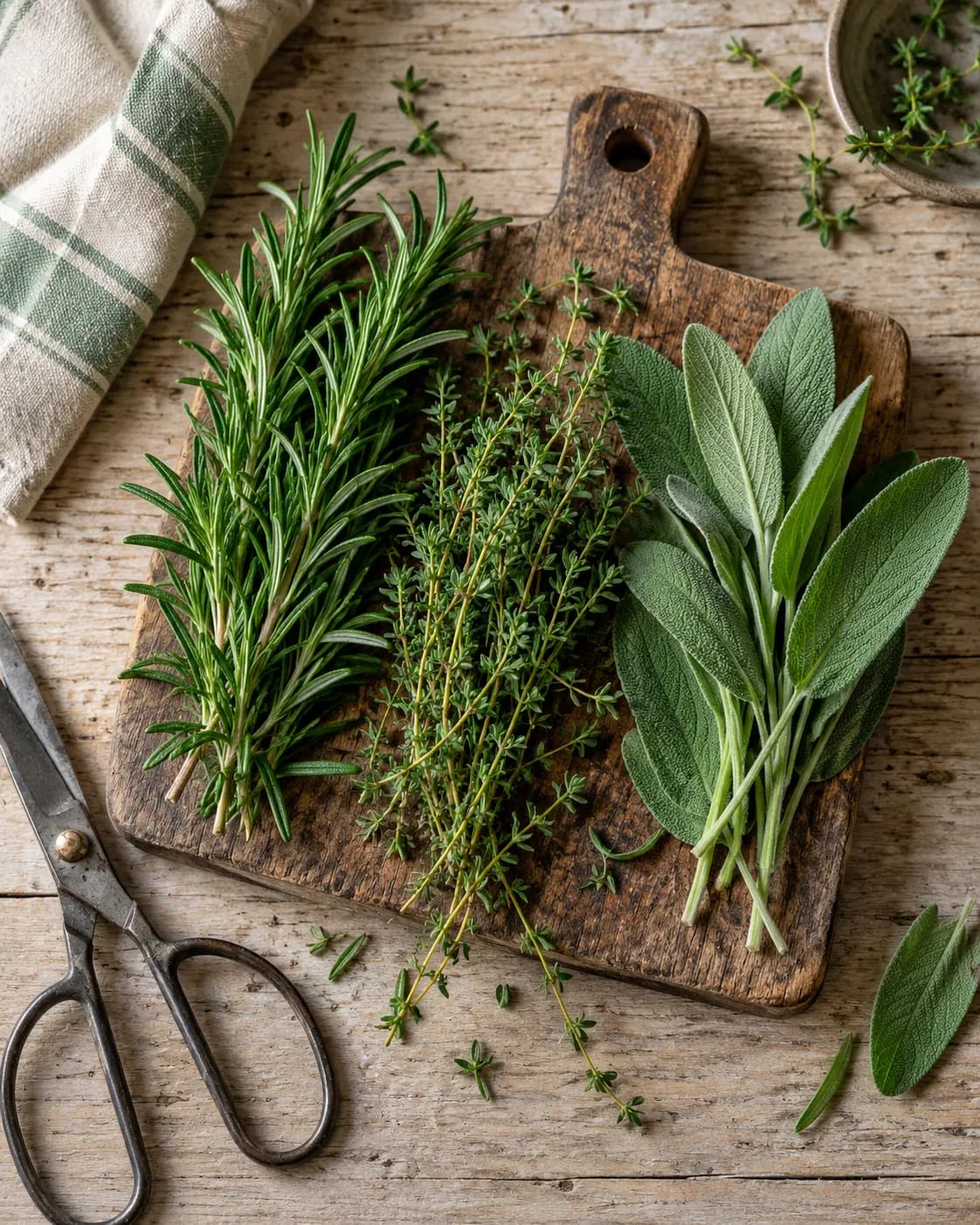
Sturdy herbs have firmer leaves and woodier stems. They can stand up to longer cooking times and slowly release their flavor into a dish.
Common sturdy herbs include:
- Rosemary
- Thyme
- Sage
- Oregano
- Marjoram
Add these herbs earlier when preparing soups, braises, roasted meats, sauces, and vegetables.
Whole sprigs can simmer in a pot and then be removed before serving. If you chop the leaves, use a light hand at first. Sturdy herbs can become strong, especially rosemary and sage.
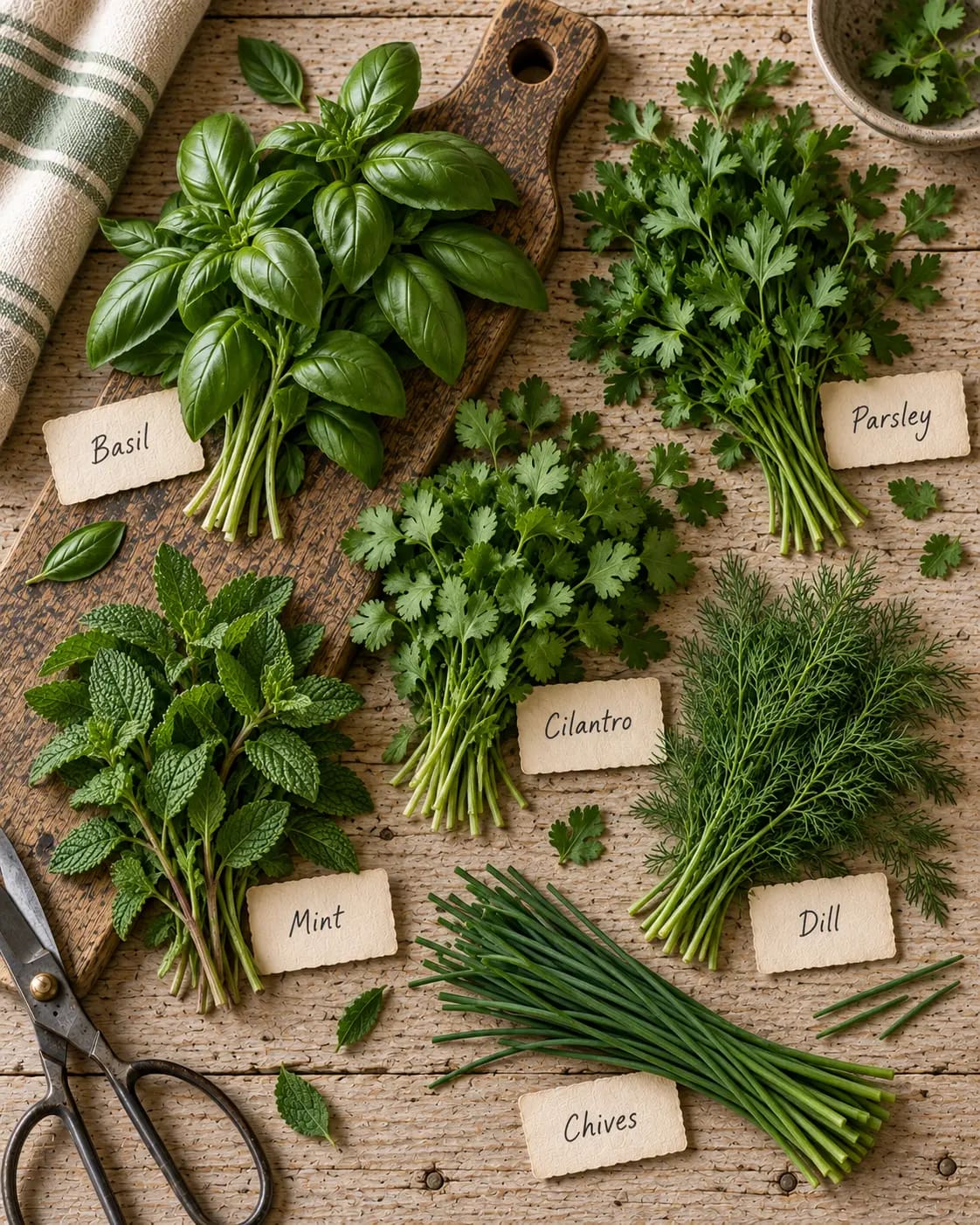
The Fresh Herbs I Use Most Often
There is room for many herbs in a kitchen garden, but a small group will carry you through countless recipes.
Basil
Basil has a soft, sweet, peppery flavor and is closely connected to Italian and Mediterranean cooking.
Use it in pesto, tomato sauces, pasta, salads, soups, sandwiches, and alongside ripe summer tomatoes. Tear or slice the leaves shortly before serving because cut basil darkens easily.
Add fresh basil near the end of cooking to preserve its color and fragrance.
Flat-Leaf Parsley
Flat-leaf parsley brings fresh, grassy flavor without overwhelming the other ingredients.
It is one of the most useful herbs to keep in the refrigerator. Add it to soups, pasta, roasted vegetables, grain salads, dressings, meatballs, and marinades.
Parsley is far more than a garnish. A generous handful can brighten a rich dish and bring balance to the final plate.
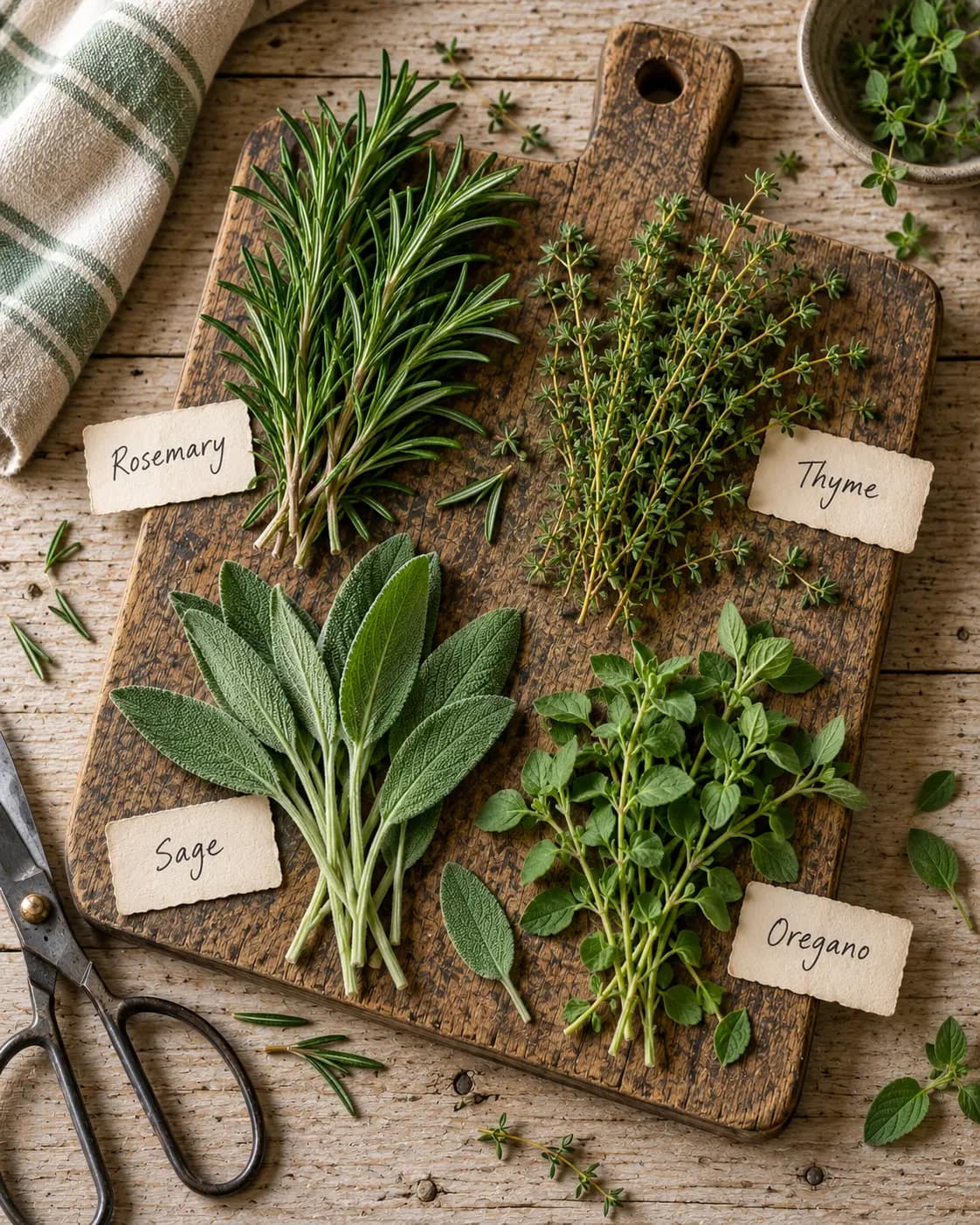
Rosemary
Rosemary has a piney fragrance and a bold, savory flavor.
It pairs beautifully with potatoes, white beans, focaccia, chicken, lamb, tomatoes, and roasted vegetables. Add whole sprigs to soups and braises or finely chop the leaves before adding them to bread dough and marinades.
Because rosemary is strong, begin with a small amount and add more if needed.
Thyme
Thyme is earthy, gently floral, and easy to pair with other ingredients.
Use it in soups, stews, tomato sauces, roasted vegetables, chicken dishes, beans, and savory tarts. Its sturdy leaves hold up well during cooking.
Run your fingers down the stem in the opposite direction of the leaves to remove them quickly. Very young thyme stems are tender enough to chop with the leaves.
Oregano
Fresh oregano tastes greener and more floral than dried oregano.
It pairs naturally with tomatoes, zucchini, peppers, potatoes, beans, grilled meats, and vinaigrettes. Fresh oregano can become assertive, so use it thoughtfully.
Dried oregano remains one of my favorite pantry staples for long-simmered sauces, while fresh oregano shines in garden-driven summer dishes.
Mint
Mint brings freshness to both sweet and savory recipes.
Add it to fruit, yogurt, peas, cucumber salads, grain bowls, iced tea, lemonade, and Mediterranean-inspired dishes. It pairs especially well with lemon, feta, lamb, melon, and berries.
Mint grows enthusiastically, so I prefer planting it in a container where it cannot take over the entire garden.
Dill
Dill has a feathery texture and a fresh flavor with light notes of citrus and anise.
It works beautifully with potatoes, cucumbers, eggs, yogurt, salmon, beans, and creamy dressings. Add it near the end of cooking to protect its delicate flavor.
Chives
Chives bring a mild onion flavor without the sharpness of raw onion.
Snip them over eggs, potatoes, soups, salads, vegetables, soft cheeses, and savory breads. Their purple blossoms are also edible and make a lovely seasonal garnish.
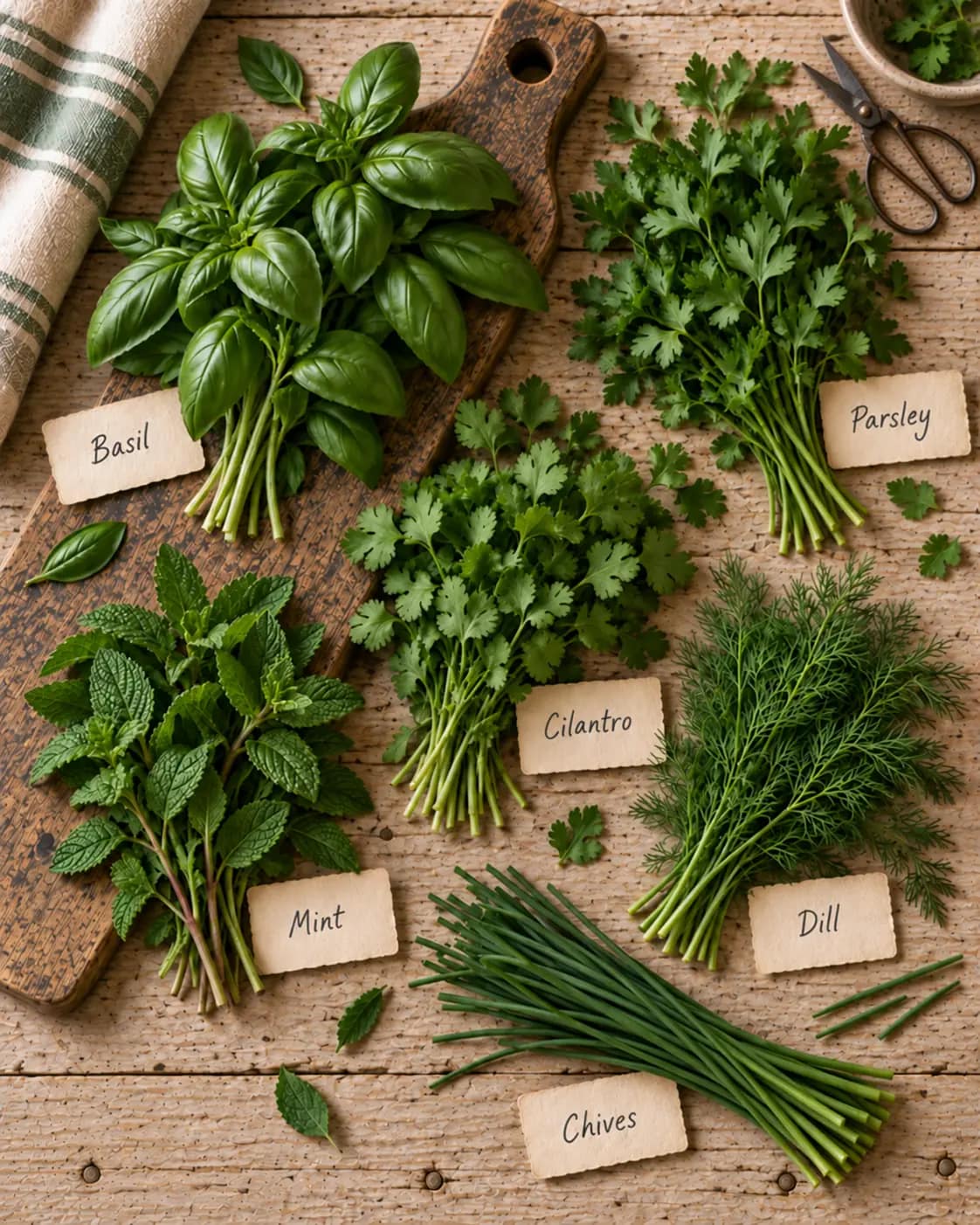
How to Choose Fresh Herbs at the Grocery Store
Look for herbs with vibrant color, upright stems, and leaves that appear fresh and hydrated.
Avoid bunches with:
- Yellowing or blackened leaves
- Slimy spots
- Wilted stems
- Excess moisture inside the package
- Mold or an unpleasant odor
Packaged herbs should look dry rather than wet. Condensation encourages deterioration, especially when delicate leaves press against the plastic.
When possible, buy loose bunches or living herb plants. A small basil, rosemary, or thyme plant can continue providing fresh leaves long after a packaged bunch would have been used.
Choose organic herbs when they are available and fit your budget. Whether they come from the garden, farmers’ market, or grocery store, freshness matters most.
How to Wash Fresh Herbs
Rinse fresh herbs thoroughly under cool running water before preparing or eating them. Do not use soap, detergent, or commercial produce wash.
Gently shake away the excess water, then dry the herbs with a clean kitchen towel or salad spinner.
Moisture left on the leaves can dilute dressings, interfere with chopping, and encourage spoilage during storage. If you wash herbs in advance, make sure they are completely dry before returning them to the refrigerator.
I usually wash herbs shortly before using them. This helps protect their texture and keeps delicate leaves from becoming bruised.
How to Store Fresh Herbs
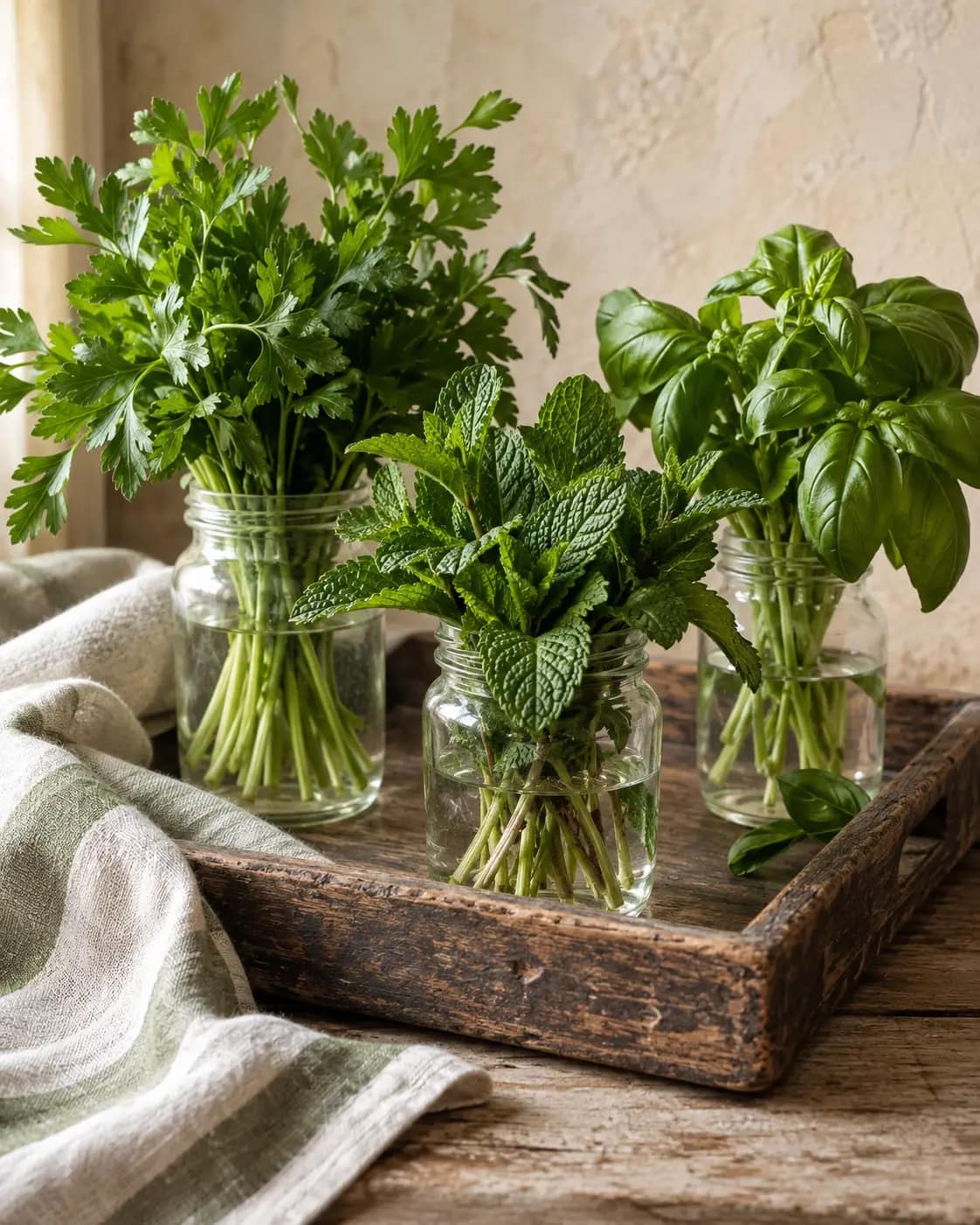
Different herbs prefer slightly different storage methods.
Parsley, Cilantro, Dill, and Mint
Trim a small amount from the bottom of the stems and place the bunch in a jar with an inch or two of water, much like a bouquet.
Loosely cover the leaves with a reusable storage bag and place the jar in the refrigerator. Change the water every couple of days.
Remove any damaged leaves as soon as you notice them.
Basil
Basil dislikes cold temperatures and may darken in the refrigerator.
Trim the stems and place the bunch in a jar of water on the counter, away from direct sunlight and heat. Loosely cover it if your kitchen is especially dry.
Use basil as soon as possible for the best flavor.
Rosemary, Thyme, Sage, and Oregano
Arrange sturdy herbs in a single layer on a barely damp paper towel or clean kitchen cloth.
Roll them loosely, place the bundle inside a storage bag or airtight container, and refrigerate. The towel should feel lightly damp, not wet.
The goal is to prevent the herbs from drying out without surrounding them with excess moisture.
When to Add Fresh Herbs While Cooking
Timing makes a noticeable difference.
Add sturdy herbs near the beginning of cooking so their flavor has time to develop. Rosemary, thyme, sage, and oregano can simmer in soups, sauces, and braises or roast alongside vegetables and meats.
Add tender herbs toward the end. Basil, parsley, cilantro, dill, mint, and chives taste freshest when stirred in during the last few minutes or scattered over the finished dish.
There are always exceptions. Parsley stems can flavor a long-simmered stock, and a few basil stems can perfume tomato sauce. The leaves, however, usually taste best when added closer to serving.
Fresh Herbs vs. Dried Herbs
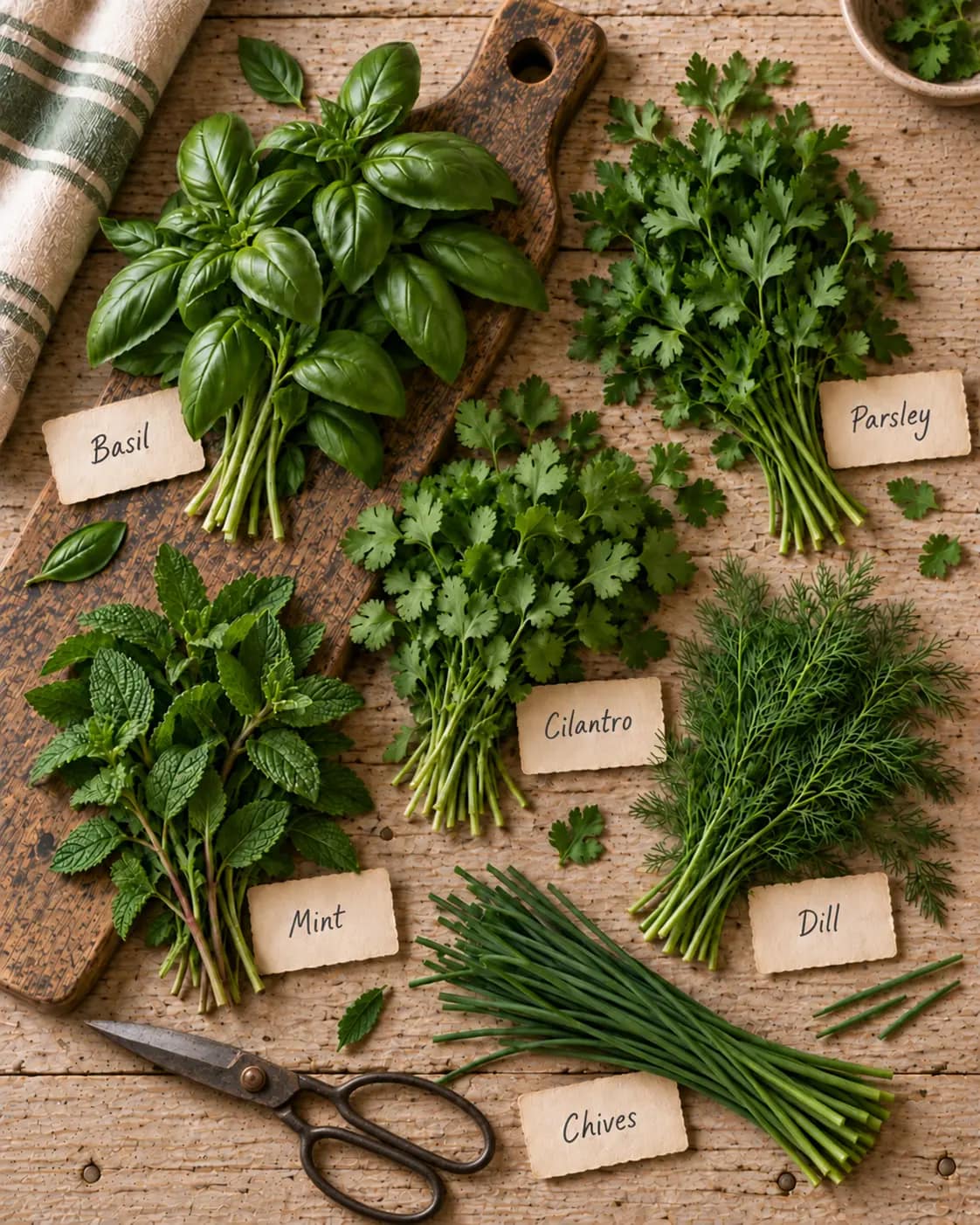
Fresh and dried herbs are not always interchangeable in flavor, even when they come from the same plant.
Drying concentrates many herbs, so you generally need less dried herb than fresh. A helpful starting point is:
1 tablespoon fresh herbs = 1 teaspoon dried herbs
Taste as you cook because the strength of dried herbs varies with age and variety.
Sturdy herbs such as oregano, thyme, rosemary, and sage retain their flavor well when dried. Delicate herbs such as parsley, basil, cilantro, and chives often lose more of their fresh character.
I keep both fresh and dried herbs in the MWT kitchen. Fresh herbs bring color and garden flavor, while dried herbs offer depth and convenience when the garden rests.
Simple Ways to Use Extra Fresh Herbs
A bundle of herbs does not need to become a forgotten bag in the back of the refrigerator.
Use extra herbs to make:
- Pesto or salsa verde
- Herb vinaigrette
- Compound butter
- Herbed yogurt sauce
- Marinades
- Garden salads
- Flavored salts
- Soup or stock
- Herb-filled omelets
- Focaccia or savory bread
- Chimichurri
- Infused vinegar
You can also chop fresh herbs and freeze them in an ice cube tray with water or olive oil. Transfer the frozen cubes to a labeled freezer container and add them directly to soups, sauces, and cooked dishes.
The texture will soften after freezing, so frozen herbs work best in cooked recipes rather than as a fresh garnish.
A Note About Fresh Herbs in Oil
Fresh herbs contain moisture, so homemade herb oils require careful storage.
If you combine fresh herbs with oil, refrigerate the mixture immediately and use it within two to four days unless you are following a tested food-safety method. Do not leave fresh herb oil sitting at room temperature.
For longer storage, freeze herbs with oil in small portions and use them as needed.
Fresh Herbs in the MWT Kitchen
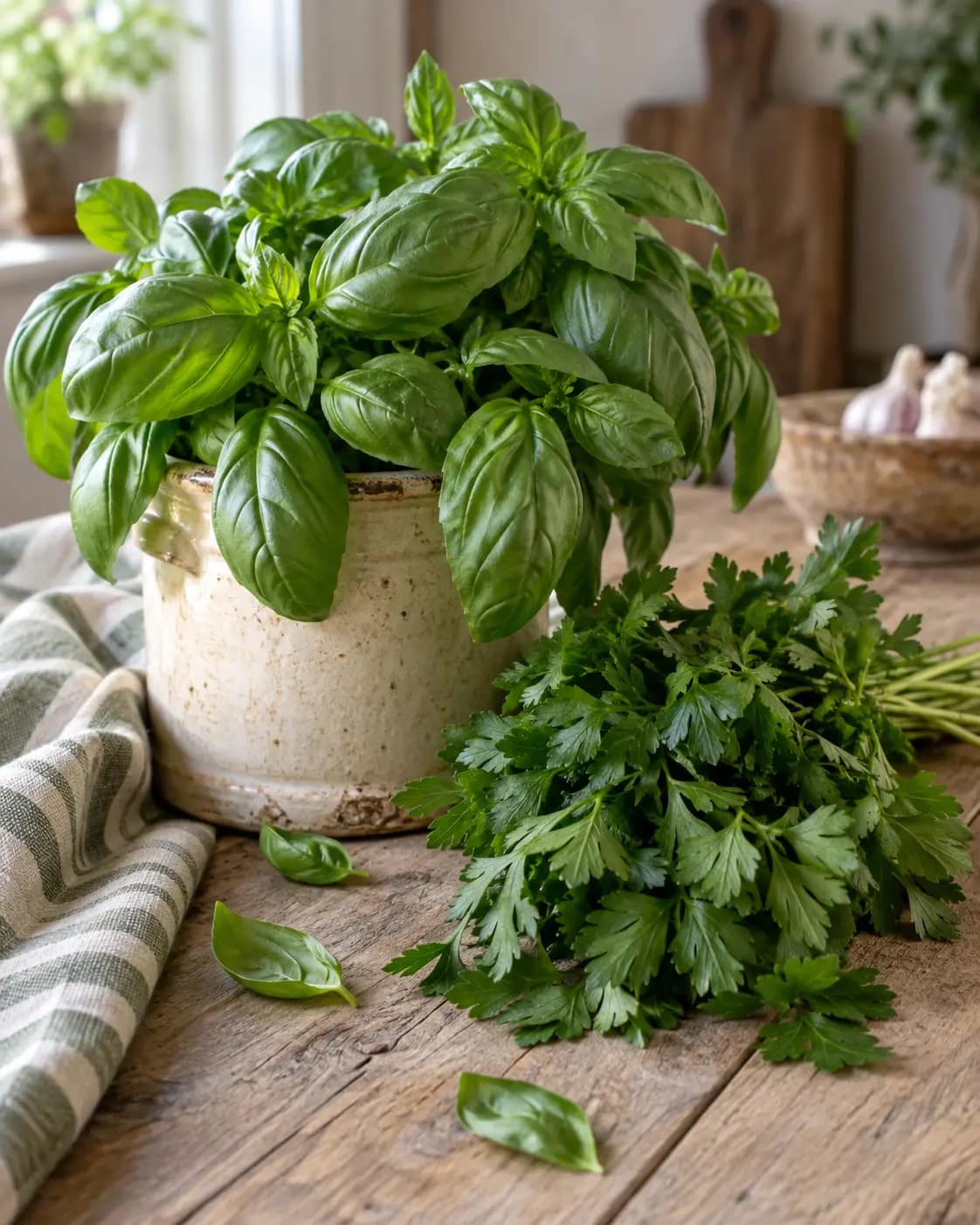
Fresh herbs are among the first ingredients I reach for when a dish needs something more.
Sometimes a sauce needs basil. A bowl of beans may need rosemary. Roasted potatoes come alive with thyme, while a spoonful of chopped parsley can lift an entire pot of soup.
I keep basil, parsley, rosemary, thyme, oregano, mint, and chives in regular rotation. They connect the kitchen to the garden and bring the Mediterranean flavors I love into everyday cooking.
I rarely measure fresh herbs with too much precision in savory dishes. I begin with a small handful, taste, and adjust. Herbs should support the food while still allowing the main ingredients to have their place at the table.
Frequently Asked Questions
Should fresh herbs be washed before storing?
You can wash them before storage, but they must be dried thoroughly. Excess water encourages spoilage. For the best texture, I prefer washing most herbs shortly before using them.
Why does basil turn black in the refrigerator?
Basil is sensitive to cold temperatures. Store cut basil stems in water on the counter, away from direct sunlight and heat, and use the leaves while they are fresh.
Can I use the stems?
Yes. Tender parsley and cilantro stems are flavorful and easy to chop. Woody rosemary and thyme stems work well for infusing soups, sauces, and stocks, but remove them before serving.
Can fresh herbs be frozen?
Yes. Freeze chopped herbs in water or olive oil for cooked dishes. Their texture will change after thawing, so they will not work as well for garnishing.
When should I add fresh herbs to a recipe?
Add sturdy herbs early enough to release their flavor. Add tender herbs near the end of cooking or immediately before serving.
My Ingredient Philosophy
Fresh herbs remind us that wonderful food does not need to be complicated.
A ripe tomato, good olive oil, a pinch of salt, and a few basil leaves can become something memorable. The ingredients remain recognizable, and each one brings its own character to the plate.
I choose organic ingredients whenever possible and grow what I can. But thoughtful cooking is not about perfection. It is about using what is available, caring for it well, and allowing simple ingredients to become something generous.
Around My Table
Fresh herbs carry the garden into the kitchen.
Their fragrance fills the cutting board as they are chopped. Their color brightens bowls and platters. Even a small handful can make dinner feel connected to the season and to the hands that grew it.
That is what I love most about cooking with herbs. They ask us to step outside, gather what is ready, and bring it back to the table.
The result may be as simple as basil over tomatoes or rosemary tucked into a loaf of bread. Yet those small details are often the ones we remember.
With flour-dusted hands, something simmering nearby, and plenty of laughter and good food to share around the table,


Questions about a recipe or technique?
I’m always happy to help. Feel free to reach out if you need guidance, substitutions, or a little extra help in the kitchen.
Pull up a Chair...
return to pantry foundations
return to recipe box
[email protected]
Questions about a recipe or technique?
I’m always happy to help. Feel free to reach out if you need guidance, substitutions, or a little extra help in the kitchen.
Lisa Marie