September 22, 2026
Fresh basil, toasted pine nuts, and two Italian cheeses come together in this simple homemade pesto. Toss it with warm pasta, spoon it over vegetables, or spread it onto crusty bread. It’s one of my favorite ways to put a big handful of fresh garden basil to good use.
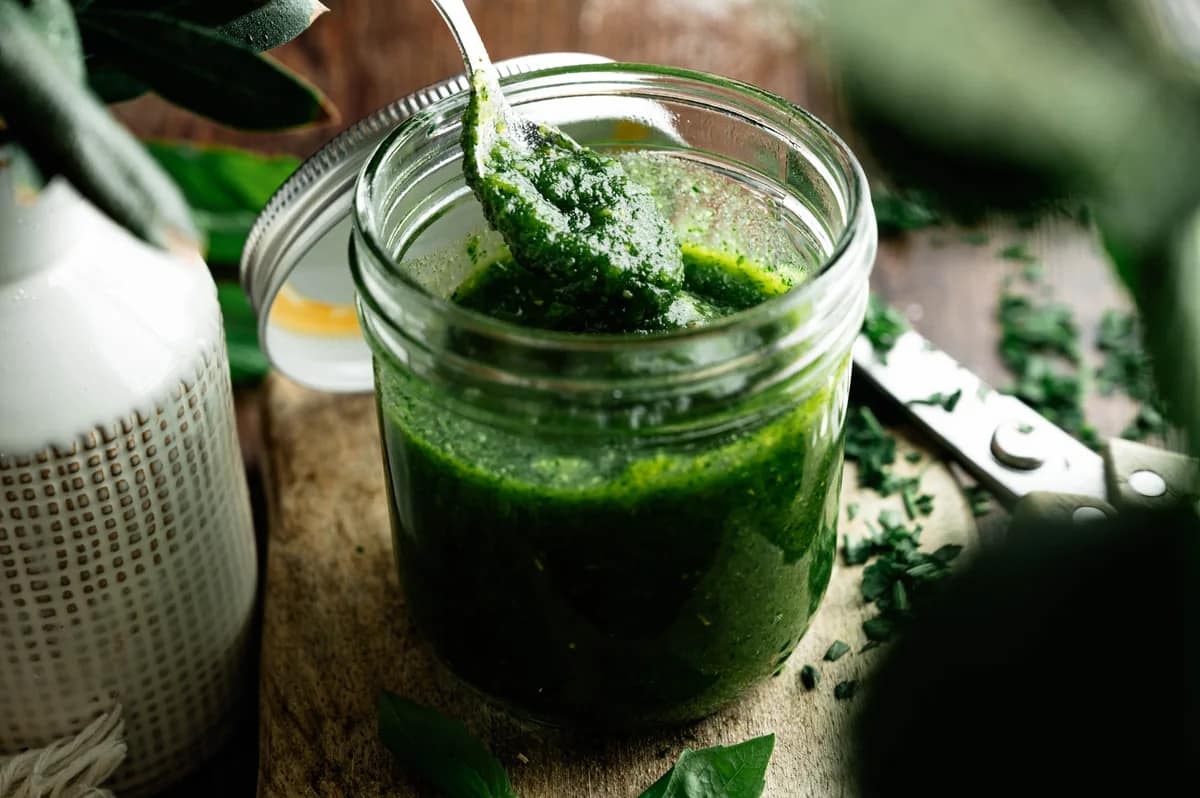
Simple Homemade Pesto Without Garlic
When there’s plenty of basil to gather from the garden, pesto is one of my favorite ways to use it. The smell of those fresh leaves makes me want to put a pot of pasta on the stove before I’ve even finished picking them. With a few simple pantry staples, dinner is already well on its way.
I make my homemade pesto without garlic, letting the fresh basil shine alongside toasted pine nuts, good quality olive oil, Parmigiano-Reggiano, and Pecorino Romano. The combination of the two cheeses gives it a rich, savory flavor, while the pine nuts add a little buttery sweetness.
This homemade pesto comes together in about 15 minutes and is ready to spread on warm bread or toss with your favorite pasta. When I’m making pasta, I love stirring in a splash of heavy cream for a richer, creamier sauce.
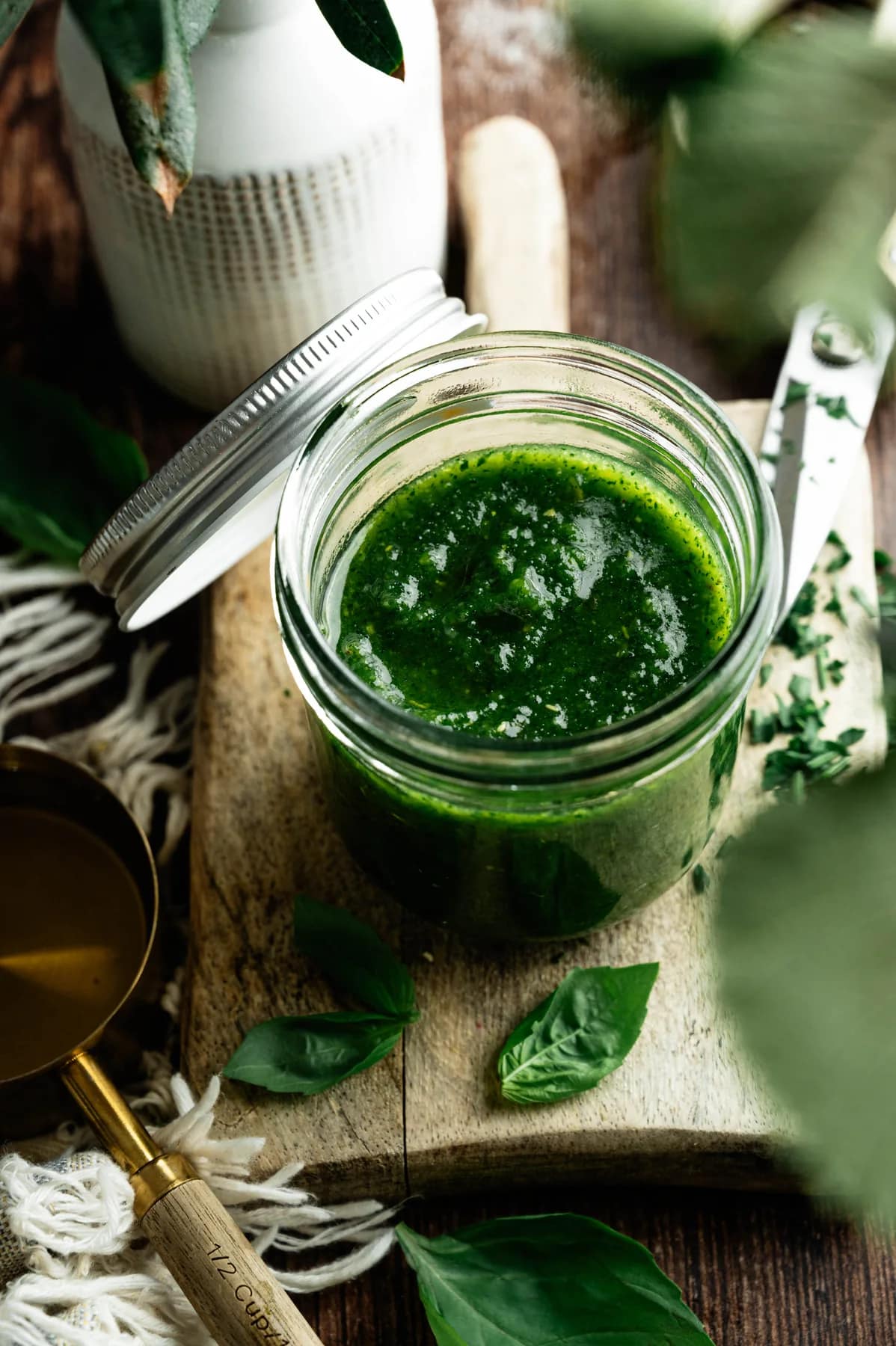
Why You’ll Love This
This is a useful recipe to have when there’s a generous bunch of basil to use.
- Basil-led flavor. This version leaves out the garlic.
- Two Italian cheeses. They give the pesto a savory finish.
- Your choice of texture. A few pulses let you control how finely it blends.
- Easy to portion. Freeze small amounts for another meal.
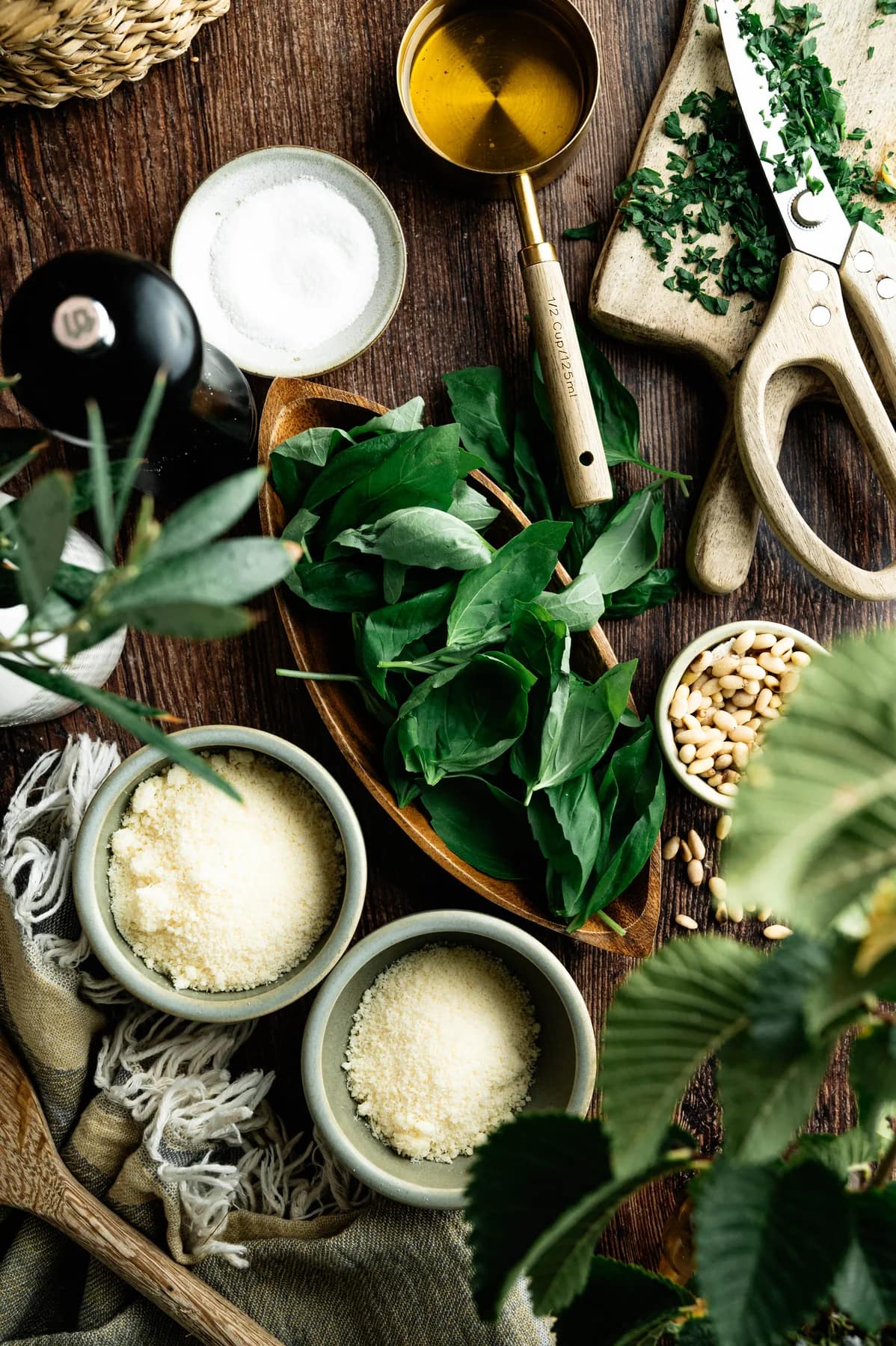
Ingredients You’ll Need
Fresh Basil
Look for bright green leaves without dark spots or wilted edges. My notes on choosing and storing fresh herbs can help you keep any extra basil fresh for another dish.
Pine Nuts
Pine nuts add body and a mild, buttery flavor. Toasting deepens their flavor; choose fresh nuts that smell sweet rather than stale.
Extra-Virgin Olive Oil
Use a good extra-virgin olive oil that you already enjoy on bread, vegetables, or salads. I like a smooth, fruity olive oil here because its flavor comes through in the finished pesto without overpowering the fresh basil.
Parmigiano-Reggiano and Pecorino Romano
Parmigiano-Reggiano is rich and nutty, while Pecorino Romano adds a sharper, saltier bite. Grate both cheeses fresh so they incorporate evenly.
I also use Romano in my Sun-Dried Tomato and Basil Farfalle, another simple pasta for an easy supper.
Fine Sea Salt
Start with just a small pinch. Both cheeses, especially the Pecorino Romano, bring saltiness of their own. Taste the finished pesto first, then add more salt only if it needs it.
Ingredient Philosophy
I choose organic ingredients whenever possible, especially fresh basil. During the warmer months, most of mine comes straight from the garden. It’s a good reason to make pesto while the leaves are at their best.
I buy the cheeses by the wedge and grate what I need. What’s left goes into pasta, soups, and vegetables throughout the week.
Good extra-virgin olive oil and pine nuts are staples I like to keep in the pantry, so when there’s basil ready to pick, most of what I need for pesto is already in the kitchen.
For other ways to use an abundant herb harvest, Fresh Herbs: One Ingredient, Many Possibilities includes vinaigrettes, herb butter, and more.
How to Make Homemade Basil Pesto
Toast and Cool the Pine Nuts
Add the pine nuts to a dry skillet over medium-low heat. Toast for 3 to 5 minutes, stirring often, until they’re lightly golden and fragrant. Keep an eye on them since pine nuts can brown quickly. Transfer them to a plate and let them cool completely.
Pulse the Basil, Pine Nuts, and Olive Oil
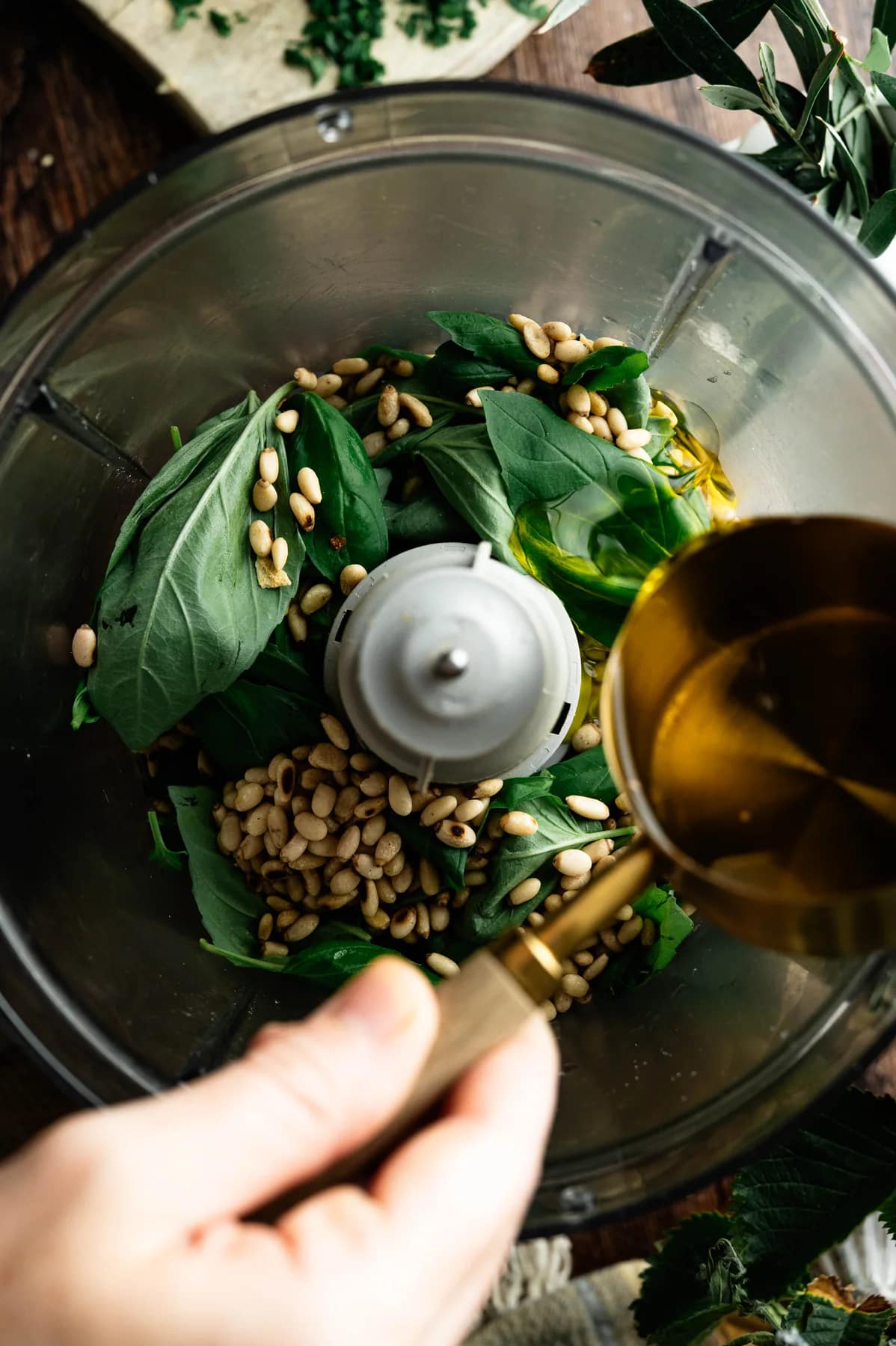
Add the dry basil leaves, cooled pine nuts, and olive oil to a food processor. Pulse in short bursts, stopping to scrape down the sides as needed. I like to leave a little texture rather than blending the pesto completely smooth.
Add the Cheeses
Add the freshly grated Parmigiano-Reggiano, Pecorino Romano, and a small pinch of sea salt. Pulse just until combined.
Adjust the Texture
Check the consistency with a spoon. It should be thick but spoonable. If needed, add olive oil 1 tablespoon at a time, pulsing briefly after each addition. Taste before adding more salt.
Finish with Cream for Pasta
For the optional creamy pasta version, warm only the portion you need in a small saucepan over low heat. Stir in a splash of heavy cream, then toss with hot pasta. Warm gently without simmering.
My Weathered Tips
Gather everything first. A little mise en place makes this pesto easy to pull together. Have your basil washed and dried, cheeses grated, and ingredients measured before you begin.
Dry the basil well. Use a salad spinner or clean towel after rinsing. Water left on the leaves can dilute the pesto.
Cool the pine nuts. Transfer them out of the skillet after toasting so residual heat doesn’t keep browning them.
Scrape the bowl. Bring any larger pieces from the sides back toward the blade between pulses for an even texture.
Save some pasta water. If the dressed pasta feels dry, toss in a small splash to loosen the coating.
Check the portion before salting. Taste the pesto with a bite of pasta or bread. Both cheeses already contribute salt.
Homemade Pesto
Fresh garden basil, toasted pine nuts, good olive oil, Parmigiano-Reggiano, and Pecorino Romano come together in this simple homemade pesto with plenty of fresh basil flavor and a little texture in every spoonful.
- Total Time15 minutes
- Yieldabout 1 to 1¼ cups 1x
- DietGluten-Free, Vegetarian
Ingredients
- 60 g fresh basil leaves (about 30 to 40 large leaves), rinsed and thoroughly dried
- 45 g pine nuts, lightly toasted and cooled
- 108 g extra-virgin olive oil, plus more as needed
- 45 g freshly grated Parmigiano-Reggiano
- 45 g freshly grated Pecorino Romano
- Fine sea salt, a small pinch, plus more to taste
Instructions
- Toast the pine nuts. Place the pine nuts in a dry skillet over medium-low heat. Stir frequently for 3 to 5 minutes, until lightly golden and fragrant. Transfer to a plate and cool completely.
- Begin the pesto. Add the basil, cooled pine nuts, and olive oil to a food processor. Pulse in short bursts until finely chopped, stopping to scrape down the bowl as needed.
- Add the cheeses. Add the Parmigiano-Reggiano, Pecorino Romano, and a small pinch of salt. Pulse just until combined.
- Adjust the texture. Taste and add more salt only if needed. If the pesto is too thick, pulse in additional olive oil, 1 tablespoon at a time, until thick but spoonable.
- Store promptly. Use immediately or transfer to a clean airtight container and refrigerate.
Notes
For creamy pesto pasta: Gently warm the amount of pesto you need over low heat, then stir in a splash of heavy cream. Do not simmer.
Adjust the consistency: If the creamy pesto is too thick for pasta, add a splash of reserved pasta water until it coats the noodles the way you like.
Taste before salting: Parmigiano-Reggiano and Pecorino Romano both add salt, so taste the finished pesto before adding more.
Serving ideas: Use the pesto with pasta, spoon it over vegetables or sliced tomatoes, or spread it onto toasted bread and sandwiches.
Storage: Spoon the finished pesto into a clean, airtight container and refrigerate for up to 4 days. To help keep that beautiful green color, smooth the top and add a thin layer of olive oil before covering.
Freezing: Freeze the pesto in an ice cube tray or small freezer-safe containers. Once solid, transfer the portions to a freezer-safe container and use within 3 months. Freeze before adding heavy cream. Thaw overnight in the refrigerator, then stir well. Add the cream only if making the pasta variation.
Make Ahead: Homemade pesto should always be kept refrigerated or frozen rather than stored at room temperature.
- Prep Time: 10 minutes
- Cook Time: 5 minutes
- Category: Sauce
- Method: Food Processor
- Cuisine: Italian
From Kitchen to Table
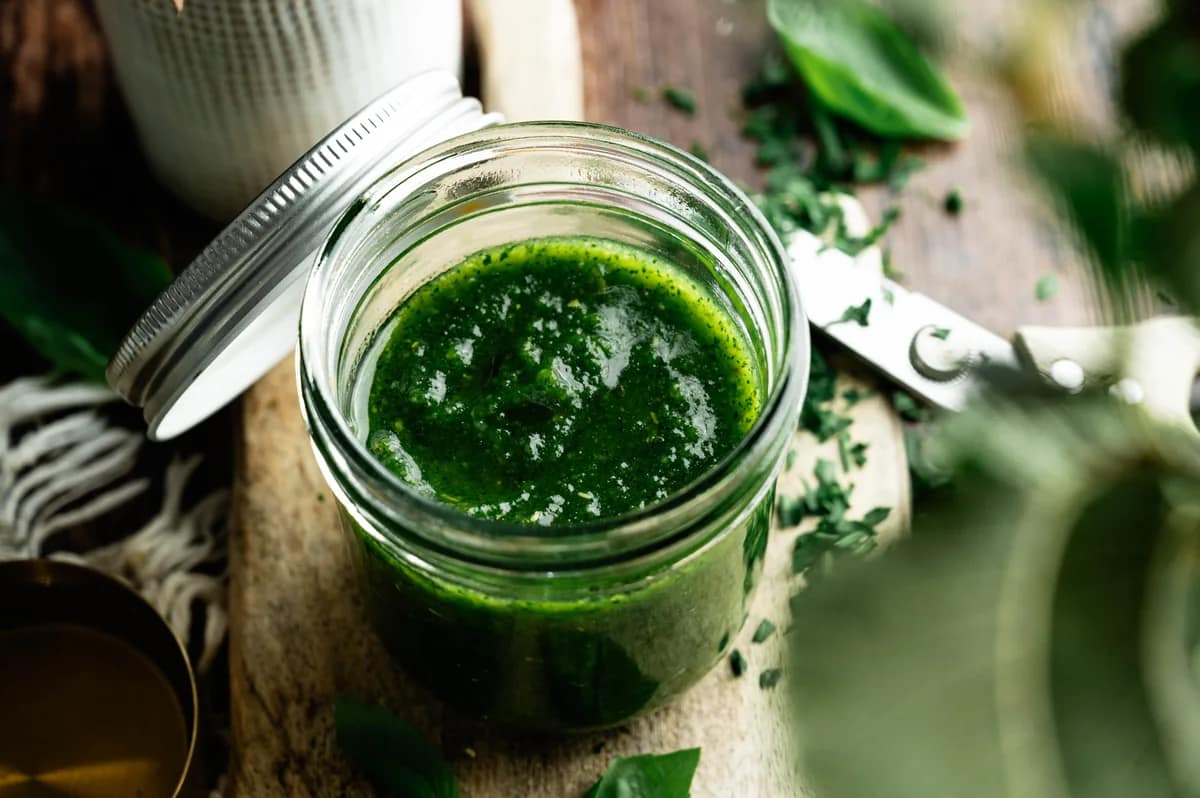
Start with a small spoonful and add more to taste. Pesto is concentrated, so a little can season a whole plate.
For Creamy Pesto Pasta
Serve the creamy version with pasta or gnocchi and a green salad. Put extra grated cheese on the table for anyone who wants it.
More Ways to Use Homemade Pesto
Pair it with chicken or fish. Spoon pesto over simply cooked chicken or fish just before serving.
Spread it on bread. Spoon it over toasted bread, tuck it into a sandwich, or make a simple bruschetta with sliced garden tomatoes.
Add it to vegetables. Spoon over roasted potatoes, zucchini, or fresh tomatoes. It also works with Warm Burrata with Burst Cherry Tomatoes.
Serve it with eggs. Add a spoonful to Garden Zucchini Frittata or alongside breakfast eggs.
Frequently Asked Questions
Why Did My Pesto Turn Dark?
Exposure to air, heat, and handling can darken basil. Keep processing brief and cover the surface of the pesto before refrigerating. A thin layer of olive oil helps limit air contact.
Can I Make Pesto Without Pine Nuts?
Yes. Toasted walnuts, almonds, or cashews can all be used in place of pine nuts. Each one changes the flavor and texture slightly, so choose a nut you already enjoy.
Does Pesto Need Garlic?
No. This recipe is made without it. Basil, pine nuts, and the two cheeses provide plenty of flavor.
Can You Heat Pesto?
Yes, gently. Avoid simmering or high heat, which can dull the basil flavor and affect the cheese’s texture.
Can I Freeze Pesto with the Cheese in It?
Yes. Both cheeses can stay in the pesto when you freeze it. Leave out the cream and follow the storage instructions above.
Around My Table
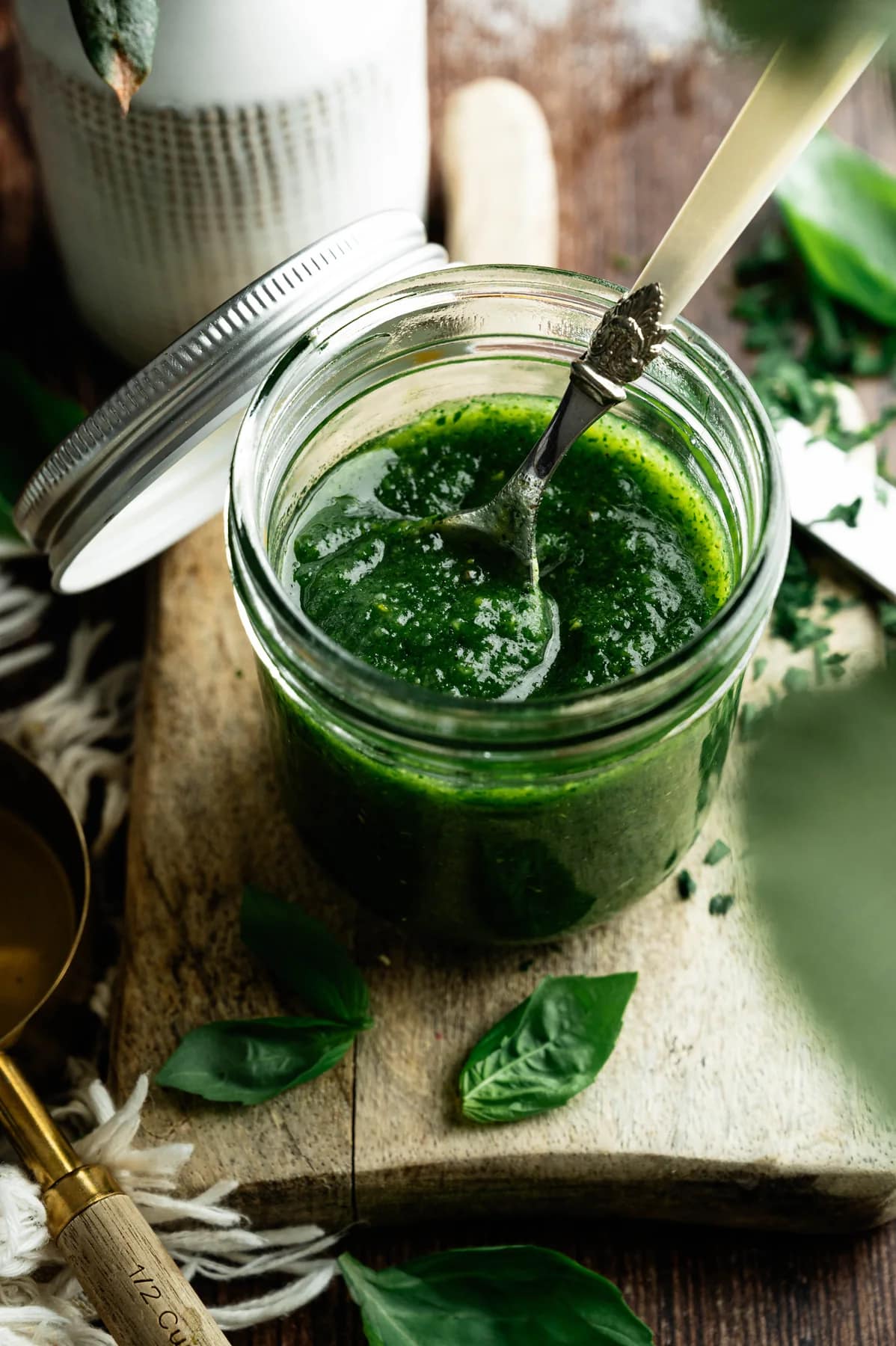
The smell of basil stays on my hands long after I’ve finished picking it. I like that connection between a few minutes in the garden and the meal that follows. By the time the pasta is ready, most of the kitchen work is done.
Then I can sit down and enjoy supper while it’s warm. That’s part of what I love about this recipe: the time spent making it leaves plenty of time for the people at the table.
If you’re planning what else to put on the table, take a look through my Recipe Box for more simple, seasonal recipes to serve alongside it.

return to recipe box
Questions about a recipe or technique?
I’m always happy to help. Feel free to reach out if you need guidance, substitutions, or a little extra help in the kitchen.
Pull up a Chair...
return to pantry foundations
return to recipe box
[email protected]
Questions about a recipe or technique?
I’m always happy to help. Feel free to reach out if you need guidance, substitutions, or a little extra help in the kitchen.
Lisa Marie
Leave a Reply